

My husband finally convinced me to watch Mad Men. I’ve been meaning to watch it for years, but he promised me I’d be hooked by the period interiors alone. I’m usually sceptical of his television recommendations—mostly because they lean a bit too serious for my liking—but he was absolutely right. Don Draper’s sunken living room, introduced in the fifth season, completely stole the show for me. It’s 1966, but there’s something about its design that anticipates the decade that followed.
Chocolate velvet, tobacco leather and wood so polished you can see your reflection. I’ve always had a soft spot for all this—the warmth, the drama. And judging by the enthusiasm for brown interiors online, I’m not alone.
But I doubt the 1970s are making a comeback simply because we’ve suddenly fallen for the colour. It’s more likely that we’re nostalgic for what those rooms represented—long evenings with other people, undistracted by anything else.
POINT OF DEPARTURE
I’d be cautious to call it a full-on revival. Revivals are tidy affairs, like the mid-century modern wave, with its predictable vernacular of Eames chairs, Tulip tables and Arco lamps.
In 2015, as Mad Men was coming to an end, Herman Miller reported that North American sales of its classic furniture designs had increased by 60 per cent over the preceding seven years. The show wasn’t solely responsible, of course, but it helped make mid-century modernism recognisable to an audience beyond design enthusiasts.
The 1970s, however, are resurfacing in fragments. You’ve got a low-slung sofa here, a mushroom lamp there. We aren’t recreating the decade so much as we’re rescuing its furniture of sociability—pieces designed, quite simply, to bring people together.
It’s worth remembering what the decade was actually like. It was hardly carefree. There was the oil crisis, Watergate and plenty else to worry about. But domestic interiors had been growing less formal for some time, and the traditional sitting room was losing ground to spaces where people could entertain, eat, lounge about and generally make themselves comfortable.
The response from designers was immediate and liberating. In 1970, Mario Bellini designed the Camaleonda for C&B Italia (later B&B Italia), a system of enormous padded modules that could be unfastened and rearranged into almost any configuration. The following year, Hans Hopfer came up with the Mah Jong for Roche Bobois, a collection of floor-level cushions that could be stacked, combined or moved about as people wished. Both were expensive, but neither was precious about how people sat on them. You could stretch out, sit cross-legged, move things around when friends came over—there was no prescribed arrangement to maintain.
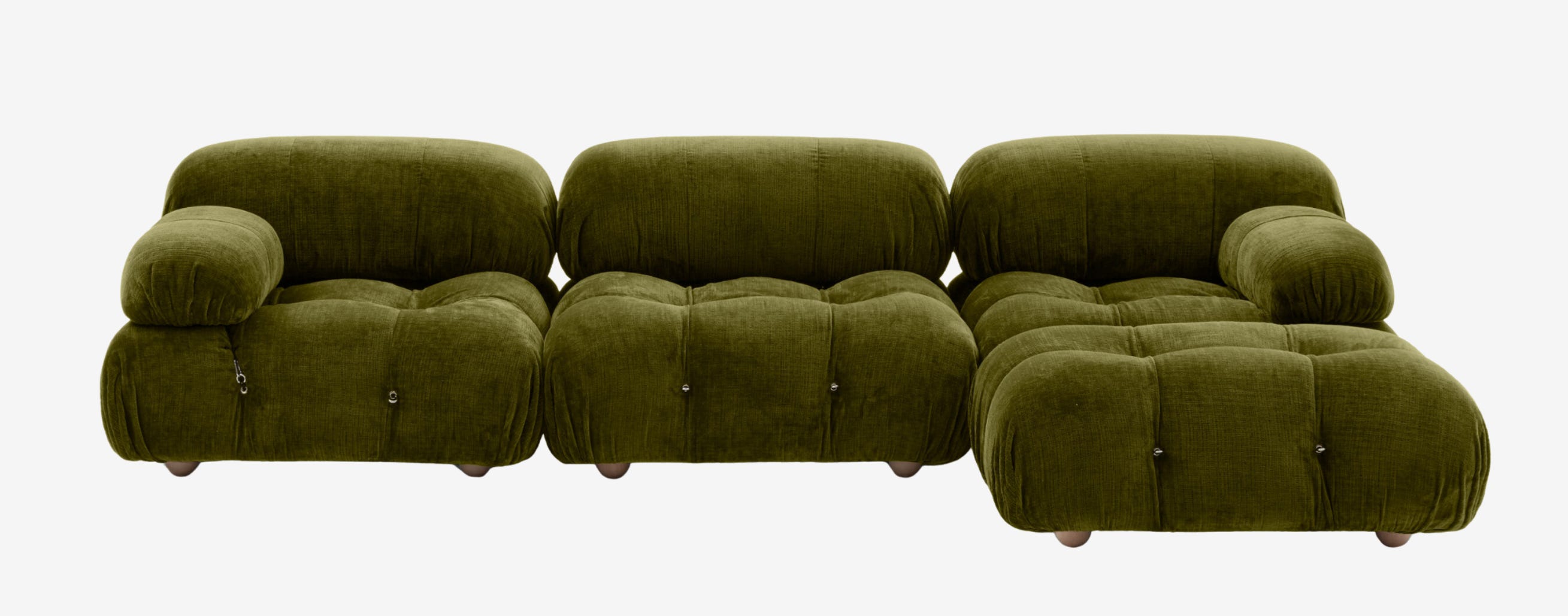
The Camaleonda eventually went out of production in the late 1970s, only to be reintroduced by B&B Italia in 2020. By then, the sofa had acquired a considerable following among collectors and on Instagram. Its modular construction remained intact, of course, but much of the renewed attention centred on its unmistakable appearance.
But it wasn’t just furniture. The conversation pit took the idea of designing for company even further. It wasn’t strictly a 1970s invention—Eero Saarinen’s Miller House in Indiana had one in 1957, developed with Alexander Girard—but it became closely associated with the decade.
The attraction was primarily architectural. Instead of relying on furniture to anchor a room, the floor itself dictated the gathering place. Once you stepped down, everyone faced inwards, so it forced you to focus on the company instead of the room.
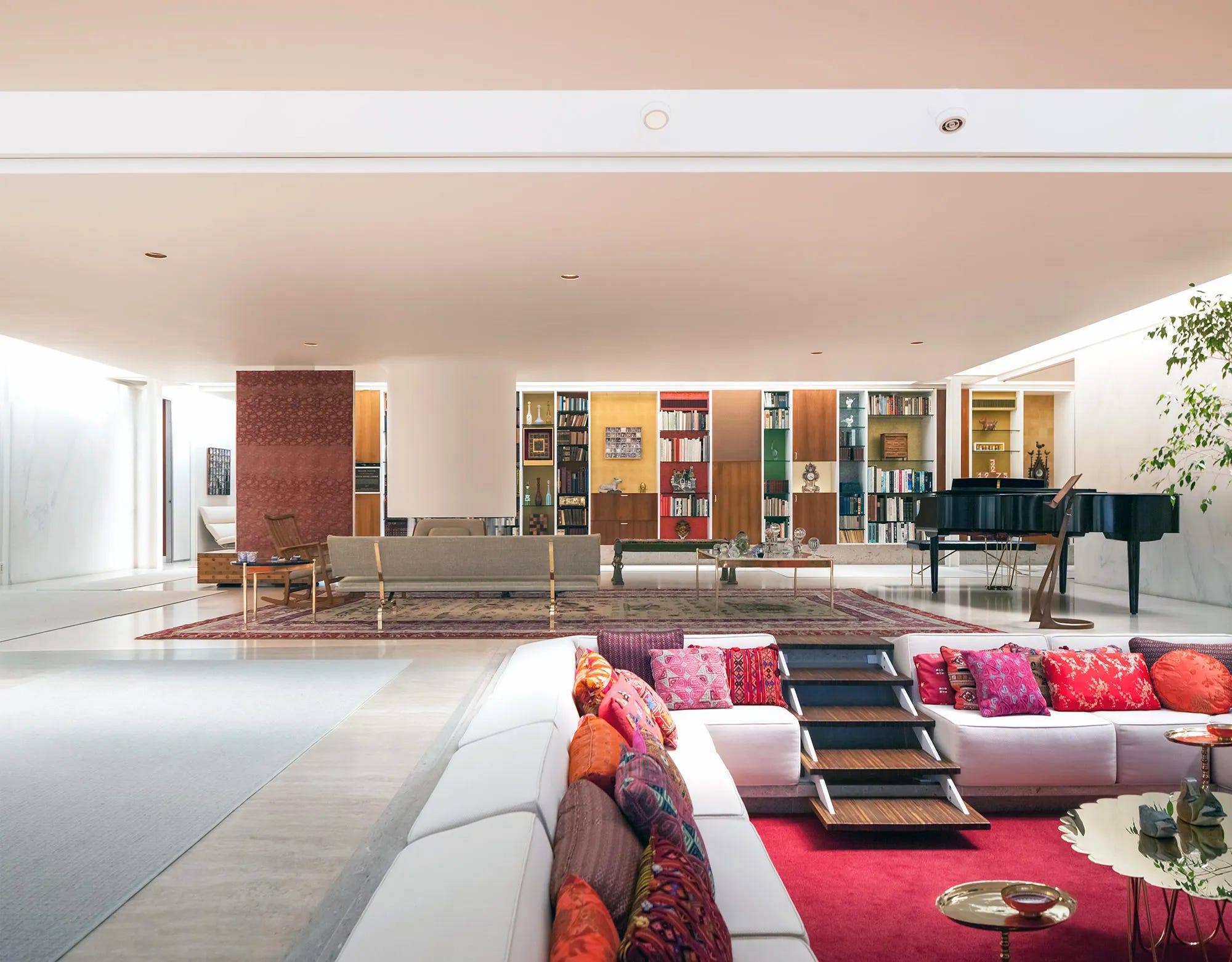
It wasn’t an entirely successful experiment, though. As early as 1963, Time was warning about the perils of sunken living rooms and guests tumbling in at cocktail parties.
Sometimes things fall out of favour for good reason; no one likes a lawsuit.
Nevertheless, every few weeks I come across a photo of a 1970s living room online. It’s usually accompanied by a caption asking for the return of the conversation pit, and the comments tend to agree. I wonder how many of these people have actually sat in one. Probably not many, but I share their enthusiasm. It’s nice to have a room that’s set up solely for the purpose of spending time with others. Isn’t that what we’re all after?
In 2023, the US Surgeon General described loneliness as an epidemic. More recently, Eventbrite reported that phone-free events on its platform grew by 567 per cent globally between 2024 and 2025. The fact that an evening without phones has become a selling point is telling in itself.
Hotels ought to be ideally placed. They’ve certainly embraced the domestic aesthetic. But a real living room has freedom. People pull up chairs, sit where they please and stay longer than intended. Hotel public spaces don’t quite work like that. Furniture needs to withstand constant use and circulation routes need to remain clear. The challenge is to properly capture that spirit of connection, as opposed to simply borrowing the look of informality.
Boutique hotels have arguably had more freedom to experiment with this. Their smaller scale allows for a more fluid approach to public space, without quite so many competing demands. At The Manner in New York, for example, guests have access to The Apartment, a private lounge where they can invite friends for aperitivo. The hotel also discourages cameras and phone calls in shared spaces, which aren’t dramatic interventions, but they’re decisions about how people spend time together.
I’m not suggesting larger luxury properties are incapable of creating the same atmosphere. They simply have a more complicated set of operational requirements to accommodate. It’s not exactly easy to preserve the freedom and spontaneity of a domestic setting in an environment that, by necessity, needs to be carefully managed.
But it’s a reminder that while luxury hospitality may place a greater premium on privacy and discretion, that doesn’t necessarily mean guests want to be alone. Some of the nicest evenings are spent talking quietly with a handful of people, and a room doesn’t need to be noisy to be alive. Ultimately, the acoustics and sense of enclosure that make a space peaceful are also what make it a great place for conversation.
So what should hotels take from the 1970s? I wouldn’t start digging conversation pits into the lobby. They’re an obvious liability for accessibility and circulation, not to mention service. I’m also not sure that every hotel lounge needs modular furniture that guests can dismantle at will.
There are simpler ways to take inspiration. A horseshoe banquette, for example, can create an intimate gathering place without changing floor levels. Movable occasional chairs allow groups to expand, and deep sofas can sit alongside more upright seating, giving guests a choice rather than assuming everyone wants to lounge in the same way. It also helps when the furniture faces the people in the room.
Much of this is straightforward design practice—hardly revolutionary. But the trick is to make it work alongside the demands of a busy hotel.
Personally, I want to see a return to something of that 1970s mentality. While solitude has its place, some of the decade’s most impressive interiors seemed to operate on a more comforting assumption: that uneasy people would rather be uneasy together. They had plenty to be uneasy about. So do we.
WORTH THE DETOUR
INDUSTRY
Auberge appoints separate designers for The Knox hotel and residences
The Knox, Auberge Collection, is scheduled to open in Dallas on 29 January 2027, with 140 hotel rooms designed by Martin Brudnizki Design Studio and 48 private residences by Dallas-based designer Chad Dorsey.
Branded residences are frequently marketed as an extension of the hotel experience, including its interiors. At The Knox, residents will have access to Auberge’s hospitality services and amenities, alongside a separate private club, lounge, pool and fitness facilities. However, their homes will have a different design identity. I’d say that’s sensible for a market where the relationship between hospitality branding and residential value continues to evolve. Besides, it’s Auberge’s service that provides the necessary connection.
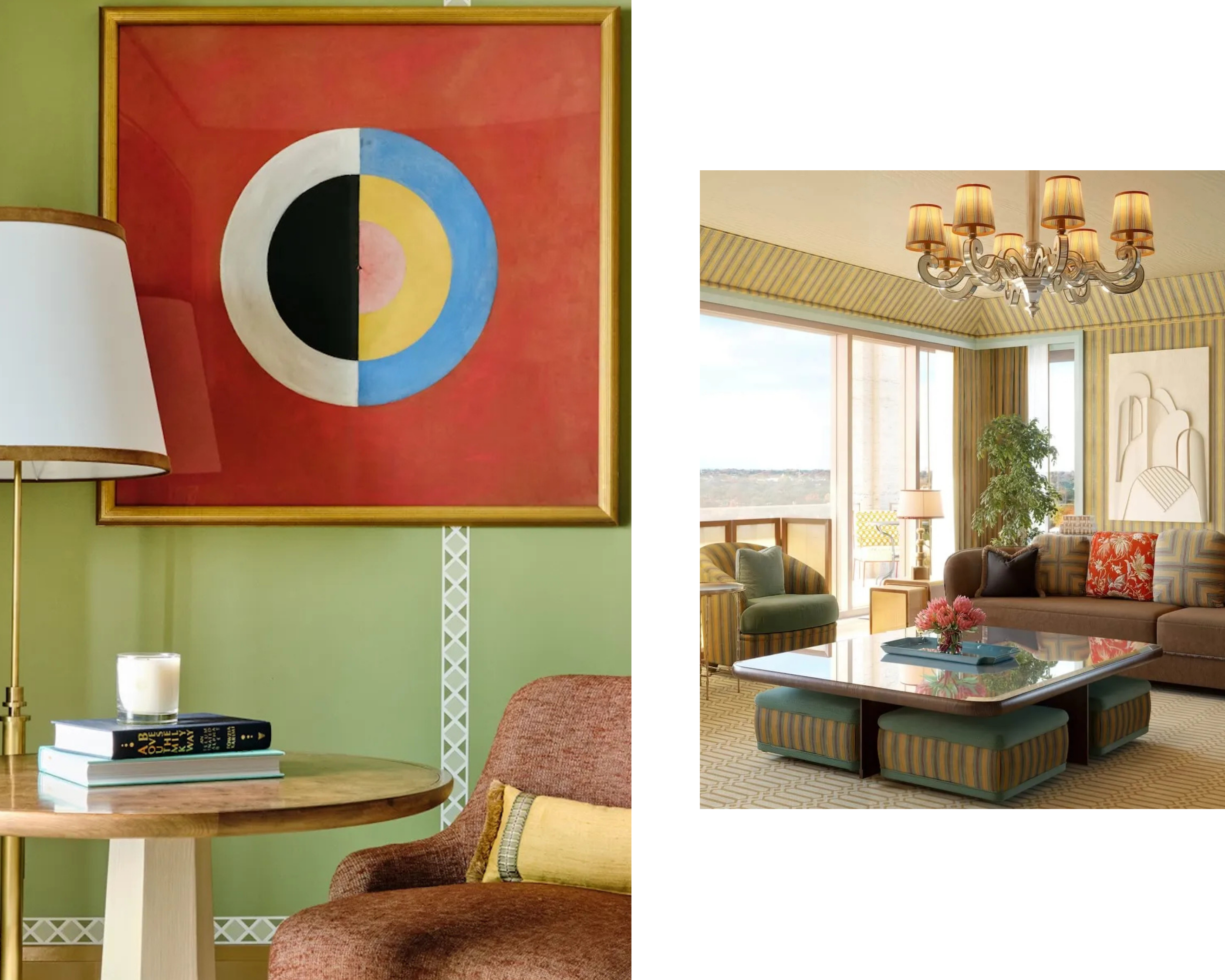
Pierre-Yves Rochon appointed to Grand Hotel San Pellegrino restoration
After nearly five decades of closure, Italy’s Grand Hotel San Pellegrino is progressing towards a reopening in late 2030. Pierre-Yves Rochon has been appointed to design the interiors of the 1904 Art Nouveau landmark, with Lombardini22 responsible for technical design. The €70 million restoration is planned to include 118 rooms and a mineral-water spa. An operator, however, has yet to be publicly named.
It’s an interesting order of announcements. Hotel brands tend to influence design from an early stage, particularly where room configurations, spa facilities and service requirements are concerned. In San Pellegrino’s case, the developer is advancing the property’s architectural identity before securing an operator. That gives the restoration a degree of independence, although it’ll be interesting to see how that plays out.
PEOPLE
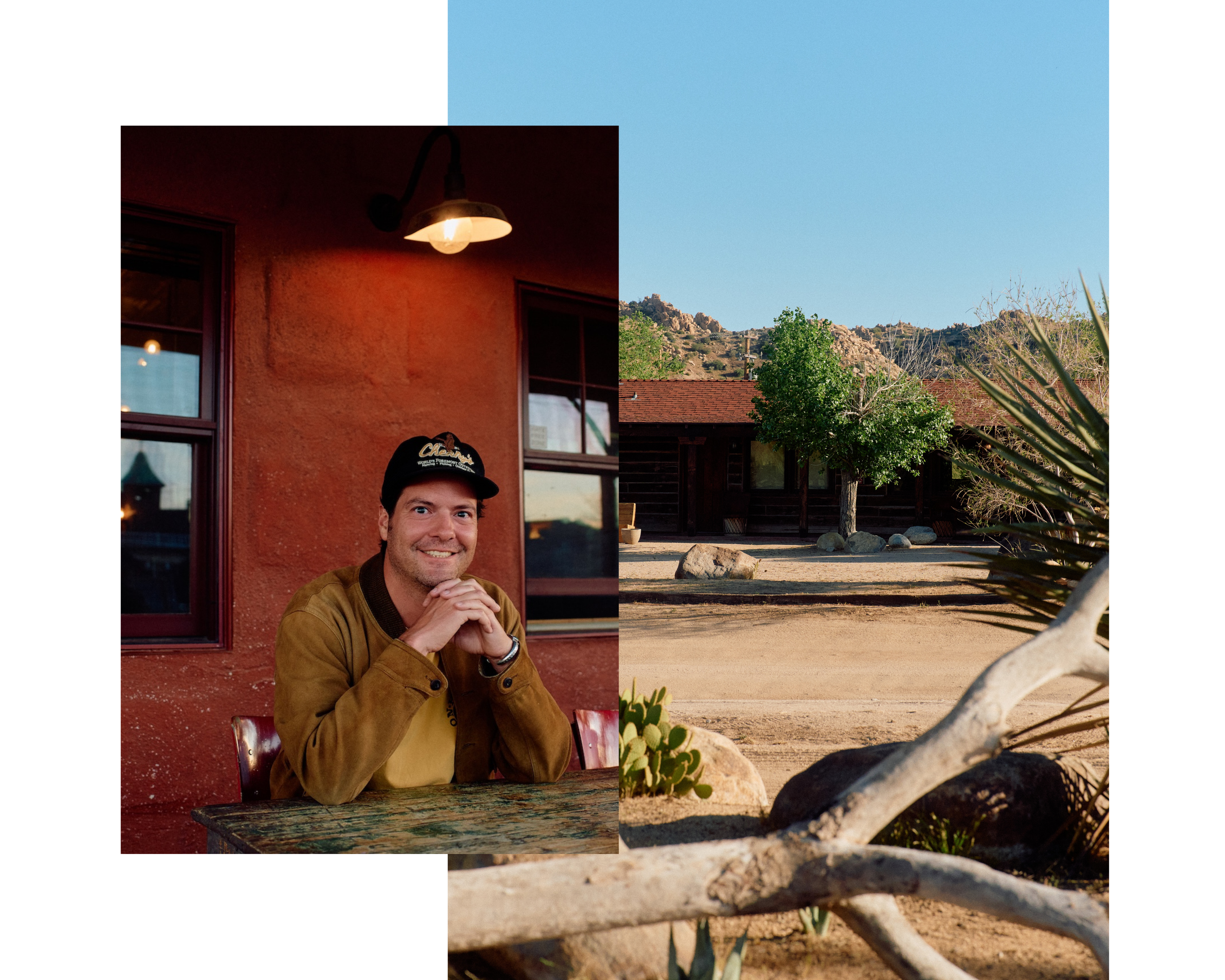
I spoke with Mike French, who runs Life & Times with his brother Matt. They’re behind the Pioneertown Motel in California and Captain Whidbey in Washington, alongside eateries such as the Red Dog Saloon and The Copper Room in the High Desert.
Mike takes the long view of hospitality, not least because he spends much of his own time in the places they’re creating. I wanted to understand what that changes about their approach to design and preservation.
Excerpt:
‘Sense of place’ has become almost an obligatory term in hospitality, but it can easily amount to a few aesthetic references to the location. What makes a hotel truly of its place to you?
The hotels that really nail this are built and operated by locals. If you’re building a restaurant, hotel or bathhouse for your community, neighbors, friends and guests, then you’re naturally going to be of the place. No aesthetic references necessary. When I visit hotels that truly feel like the owner’s dream project, I pay way more attention.
Most of your projects begin with places that already have history to them. How do you decide what should be preserved and what can be reinterpreted?
People remember feelings not fixtures. We aim to give guests a certain feeling and that isn’t always achieved by preserving the designs of the past. The Copper Room was a complete reinterpretation because there weren’t many historical interior images available. We had stories and characters, which turned out to be plenty. At the end of the day, guests can tell if you truly care about a place and that’s what resonates.
MIND
All this thinking about 1970s living rooms has led me to Epicurus’s Garden.
Epicurus has become so closely associated with indulgence, when his idea of pleasure was considerably more modest. He believed we should pay more attention to whom we eat and drink with than to what we eat and drink. And he took his own advice. His Garden, outside Athens, was a place where friends got together to eat, talk and think, away from the demands of public life.
He didn’t leave friendship to good intentions. Most of us know how easily ‘we must have dinner soon’ turns into six months of exchanging dates, despite everyone being perfectly sincere. But Epicurus made companionship part of the structure of his everyday life.
I also love a philosopher who took pleasure so seriously that he questioned how much we actually need to be content. For Epicurus, that meant freeing ourselves from unnecessary desires and anxieties. We’ve become so good at finding new things to want, but less practised at recognising when we have enough.
UNTIL NEXT TIME
Thank you for reading and supporting The Other HAFH. Have a great weekend, and I’ll catch you next week.
I’ve always loved the concept of a conversation pit. And I so resonate with Mike’s sentiment that “people remember feelings not fixtures.” I usually remember both though!