

A few months ago, my husband and I dined at Pujol in Mexico City. The takeaway: this place nails the five senses, with scent standing out in particular. I couldn’t tell you what the restaurant actually smelt like, only that it was fresh and subtle, never overpowering or pulling focus from the food. It was balanced.
In short, scent architecture is about bringing fragrance into the design of a space, shaping how we remember and react to it. I think it’s often overlooked, mostly because the industry is so focused on what we see. There’s a tendency to rely on visual measures, which means scent is either left out of the design process or only considered at the last minute.
Why?
POINT OF DEPARTURE
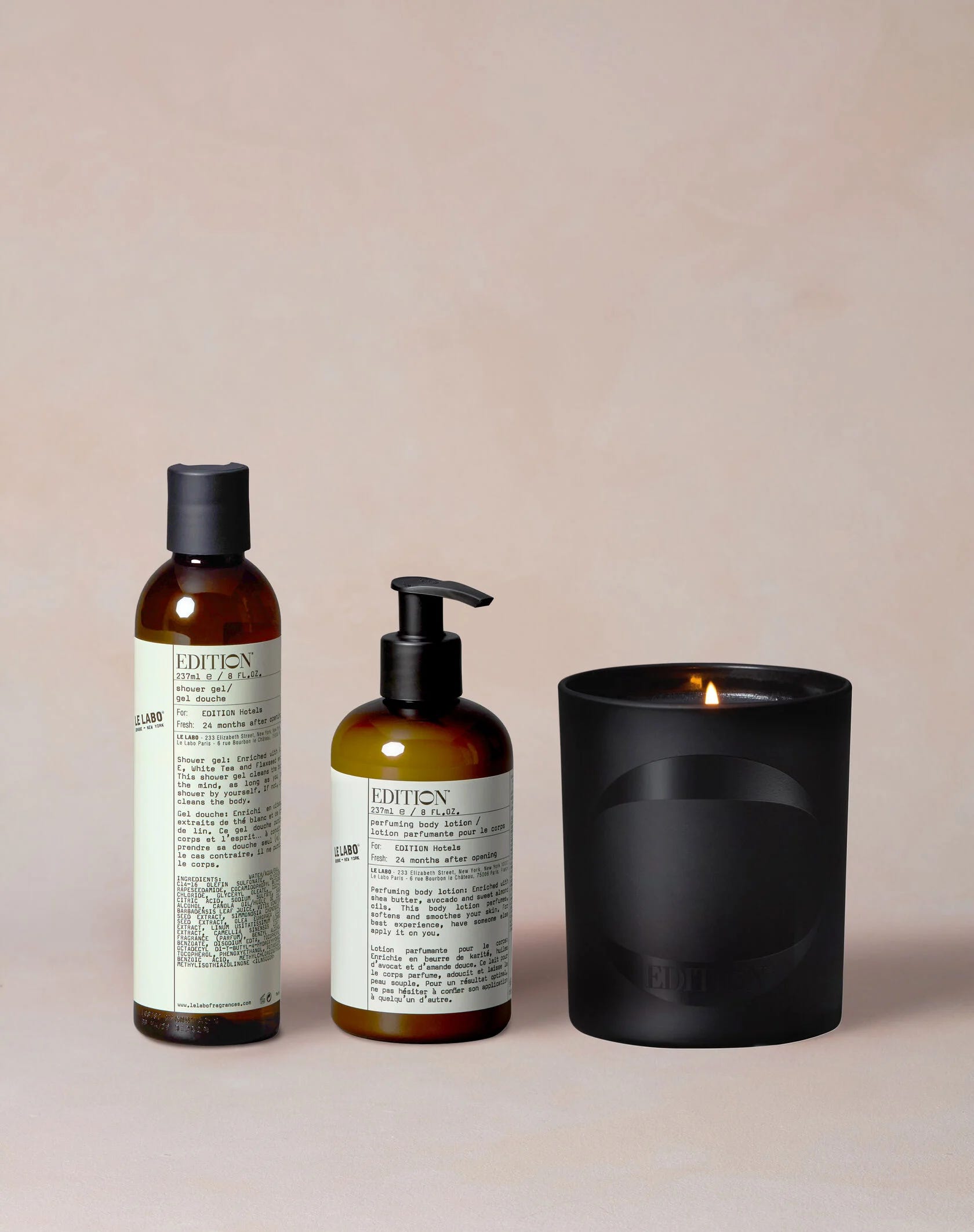
Hotels are adept at making themselves recognisable by scent. EDITION, for instance, joined forces with Le Labo to create a black-tea and bergamot fragrance that now wafts through its properties. Four Seasons has its own signature scent available to buy, while 1 Hotels sells candles that convey the mood of its spaces. Aman took a slightly different approach, developing fragrances inspired by specific destinations and landscapes.
What was once an intangible part of a hotel stay can now be slipped into your suitcase and taken home. After all, scent can anchor us to memories, instantly transporting us back, and it’s hardly surprising that hospitality marketers have seized on the idea.
The science, though, is less clear than the marketing would have us believe. Studies into the so-called Proust effect suggest that scent-triggered memories can differ from those prompted by other cues, but the results depend on how you measure them. More recent research has also complicated the idea that scent-linked memories are always more emotional than those connected to other senses.
Scent architecture, however, is a different matter. The term itself is a little slippery, but if we take it seriously, it involves so much more than simply choosing a fragrance and letting it drift through the space. It means considering the whole olfactory landscape: what’s already in the air, where those smells originate, how they move, which ones are welcome, which ought to be banished, and whether adding another scent is even wise.
For the most part, hospitality design remains a visual pursuit. Buildings are imagined via sketches and renderings, then sold through photographs. We discuss light, proportion, colour and material long before a hotel opens its doors. But putting scent at the centre of that process doesn’t seem as obvious.
The late Victoria Henshaw’s work on urban ‘smellscapes’ is helpful. Instead of treating scenting as the obvious fix for olfactory design, she examined each site’s existing odour environment, including where scents come from, what activities produce them, how air moves, the microclimate, and how these aspects interact. She viewed odour as part of a place’s identity, but was careful not to assume that adding fragrance always makes things better, which translates well to hospitality.
A hotel’s scent is already forming before a perfumer steps in. Timber and textiles bring their own aromas, as do laundry detergents, cleaning products and all the bathroom bits. Kitchens, bars, pools and fireplaces each add their own notes. Then there’s the vegetation, soil and weather to factor in. Humidity can alter the strength of a smell, and ventilation determines where it travels. An open restaurant beside a garden, for example, needs a different approach from an air-conditioned tower hotel, even if both end up burning the same candle.
If scent only enters the conversation at the brand stage, it’s simply responding to an olfactory environment that’s already been established. I’d be inclined to start much earlier, with something akin to an olfactory survey.
Smellwalks and smell-mapping have been used in built-environment research to track what people actually notice in a place and where those scents originate, as well as how they change as you move about. There’s no real reason why more hotels couldn’t do the same as part of their development process.
Some questions to ask:
What does the site smell like after rain? At the height of summer? In the early morning, when breakfast preparation begins? What drifts in from neighbouring properties? Where does the kitchen exhaust travel? Which plants release scent, and when? What changes when the doors in public spaces stay open all afternoon?
A proper survey would need to account for the seasons and the time of day. The smellscape of a hotel fluctuates, unlike the furniture, and I’m increasingly convinced that an olfactory hierarchy is more useful than strict consistency. Some scents should take the lead, while others should remain as subtle notes in the background.
What leads will depend on the space. A restaurant is a good example. Olfaction plays a key role in how we perceive flavour, so a scent in the dining room has to justify its place differently from one elsewhere in the hotel. The type of property matters, too. A resort surrounded by fragrant greenery already has a landscape doing some of the heavy lifting, while a city hotel, sealed off from the outside, may have far more reason to create an olfactory identity of its own.
Neutrality can be just as intentional, and oftentimes harder to achieve. Eliminating the smell of cleaning products in a corridor, preventing kitchen odours from drifting into guest rooms, or ensuring pool chemicals don’t follow guests are all acts of olfactory design, and they might do more for a hotel’s sense of polish than any candle ever could.
Fit, then, matters more than fragrance for fragrance’s sake. Sensory-marketing research has shown that scent works differently depending on how well it fits the wider experience. One in-situ hospitality study found more favourable responses when the fragrance was seen as congruent with the brand image. A scent can be lovely on its own and still be misplaced for a given brand or interior. So the right scent in the wrong place is, ultimately, still the wrong scent.
There’s a lesson here for luxury more generally. We tend to mistake more intervention for more care: more styling, more fragrance. But sometimes, deciding what to leave out is just as important as what to include.
Also, we don’t all agree on what smells good. Smell is neither wholly universal nor purely defined by culture, and our perception of it isn’t fixed either. We get used to smells over time, so a fragrance that’s obvious when you first arrive can quickly fade into the background. Staff who work around it every day may notice it far less than a guest, which creates a slightly comical but very real problem when it comes to judging intensity. I, for one, don’t want extra fragrance when it gets too strong; I only end up with a headache.
None of this makes the signature scent a bad idea. Designing for memory isn’t ‘artless’, nor is commercialising the result. Consistency matters, and so does recognition. EDITION’s black-tea fragrance belongs to a consciously formed brand world in much the same way its visual identity does.
Personally, I like Aman’s destination-specific approach, but ‘sense of place’ shouldn’t become another design cliché. Not every local smell is worth bottling up. Traffic fumes and drains are just as authentic as lavender and pine. I care about specificity, not literalism. A hotel doesn’t need to smell obviously local, but it does need to understand the olfactory conditions of its site. Sometimes a signature scent will be part of that world, and other times it won’t.
Fair play to the hotel candle, though. It’s a nice way for guests to take a piece of the hotel home with them.
WORTH THE DETOUR
INDUSTRY
In keeping with the theme of the five senses, I asked Chef Pedro Baroso of the much-loved Parker Palm Springs hotel a few questions. I wanted to learn more about the experience he’s building for guests.
Excerpt:
You’ve cooked in Dubai, Istanbul, Maui, Washington, D.C., and now the California desert. How do you decide what a place’s food identity actually is, versus what guests expect it to be? And where does that tension show up most at Parker?
Every place already has its own rhythm before you arrive. Guests may come with expectations, but I think a chef’s responsibility is to understand what the place actually is beneath that. In Dubai, luxury was very polished and ambitious. In Maui, people wanted a stronger connection to nature and simplicity. In Washington, there was more structure and tradition. Palm Springs is interesting because people arrive with this fantasy of glamour and escape already in their minds. At Parker, the tension comes from balancing that old Hollywood feeling with modern California dining. Guests want indulgence, but they also want freshness and seasonality. We try to respect both.
You’ve spoken about wanting the restaurants to serve both hotel guests and the local community. In practice, how equal is that relationship?
It has to be equal. If a restaurant exists only for hotel guests, it eventually loses its connection to the community. Locals are among your most important guests because their loyalty is earned over time, and their expectations keep you grounded in delivering genuine quality. They notice consistency, details, and changes. Hotel guests bring different energy because they are discovering the estate for the first time. Ideally, both groups feel comfortable in the same room without feeling like the restaurant belongs more to one than the other.
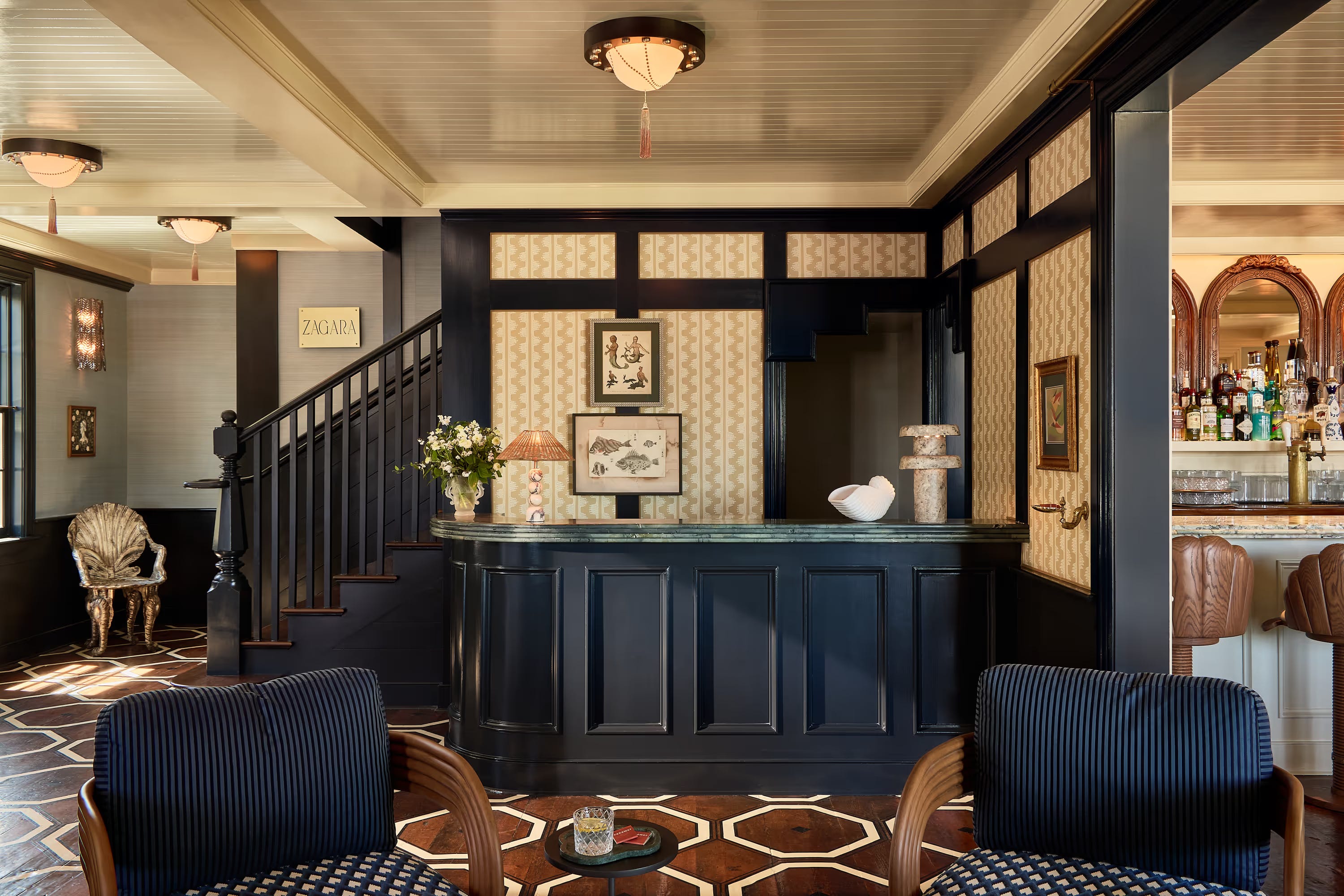
Faraway Hotels has opened in Sag Harbor, transforming the former Baron’s Cove into a more nuanced take on Hamptons hospitality. Designed by Jenny Bukovec for Blue Flag Capital, the property moves away from the expected nautical theme of blue-and-white stripes, dark wood and glossy finishes in favour of softer tones, tactile materials, vintage pieces and custom furnishings. The hotel is deliberately more residential, while still drawing on the character of Sag Harbor and the wider East End.
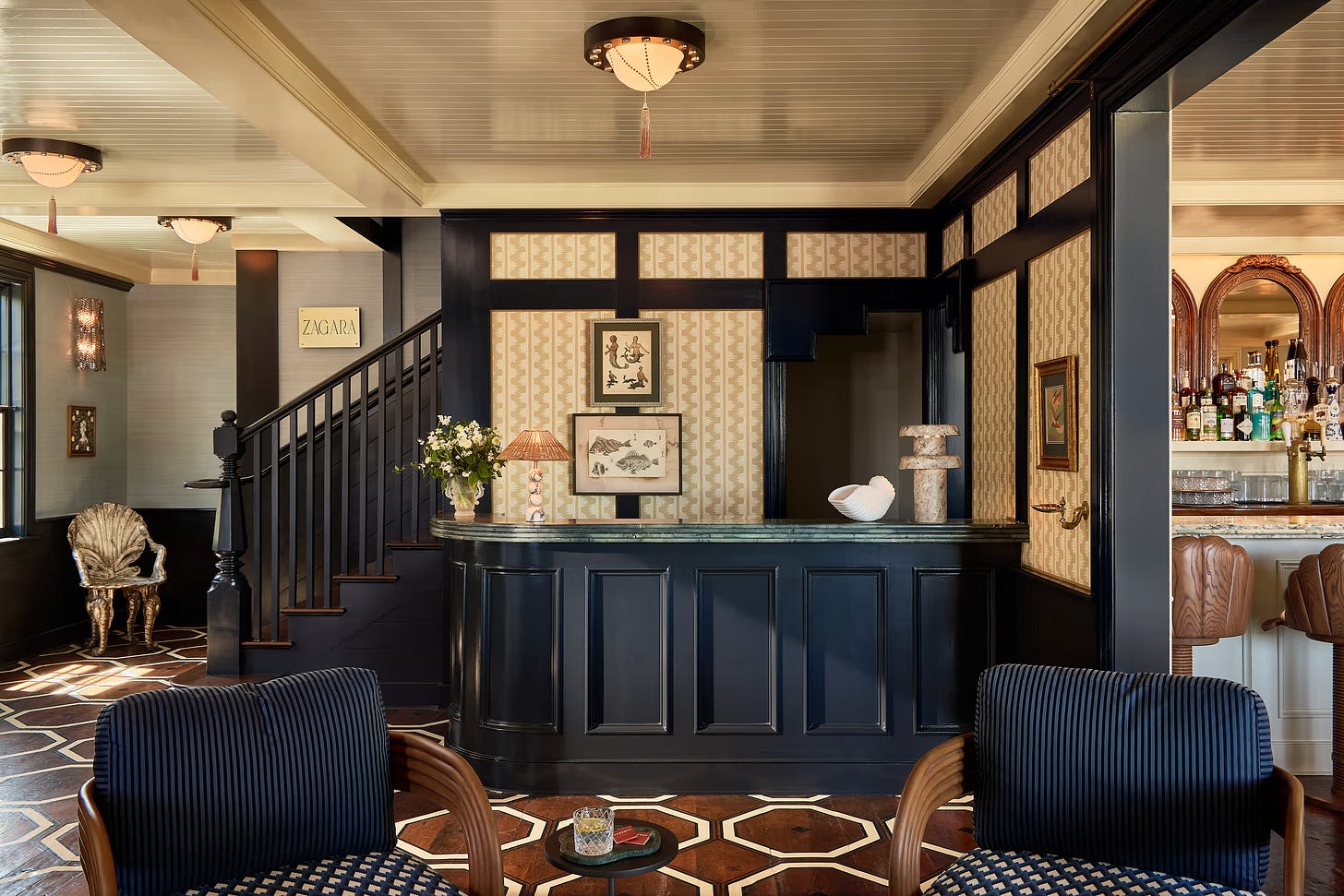
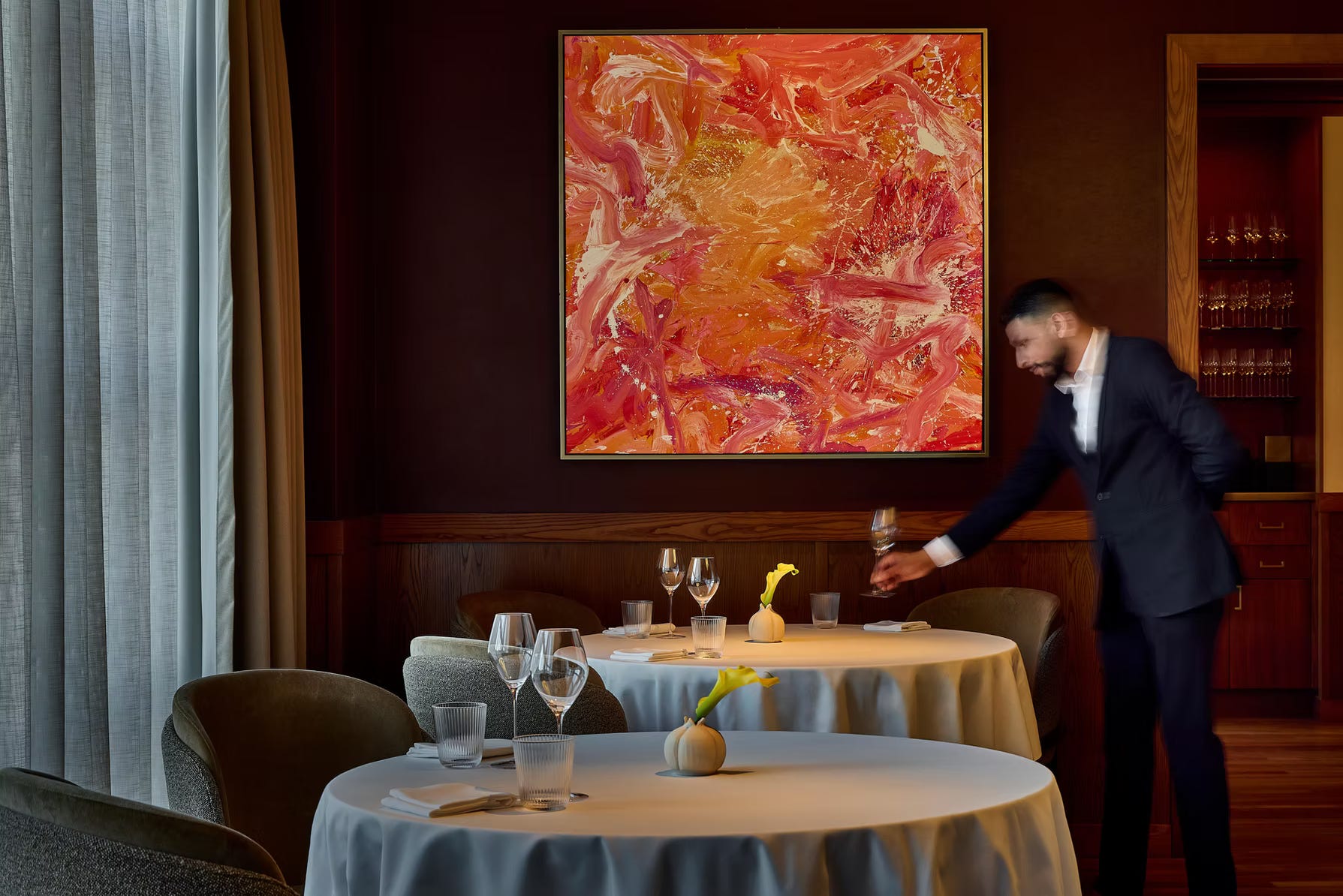
Photo credit: Faraway Hotels. Chef Sujan Sarkar has opened the New York outpost of Indienne at Henry Hall in Hudson Yards, following the success of his Michelin-starred Chicago restaurant. Designed in collaboration with Mapa Mueller, the 34-seat interior unfolds through a series of intimate rooms, moving from warm ochre and cream tones into deeper burgundy and wood finishes. Woven ceiling panels, tailored millwork, sculptural glass lighting and blush banquettes give the space a residential quality, while vibrant, Holi-inspired artwork forms a visual link to the Chicago original. A separate private dining room takes a more expressive approach, with patterned walls and statement lighting.
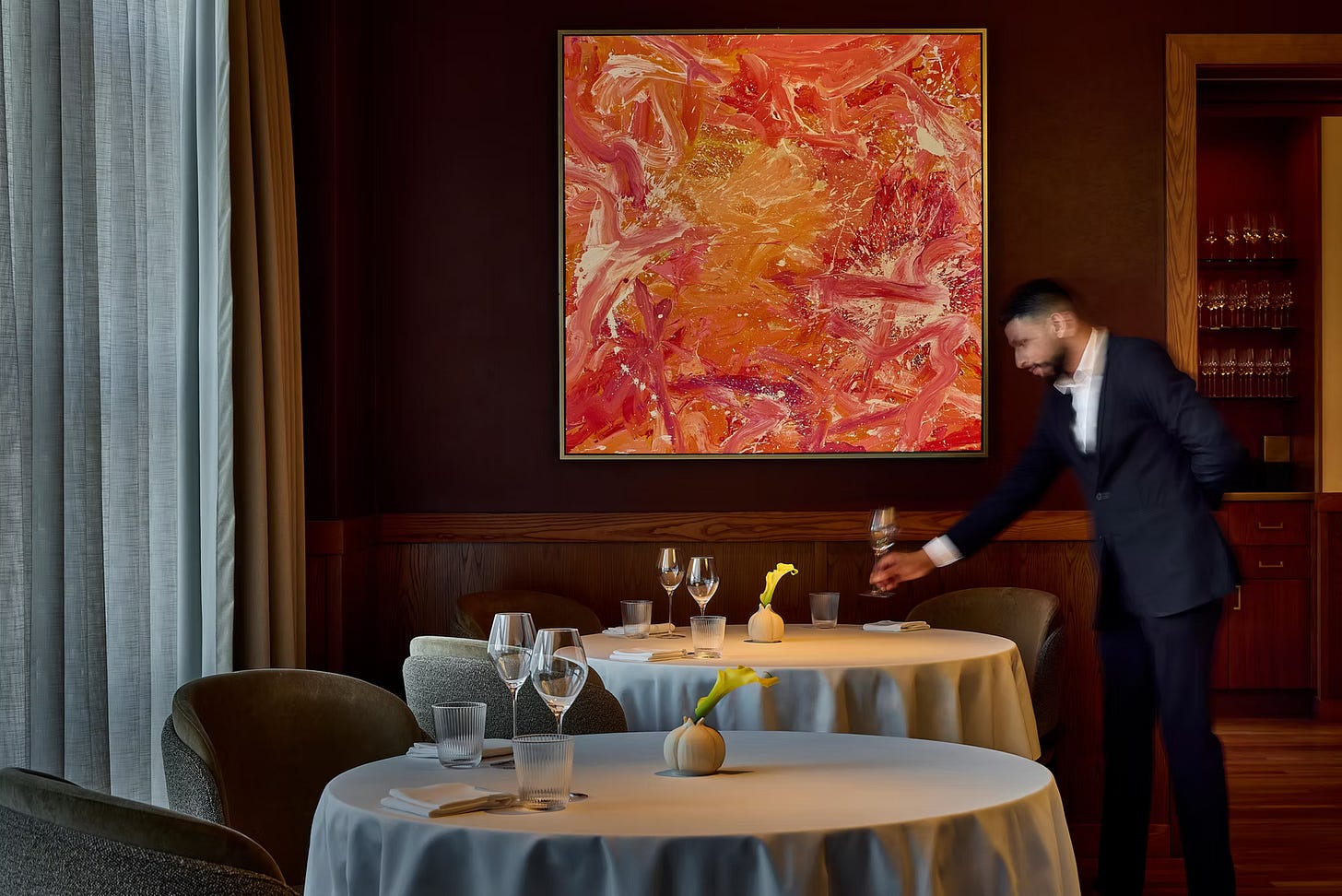
Photo credit: ABV Hospitality.
MIND
I wouldn’t call myself a devotee of Arthur Brooks, the internet’s favourite happiness guru, but a recent comment of his caught my attention. He was reflecting on diversity, and pointed out that we tend to reduce it to demographics, missing a crucial component: the experience of being around those who think differently from us. That includes, perhaps most uncomfortably, those with opposing political views.
Diversity is important to me. The thought becomes more pressing as I imagine having children. Where we end up living, which schools they go to, the people they meet and the world they come to see as ‘normal’ are all weighty things. I’d hate for them to grow up in a place where everyone looks much the same, earns about the same, shares similar experiences and holds the same beliefs—only to mistake that narrow slice of life for the whole world. But there’s a big difference between living in a diverse place and actually leading a diverse life. Cities like New York or London accommodate every imaginable person, but it’s all too easy to drift through a very confined corner. We might toast diversity in principle, while we gather friends who share similar viewpoints.
Political allegiance, especially, can become a proxy for almost everything else, like a person’s values, intellect, education, postcode, media habits—even whether we think we might get on. More and more, it seems you can guess someone’s politics before you know anything else about them. I see why, but I don’t buy into the idea that open-mindedness means treating every belief as equally valid. Political diversity isn’t on the same footing as racial or cultural diversity; political beliefs are ideas, and ideas are meant to be questioned. Still, I find it dispiriting to build a life where politics is a filter for friendship. If everyone I’m close to reaches similar conclusions, reads the same papers and sees the world through the same lens, I’m not sure I can honestly say I value diversity as much as I’d like to think. So I suppose I’m after pluralism. To remember that curiosity isn’t the same as surrender, and that being true to your values doesn’t mean existing in a reality where they’re never put to the test.
THINGS
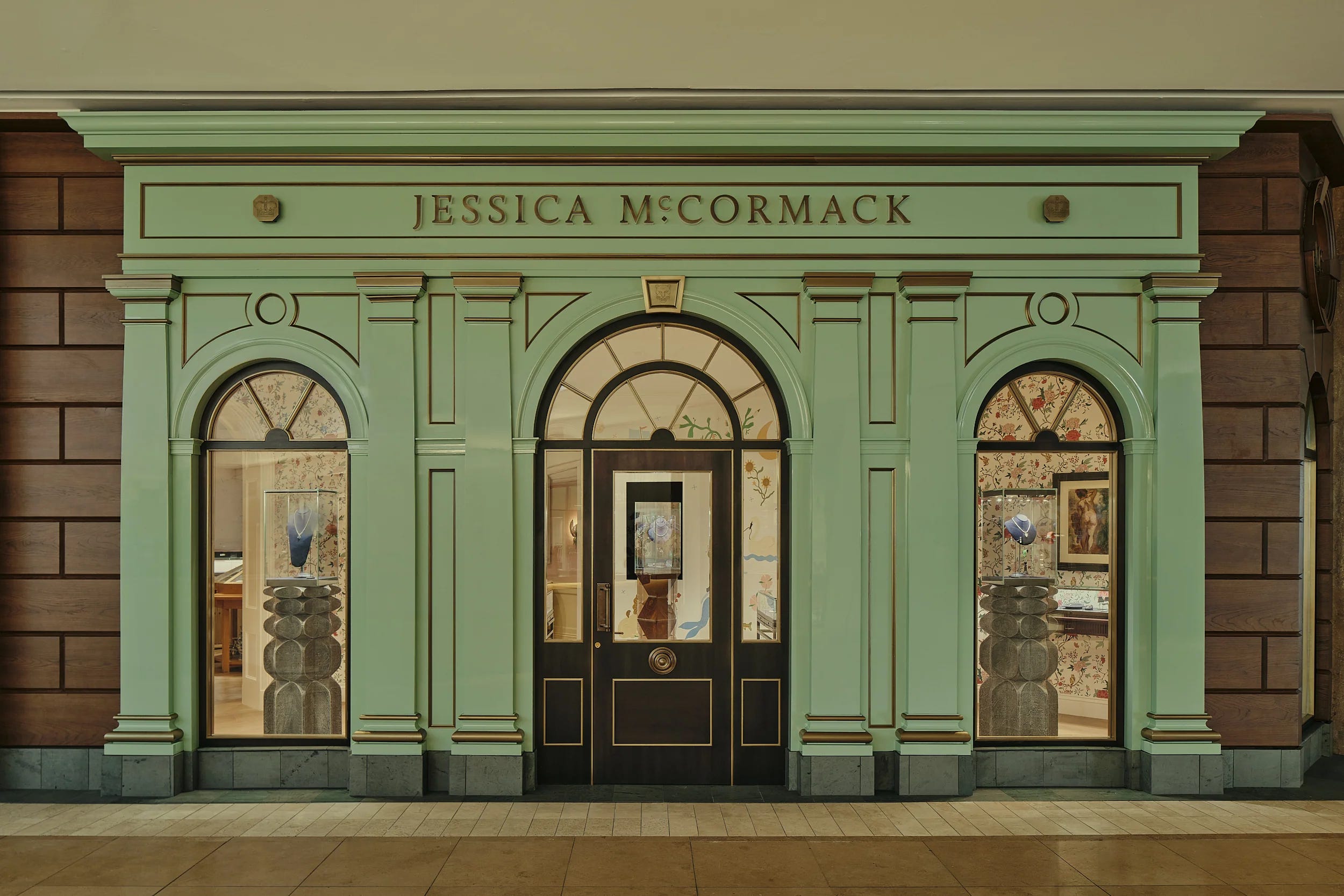
Did you hear? Jessica McCormack has opened a new West Coast store in South Coast Plaza. The interiors echo her townhomes in London and New York, and her whole concept of ‘day diamonds’ couldn’t be more fitting for this relaxed, albeit refined, state. I’m not totally sure how I feel about this exact location, but who really cares.
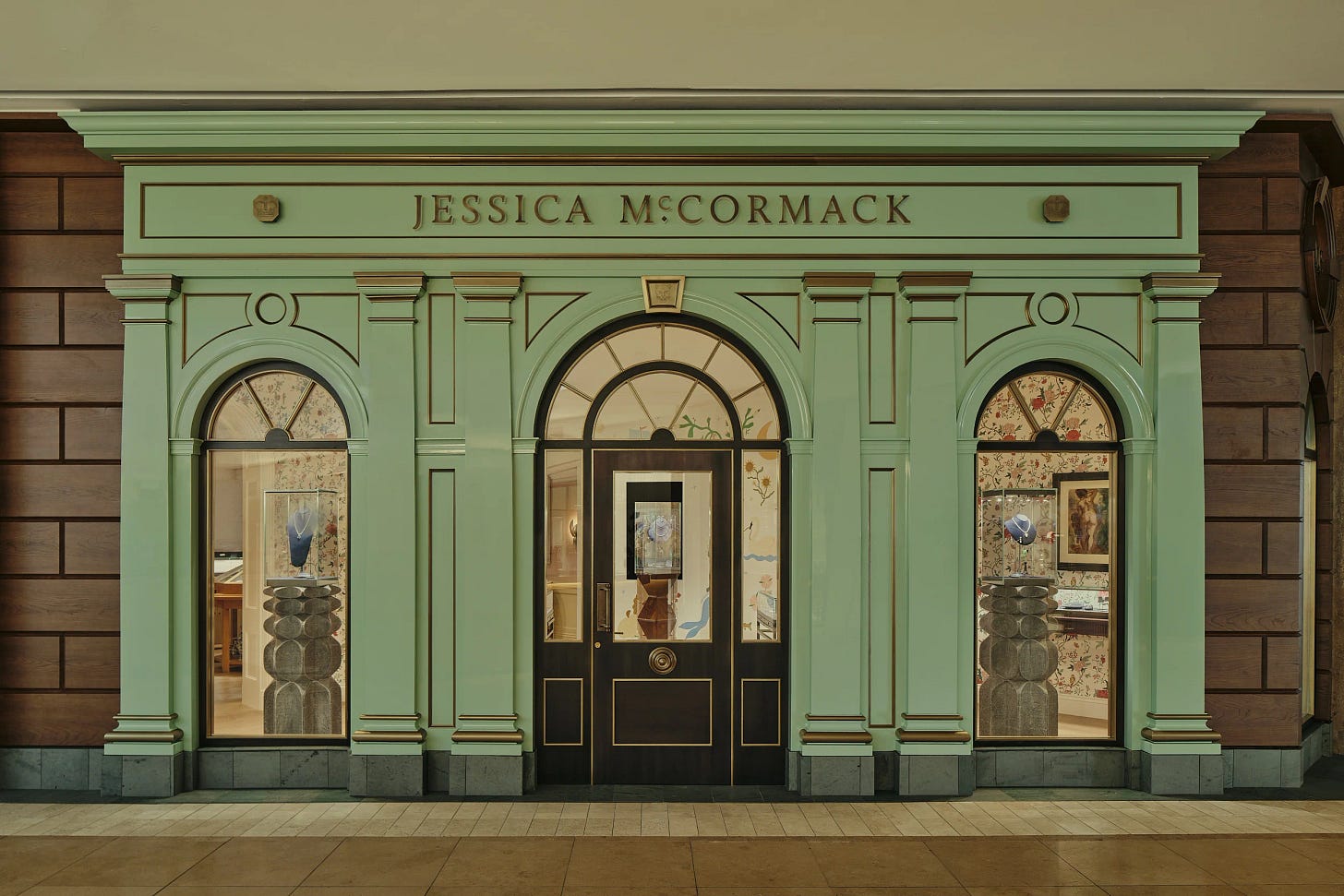
Photo credit: Jessica McCormack. My friend sent me this video, and all I’ll say is that we need to bring back this HGTV.
UNTIL NEXT TIME
Thank you for reading and supporting The Other HAFH. I’ll catch you next week.
In a dining room this stops being a design question and becomes a service one. Flowers near the pass will flatten every aromatic white on a list, and in most rooms nobody in the design conversation ever decided that. Scent changes how everything else in the room is perceived.
The most sophisticated scent architecture may be what guests never smell: cleaning chemicals, kitchen exhaust or an overenthusiastic lobby diffuser......some are truly yuck!