

Like many, I’ve been hooked on the new season of The White Lotus. The way that this show in particular portrays luxury is so biting, it’s both absurd and aspirational.
It’s got me thinking about wellness hotels, you know, the kind that promise transformation but package it into rigid, almost theatrical rituals.
Detoxes, silent retreats, obscure Eastern philosophies, all neatly arranged into bespoke programmes. It’s very curated, very expensive and very contradictory.
I find it fitting that this season is set in Thailand. Where better to explore the contradictions of modern wellness than a place designed to strip you down spiritually, emotionally, and sometimes, quite literally, while charging five figures for the privilege?
Because wellness, when positioned as a luxury experience, is often just another form of control.
See, for many high-net-worth individuals, time off has to be productive. They don’t simply lounge by the pool. They need structure, regimes. Because relaxation is yet another thing to be hacked and measured.
And so, these retreats promise a reset, but only within a carefully designed environment, delivering exclusivity disguised as meaning. Or indulgence disguised as discipline.
But the appeal isn’t just about health. Oh no. As with everything today, it’s about identity.
To retreat to a remote, cutting-edge sanctuary in the middle of nowhere, where phones are confiscated at check-in and meals are part of a ‘protocol’, isn’t just self-care. It’s a statement. A loud one. It declares that one values self-optimisation as much as material wealth.
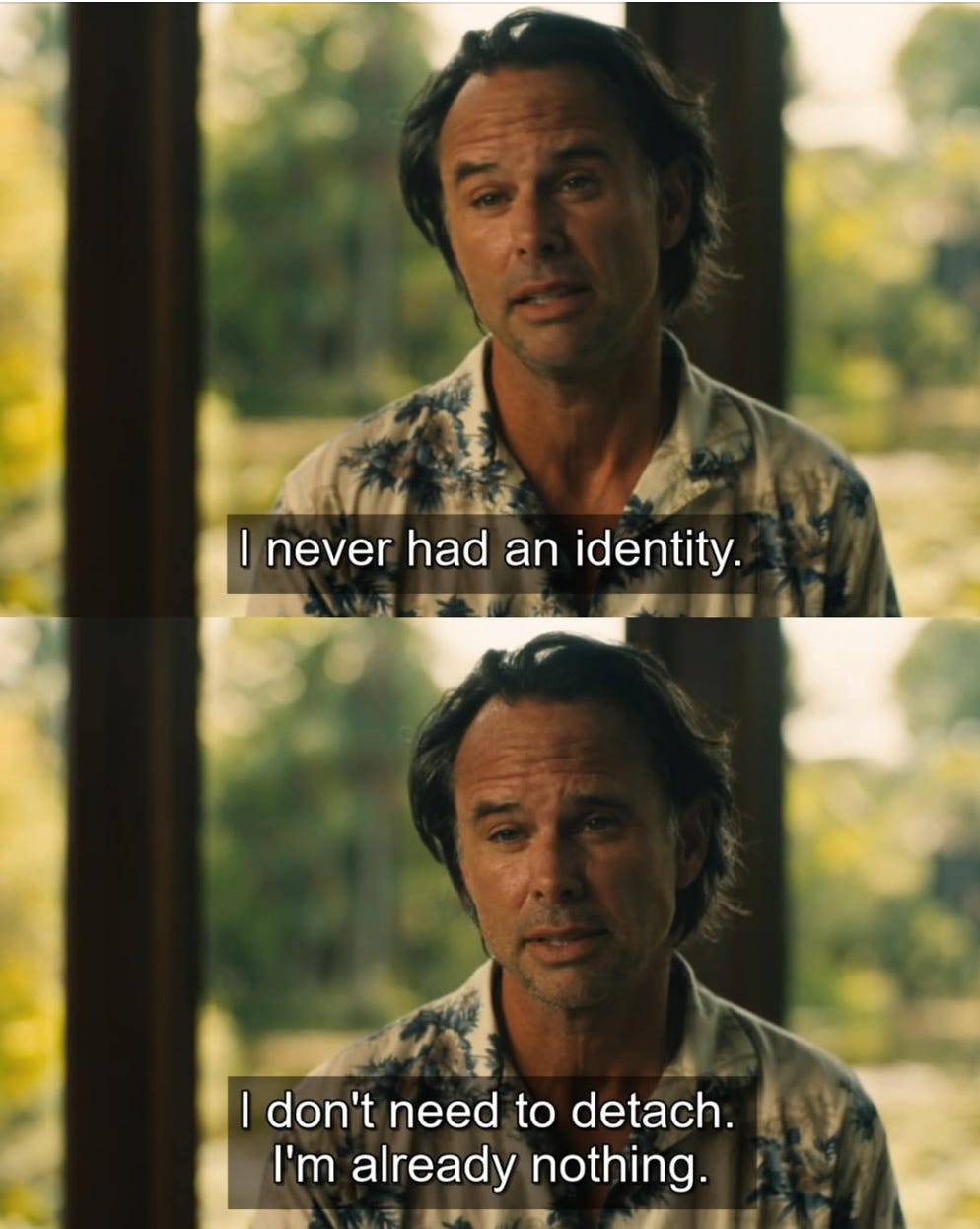
This is why these retreats succeed. They’ve turned wellness into a finely calibrated luxury product.
But when wellness becomes a luxury product, it ceases to be about wellbeing. It becomes an exclusionary practice that thrives on the very insecurity it claims to cure.
These hotels sell a lifestyle of balance and purity while subtly reinforcing the notion that, without them, you’re somehow lacking. It’s a Goop-ification, where the best version of yourself is to be bought, not cultivated.
I might roll my eyes at the turmeric shots and the oxygen chambers, but I also buy into it. Because deep down, there’s a thrill in unlocking yet another tier of modern luxury.
The wellness industry understands this perfectly. It sells belonging. It tells us that the highest form of self-care isn’t intuitive, it’s expansive. It’s technological, and, crucially, earned.
Wellness, at least in this form, was never meant to be democratic.
Awkward.
Have we lost sight of what it means to feel well? To unwind without curating the illusion of doing so?
The need to optimise even our stillness, to make self-care something that must be demonstrated, doesn’t feel particularly restorative. It’s quite the opposite actually—it sounds exhausting.
And none of this is new. This has been the trajectory of wellness for some years now—taking centuries-old philosophies and repackaging them into something glossy, commercial and inherently Western.
But you can’t strip these traditions of their depth, categorise them into purchasable experiences, and call it wellness.
Ayurveda, ancient Chinese medicine, meditation, yoga… these weren’t designed as productivity tools per se. They were interwoven with belief systems and lived experiences. There’s a difference between engaging with these practices in a way that honours their complexity and co-opting them for aesthetic or status-driven pursuits.
And yet, that’s exactly what many high-end wellness retreats do. They flatten tradition and culture into sleek, transactional experiences, designed for high-paying clientele.
And no, it’s not about gatekeeping. Not at all. It’s about recognising the difference between adaptation and, well, I hate to say it, but appropriation.
Cultures evolve, ideas inevitably cross-pollinate. But at what point does adaptation become dilution? And when does reinterpretation turn into erasure?
The very idea of wellness as a luxury commodity is at odds with the philosophies it so freely borrows from—most of which were never designed to be exclusive, let alone monetised.
But here we are, in a world where enlightenment is something you can book in advance.
So, is there a way to engage with these traditions without turning them into status symbols? Is there a middle-ground between blind consumerism and outright rejection? Possibly. But it requires a shift in perspective. We need to see wellness as something to be lived.
We ought to question why we feel the need to commercialise wellness in the first place. Does true wellbeing require exclusivity and technology? Certain practices have become so bound by external validation that they’ve stopped being about care altogether.
If nothing else, it requires a little self-awareness. We can appreciate the irony of indulging in a $10,000 detox.
Anyway, what is the main takeaway? Perhaps it’s just the fact that we all know where this is going. And at what point does it stop?
Cultures naturally evolve through exchange, but the line between adaptation and dilution, or reinterpretation and erasure, depends on respect and context. When core meanings or origins are lost, cultural appreciation can shift into appropriation or distortion.