

Almost every hotel announcement that reaches me promises a sense of place. But what does that even mean anymore? City hotels claim it, and so do desert camps, 30-room inns and 300-room towers alike. The phrase has been so thoroughly rinsed that I now believe it says more about the PR team than the property.
What I almost never see is anyone in the business admitting that much of what opens each year could be anywhere at all. To do so would require explaining what the alternative might look like.
Christian Clerc, president and chief executive of Auberge Collection, did both this week. He told The Times that a number of the luxury hotels opened in the past five years or so are adrift in a ‘sea of sameness’, so formulaic that some could be dropped into Dubai without seeming out of place. He put forward Auberge’s first London hotel, Cambridge House, as the alternative.
He’s half right. Cambridge House will stand out wherever its programme honours the building’s original purpose, and blend in wherever it follows the current luxury hotel blueprint. By programme I mean the architect’s sense of the word, the mix of spaces and uses a building is asked to contain—not to be confused with hotel programming. Sameness, then, is a problem of programme, not architecture. And no building, however irreplaceable, can solve it on an operator’s behalf.
POINT OF DEPARTURE
About the building itself, there’s no argument. The mansion at 94 Piccadilly, overlooking Green Park, was commissioned by the 2nd Earl of Egremont in 1756 and spent the best part of two and a half centuries entertaining. Queen Victoria was received there. And Lord Palmerston lived there. As prime minister, he used it as a stand-in for Downing Street. From 1865 to 1999 it was the Naval and Military Club, with Kipling, Ian Fleming and T.E. Lawrence among its members. It was known as the ‘In and Out’, after the signs on the gateposts directing carriages.
So yes, Clerc is right: Cambridge House could only be in London. But look at the company The Times puts him in. Raffles opened 120 rooms in the Old War Office on Whitehall in 2023. Meanwhile, the former American embassy in Grosvenor Square is now the Chancery Rosewood, and Hilton’s Waldorf Astoria is due in Admiralty Arch before the year is out. They all occupy buildings that truly couldn’t exist anywhere else.
At the top end of the London market, the irreplaceable landmark is no longer the exception. We have a landmark monoculture, which brings its own brand of sameness. If any of these hotels ends up feeling interchangeable, it won’t be because the building could be airlifted to Dubai. It’ll be down to what’s been put inside.
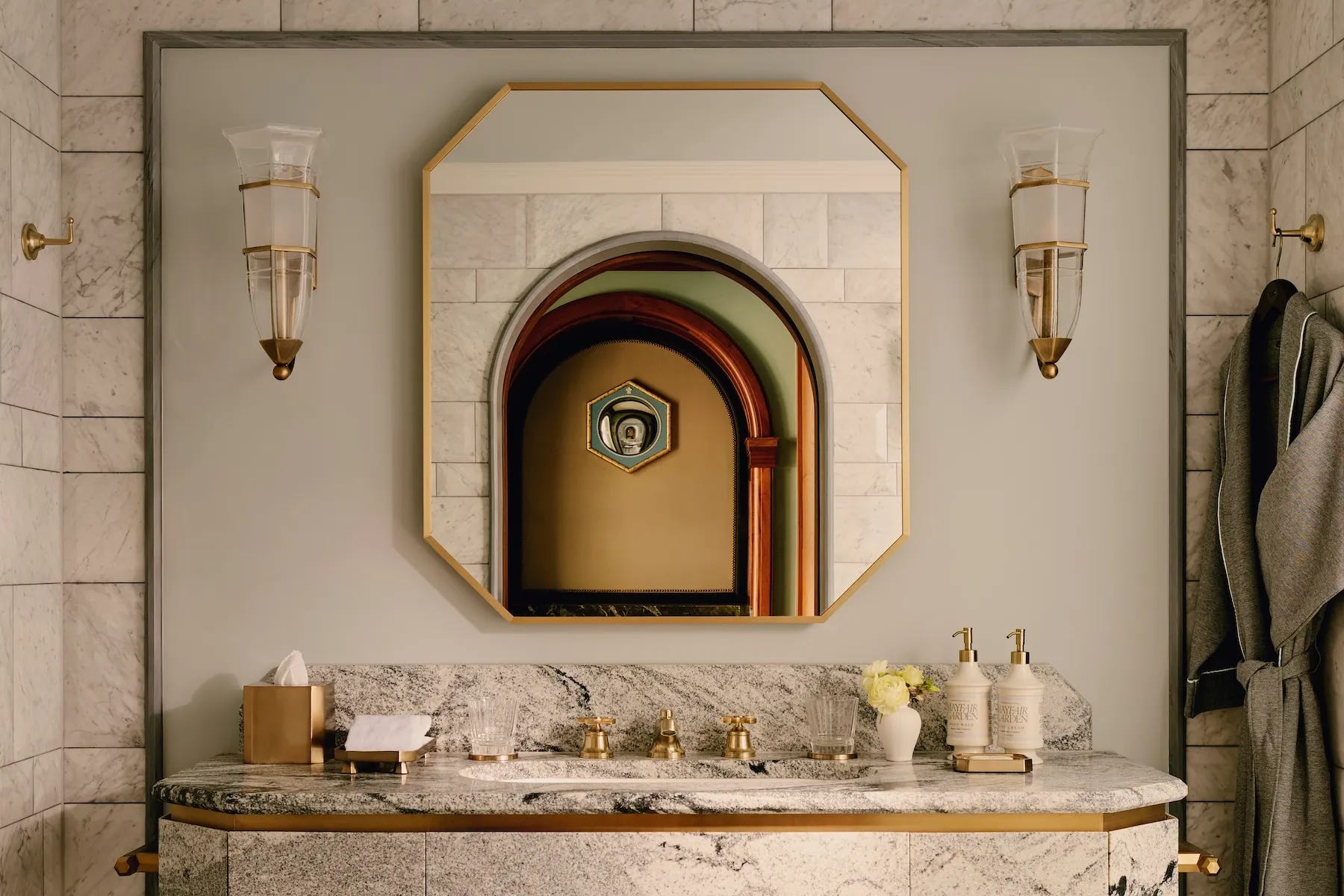
The mansion belongs to the Reuben brothers and forms part of their billion-pound regeneration of 1.3 acres of the Piccadilly Estate. They’ve brought in Auberge to run the show. Admiralty Arch, it’s worth noting, is also a Reuben Brothers property, and it’s going to Hilton. The irreplaceable part of Cambridge House belongs to the owner, but the operator brings almost everything else: the restaurants, the bars, the spa, the club, the service and, crucially, the story told about all of them.
Clerc is refreshingly open about that contribution. He calls exceptional dining and wellness the brand’s way in, and argues that many hotel companies have given up on food and drink. I’m inclined to agree with the food and drink part. He also says that hotels built solely for travellers are an outdated idea, and that someone popping in for afternoon tea with their daughter is as much an Auberge guest as anyone staying overnight. It’s a sound idea, if a familiar one. The catch is that dining and wellness are exactly where luxury hotels now appear most alike.
Auberge’s own boilerplate describes 39 properties, each unique, all sharing one approach to luxury. That’s a fair definition of a recipe, and not necessarily a damning one. But it means the real question at Cambridge House isn’t whether the building is singular. It’s which parts of the programme come from the house, and which come from this recipe.
Take the club. It looks the most generic and turns out to be the least. The private members’ club is now one of the most predictable lines on any new luxury hotel’s fact sheet. But at 94 Piccadilly, it’s the most site-specific element on the plan. This is a house built to entertain the political and social elite, which then spent 134 years as a club. When Laura Gonzalez’s members’ club opens in 2027, the building will simply be resuming an old habit instead of adopting a new concept for the sake of it.
There’s a slight friction here, though. A members’ club is a door that closes, which sits awkwardly with Clerc's pitch to the Londoner dropping in for tea. Then again, in a house nicknamed for its way in and its way out, that might be the most historically faithful detail of all.
Major’s is less clear-cut—part of it belongs to the house, and part of it doesn’t. Major Food Group’s restaurant takes the restored Georgian ballroom and a courtyard planted with jasmine, the rooms where the house always did its entertaining. Parts of the brief honour that history. The menu is built on British ingredients, and British makers have been commissioned for the china and for the trolleys that carve spit-roasted prime rib at the table. The trolley even has a London pedigree—Simpson’s in the Strand has been wheeling roast beef to tables since 1848.
But the format is unmistakably American. Tableside theatre, formal caviar service, seafood towers and a list of ten martinis are the calling cards of the group behind Carbone. It’s a signature that’s already travelled far beyond Manhattan. Auberge describes Major’s as an American chophouse in conversation with the London grill, which is a neat description of a compromise. It’s an effective way to fill a ballroom, but it’s a format that could fill one anywhere.
Then there’s the spa, which absolutely belongs to the brand. It takes up three floors, with hydrotherapy, a heated pool, six treatment rooms, a bathhouse, a gym and a circular relaxation lounge around a fire pit. That’s now close to the standard for any urban luxury hotel that wants to be taken seriously. To make it local, the press material reaches past the building altogether, as plenty of hotel spas now do, invoking Britain’s healing lore and Roman bathhouses.
Nothing about this particular Georgian townhouse suggests a bathhouse, so the story has been borrowed. Clerc hopes the spa will build a following of its own, and perhaps it will. It remains, though, the most interchangeable part of Cambridge House.
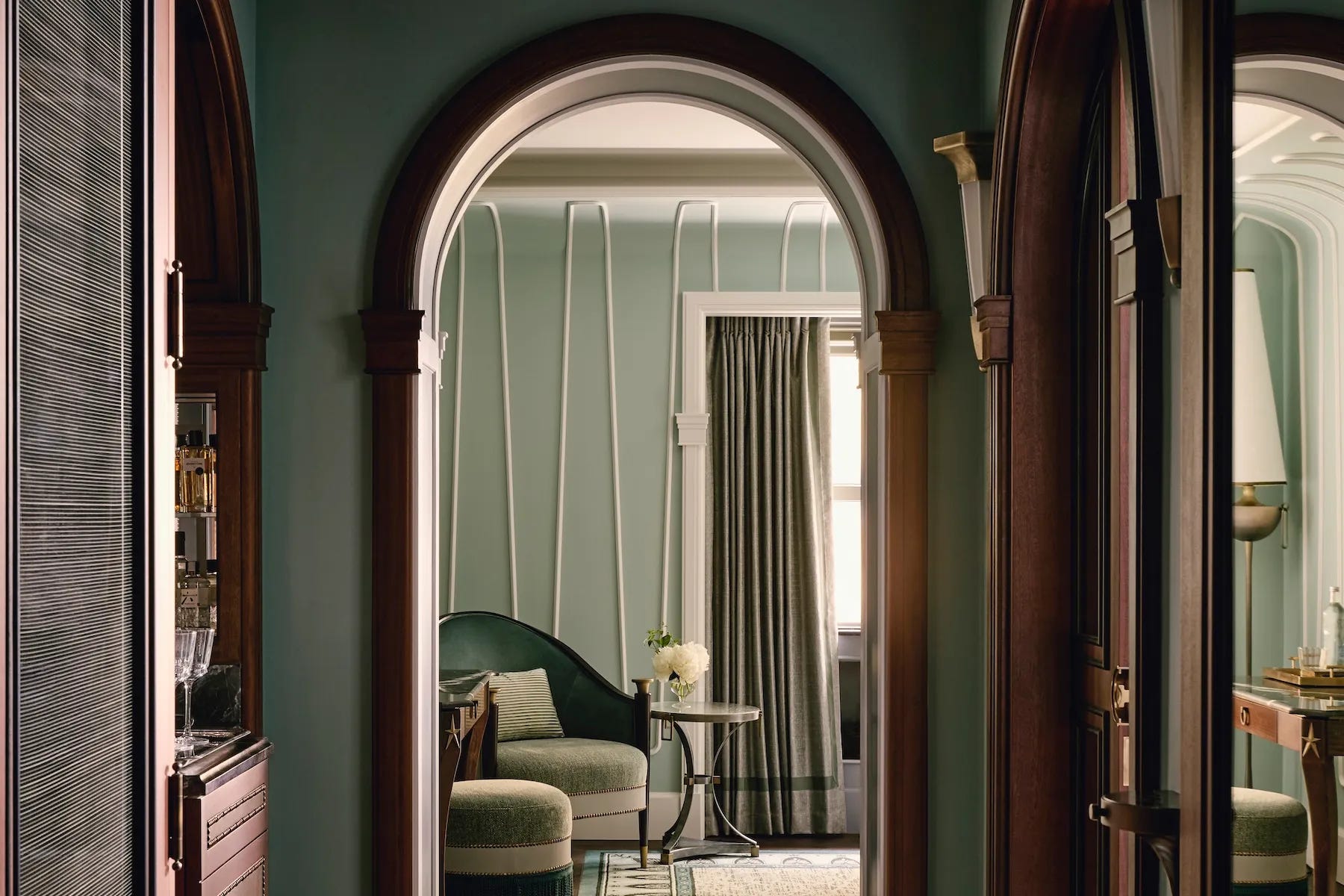
While Gonzalez is designing the wellbeing floors as well as the club and the signature bar, Jean-Louis Deniot is designing the rest of the hotel and its guest spaces. It’s his first hotel in Britain, as it is for Gonzalez, and so far there are only renderings. Auberge hasn’t said how many of the 102 rooms are in the Earl of Egremont’s house and how many are in the buildings next door.
But Sanchita, what are you on about? Rooms at Cambridge House start at £1,250 a night. At that price, guests are entitled to expect a pool, a spa and a restaurant that’s actually good. Any hotel that declines to provide them would simply lose bookings to the OWO and the Chancery.
To that, I would say: fair point. A familiar programme is how a Grade I house pays for its restoration and upkeep, and how a billion-pound regeneration earns its return.
The trouble is that the standard programme keeps getting referred to as ‘sense of place’. It would be more convincing to let the generic parts stay generic and save the storytelling for the rooms where the house has earned it. A ‘sea of sameness’ is something that the luxury market can live with, as long as we stop pretending each hotel is an island.
There’s a better argument for Auberge, and it’s the interior design. The Times notes that the company ensures no two of its properties are alike, and in the ones I’ve stayed in, that holds. Each has its own creative direction as opposed to a house style, and often, that direction isn’t Auberge’s alone. At Bowie House in Fort Worth, for example, the taste is that of the owner: Jo Ellard. Her fantastic collection of Texas art is on the walls, and BOKA Powell built to her vision. Auberge had the good sense to let it lead, and that restraint is an admirable skill.
In a house like this, an operator reveals itself by what it adds and, more challengingly, by what it chooses not to add. Judging by the programme so far—restaurant, bars, members’ club, three floors of wellness, a gym, studios and event rooms of every size—Auberge appears to have declined nothing. That may be commercially wise, but it isn’t really an answer to sameness.
If it were up to me, I wouldn’t cut the spa, but I’d cut its story, and let it be a very good spa on its own terms. The club stays, because the house has more than earned it. However, the ballroom is where it gets interesting. There’s no rule that a Georgian room in London has to serve British food, and plenty of the city’s best hotel restaurants don’t. Obviously. But once a hotel’s case for being different rests on its building, the building ought to set some of the terms, rather than just lending its façade. That’s the standard I’d hold Cambridge House to.
Auberge’s answer to sameness will be in what Deniot and Gonzalez do inside the house, which we can’t judge until it opens.
WORTH THE DETOUR
INDUSTRY
EDITION opens its first African hotel on Cape Town’s working harbour
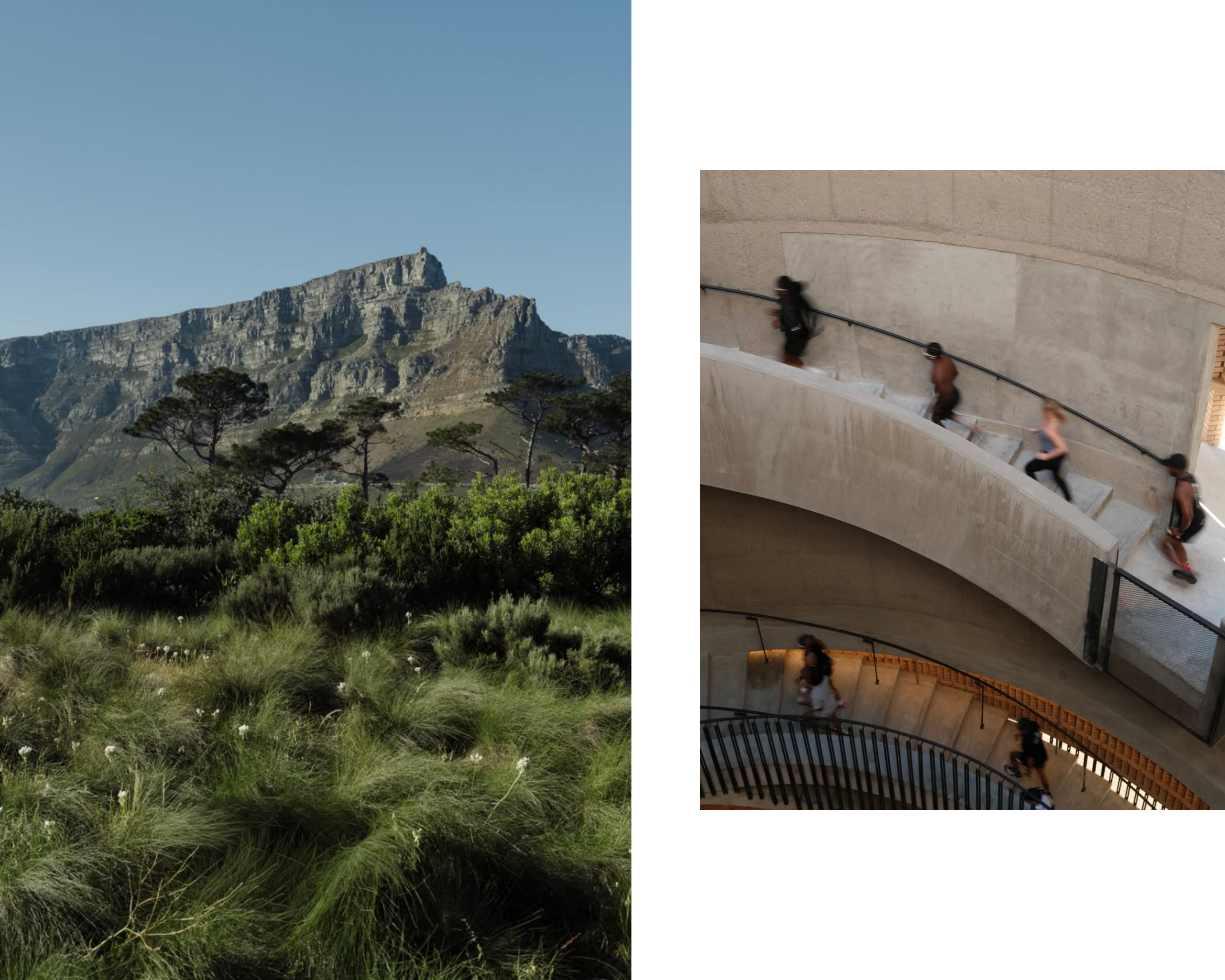
EDITION’s first hotel in Africa opened on Tuesday at Quay 7, on Cape Town’s V&A Waterfront. Neri&Hu worked with Cape Town-based architects to keep the building long and low, with pitched roofs that nod to the warehouses that once stood there. More than six million bricks were laid by hand, in patterns that change as you walk along the façade.
The feature I most want to see in person is The Drum. It’s a cylinder open to the sky at the centre of the hotel, with a spiral staircase leading up to a viewing platform. Most hotels hide their circulation, but here, the climb becomes a slow reveal of the harbour, Table Mountain and the Atlantic.
The art is taken just as seriously. Southern Guild curated the collection, which includes Zanele Muholi’s portraits in the Punch Room, and Design Network Africa sourced work from makers across the continent.
Dubai’s Shangri-La will become offices, and keep the hotel’s amenities
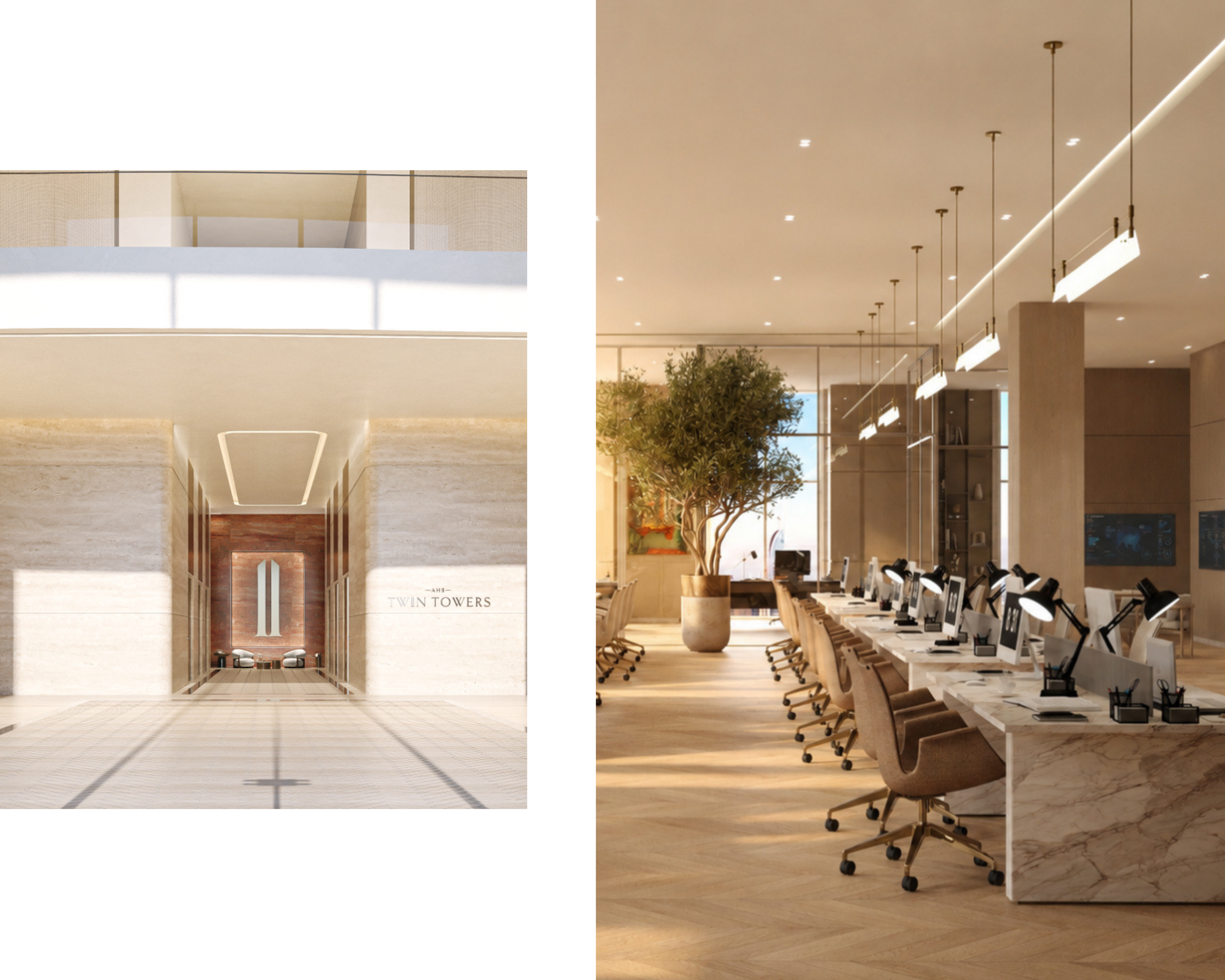
Hotels usually take over old offices, not the other way round. AHS Properties bought the Shangri-La on Sheikh Zayed Road in June for AED1.1 billion, and this week announced that the tower will become AHS Twin Towers, a $1.3 billion office development designed by Gensler, due in 2028.
Dubai has a long-running shortage of top-grade office space. Grade A buildings are around 95 per cent full, and average office rents rose 16 per cent in a year. Hotels, meanwhile, have cooled. AHS sells its offices by the floor rather than renting them out, and says more than 30 per cent of this tower is already booked. A working luxury hotel, in other words, is now worth more as somewhere to work.
The plans keep more than 30,000 sq ft of wellness and fitness and more than 12,000 sq ft of dining, and sales listings add a spa, a pool and a cigar lounge. It’s the Cambridge House argument from the other side. If the programme that makes so many hotels feel interchangeable can outlive the hotel itself, it may never have been unique to the hotel in the first place.
Silversea, the luxury cruise line, is opening its first hotel
The Cormorant at 55 South is in Puerto Williams, on Chile’s Navarino Island, and only passengers on Silversea’s Antarctica fly cruises can stay there. For now, guests fly in from Santiago, spend a night, then fly on to King George Island to board their ship. Silversea plans to move the flight base to Puerto Williams eventually.
The 150 rooms were made as finished modules in Mendoza, Argentina, with the art already on the walls. They then spent more than a week travelling south. Silversea talks about authenticity and its locally based architect, and the rooms look out on forest and the Beagle Channel through floor-to-ceiling glass. That might sound like a contradiction, but I don’t think it is. At the end of the world, prefabrication may be the only way to build well.
MIND
I took a politics test this week, and I’d recommend it. It’s an online quiz that plots you across a dozen axes, and it’s quite interesting to see where your morals and political instincts land once they’re laid out in front of you. You can take it here. No email sign-up needed.
I’ll let you form your own opinion of me. But the philosopher it matched me with was Epicurus, which made me laugh, given that I brought him up only last week. Regular readers will know how much I admire him, and I can’t think of better company.
The test also told me that the country I’d thrive in is Australia. I won’t argue. Put me in a Peter Stutchbury house, and I’ll consider the matter settled.
UNTIL NEXT TIME
Thank you for reading and supporting The Other HAFH. Don’t get too silly this Halloween weekend. I’ll catch you next week.
A building can be irreplaceable and still be asked to perform a very replaceable evening. I would rather the storytelling stayed in the rooms the house has already earned.
The line about the operator revealing itself by what it adds and what it leaves out is the sharpest part. A famous building or a famous brand can open the door, but it cannot do the rest of the work. The places that stay with you are the ones where someone made real choices, and left the rest alone.