

A few weeks ago, I wrote about Philippe Starck inventing a fictional couple to help guide the design of his new project in Portugal. You can read that piece here:

Personally, I’m all for it. Giving an imaginary person their own tastes and quirks can be a useful way to make design choices, and guests don’t even need to know the backstory to appreciate the end result.
But it seems I haven’t quite finished thinking about it.
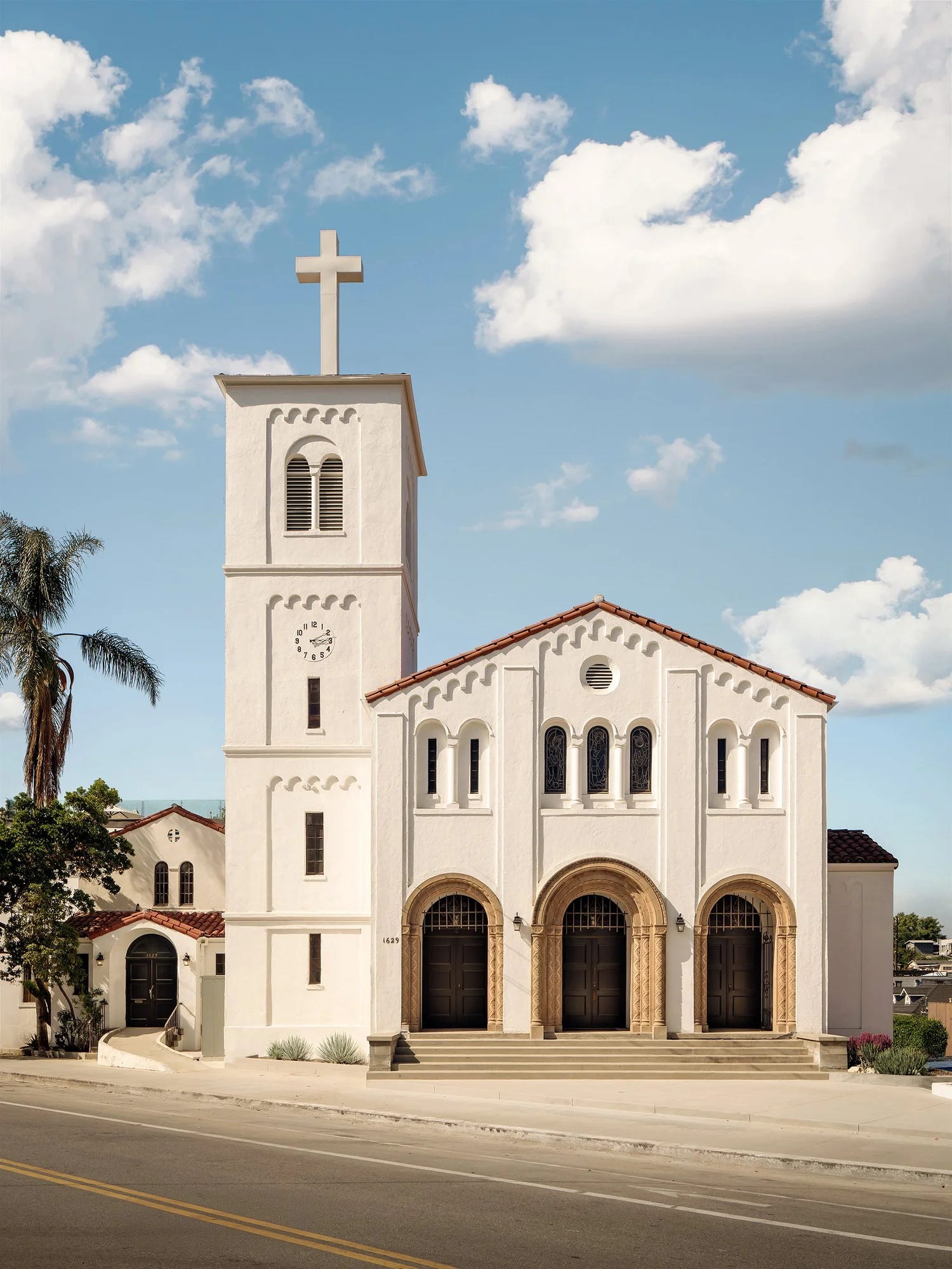
This week, my attention’s turned to another inhabitant at Hotel Lucile, a newly opened hotel in Silver Lake, Los Angeles. It’s housed in a former church that comes with a long and tangled history of its own, which makes me wonder: if a building already has so many stories to tell, what does inventing another one actually contribute?
POINT OF DEPARTURE
I’m not convinced that history must always determine a hotel’s future, but it’s important to be honest about what any conversion manages to preserve. Before getting into that, though, it’s only fair to acknowledge just how difficult it was to get anything up and running here in the first place.
Restaurateur Dana Hollister first proposed turning the church into a hotel back in 2011. By February 2013, local reporting described the former Pilgrim Church (originally built as Bethany Presbyterian Church) as largely idle, occasionally used for shoots. Residents, meanwhile, weren’t too enthused, as they voiced concerns about parking and the prospect of yet another venue serving alcohol in the area.
I’d have my own reservations if I lived next door. A small hotel with only 25 rooms doesn’t always mean it’s quiet. Restaurants and events bring in people who aren’t staying the night. For owners, those guests are good for business, but it’s understandable that neighbours would be wary.
The finished hotel still doesn’t have on-site parking, by the way. You have to rely on valet or whatever street spaces are available.
City approval came in 2014, only for the Katy Perry incident to follow. It wasn’t exactly the plot twist I had in mind when considering the fate of a former church.
Hollister filed for Chapter 11 bankruptcy on 6 March 2018. Much of the reporting has linked her financial difficulties to a dispute involving Perry and the Los Angeles archdiocese over a former convent in Los Feliz. The property in question was completely separate, but sadly, the financial consequences found their way here.
By 2020, Casetta had taken over Hollister’s lease and the plans for the hotel.
Another six years passed before the doors opened. There were talks about a soft launch in 2024 and a grand opening in early 2025, but the schedule kept shifting. I remember my early enthusiasm gradually giving way to indifference as the delays mounted. But after years of waiting, Hotel Lucile finally welcomed its first overnight guests on 14 September 2026.
Whose gathering place is this?
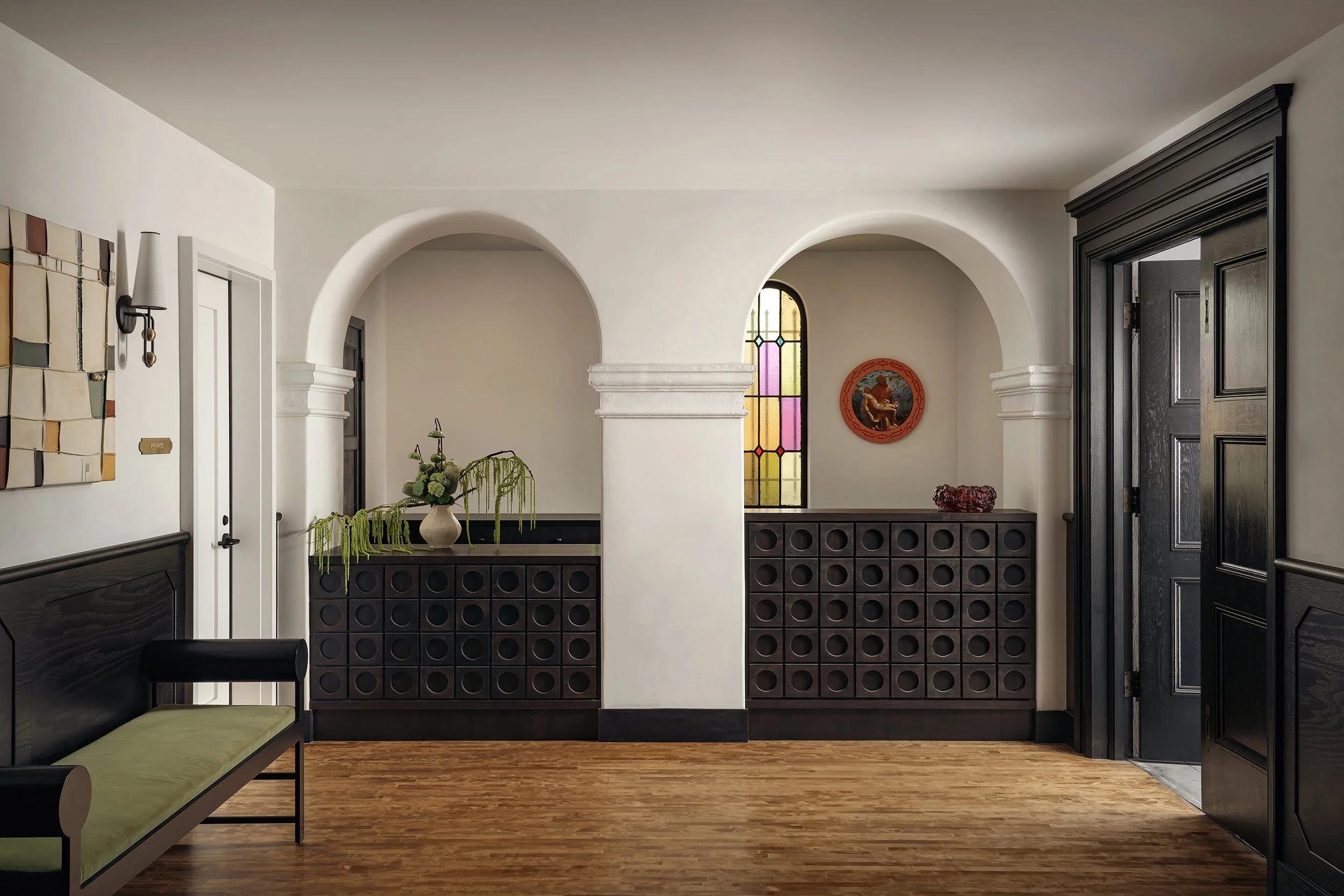
When hotels talk about community, we typically picture the people they hope to attract: diners, artists, collaborators and regulars. The neighbours who were worried about parking are a part of that picture, too.
And this is Silver Lake, where debates about gentrification are hardly new. By the time the hotel was proposed, fashionable restaurants and boutiques were already shaking up the neighbourhood, while rising property prices left some longtime residents questioning who all that change was really serving.
In its early years, East West Players used Bethany Presbyterian Church for rehearsals and performances. Founded in 1965, the theatre company emerged in response to a lack of roles available to Asian American actors, and the church gained cultural significance as it gave them a creative space when opportunities elsewhere were limited.
That’s the building’s history, but inheriting its architecture doesn’t mean automatically inheriting its former social purpose. Casetta isn’t obliged to bring back a non-profit rehearsal venue or start programming theatre.
On its own website, Hotel Lucile describes the former church as continuing its ‘long tradition of bringing people together’. And in one sense, it certainly does. People still gather here, albeit for different reasons. Whether that also makes it a meaningful gathering place for the surrounding neighbourhood will depend on how the hotel operates, not simply what it preserves.
The curation illusion
There are perfectly good reasons to preserve Lucile’s original architecture. Those inherited spaces lend the place its character and, not incidentally, provide an extraordinary setting for its F&B offering. Keeping the sanctuary as a communal space lets diners enjoy its scale together, while the choir loft provides a tiered, visually striking perch within the same walls. Elsewhere, the former altar has been repurposed for private dining.
While the architecture conveys something of the building’s past life, the furnishings introduce another layer of storytelling.
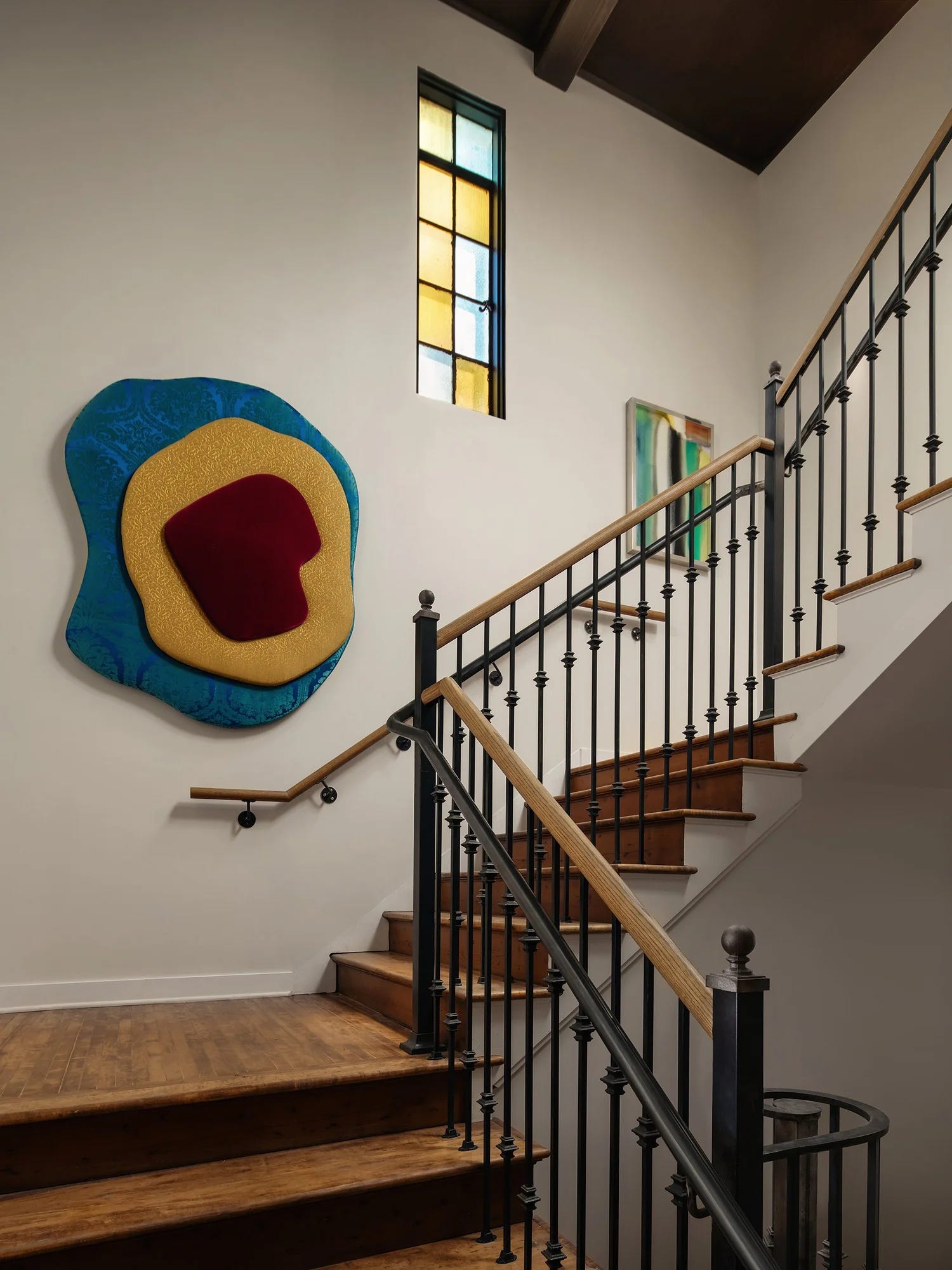
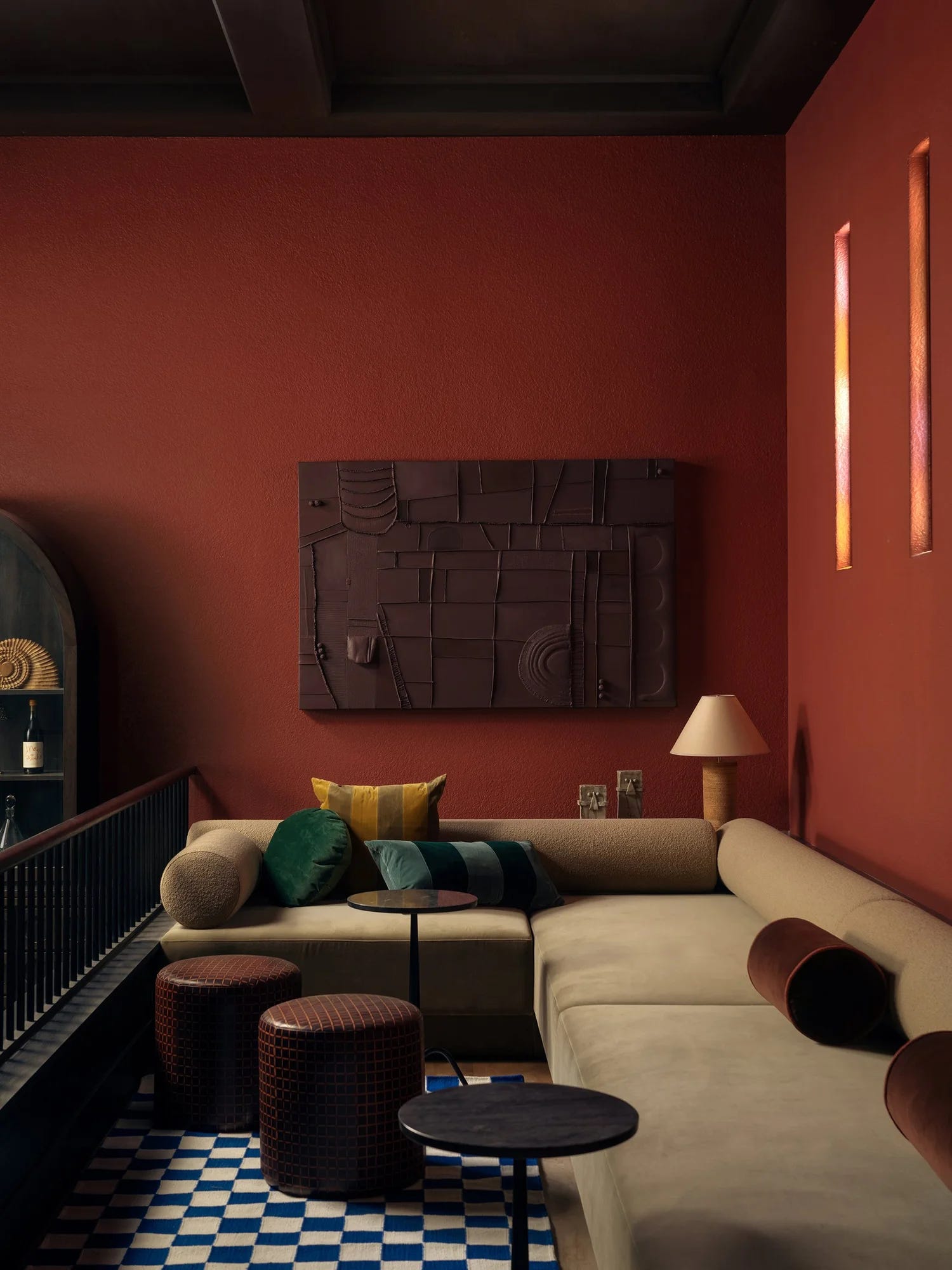
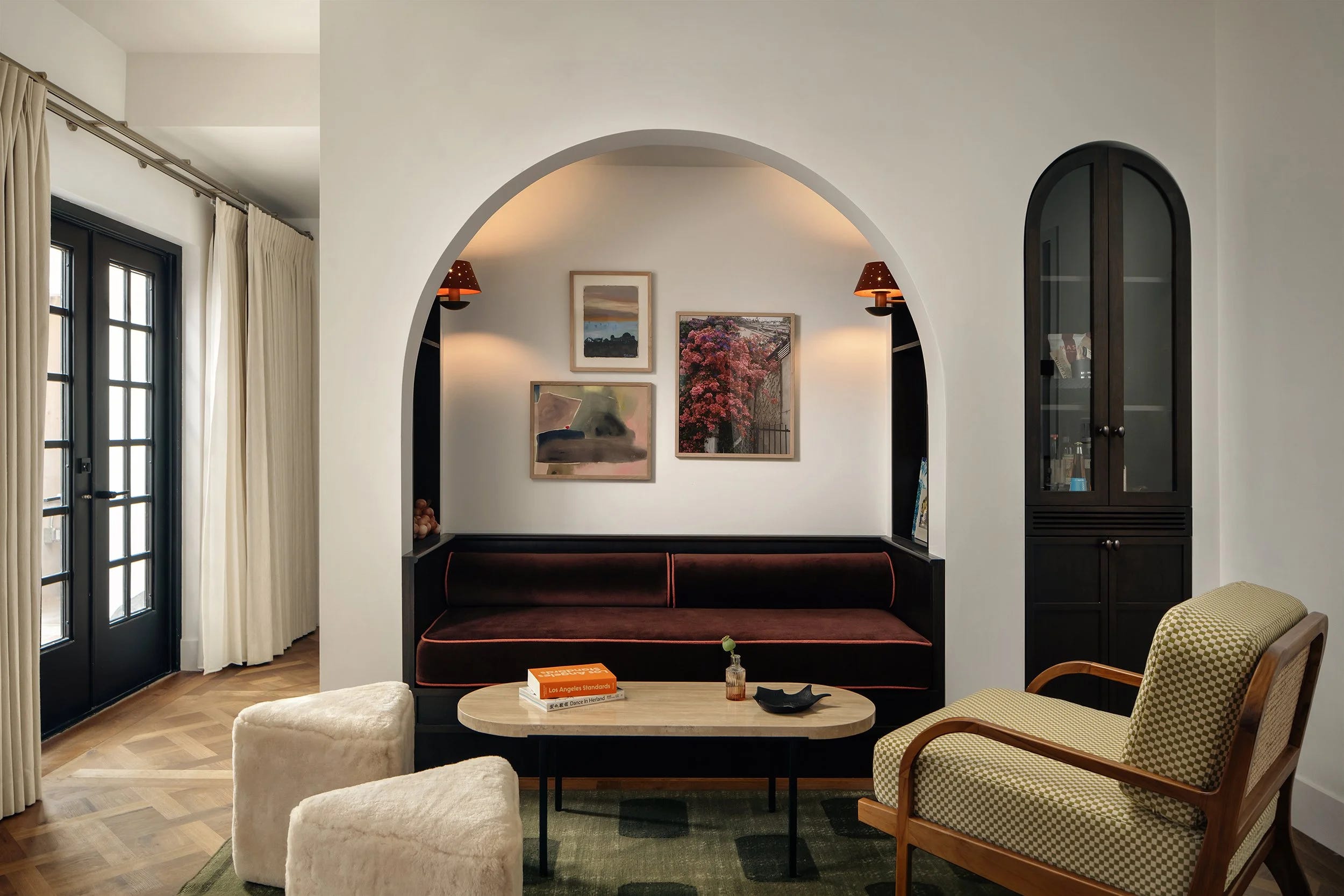
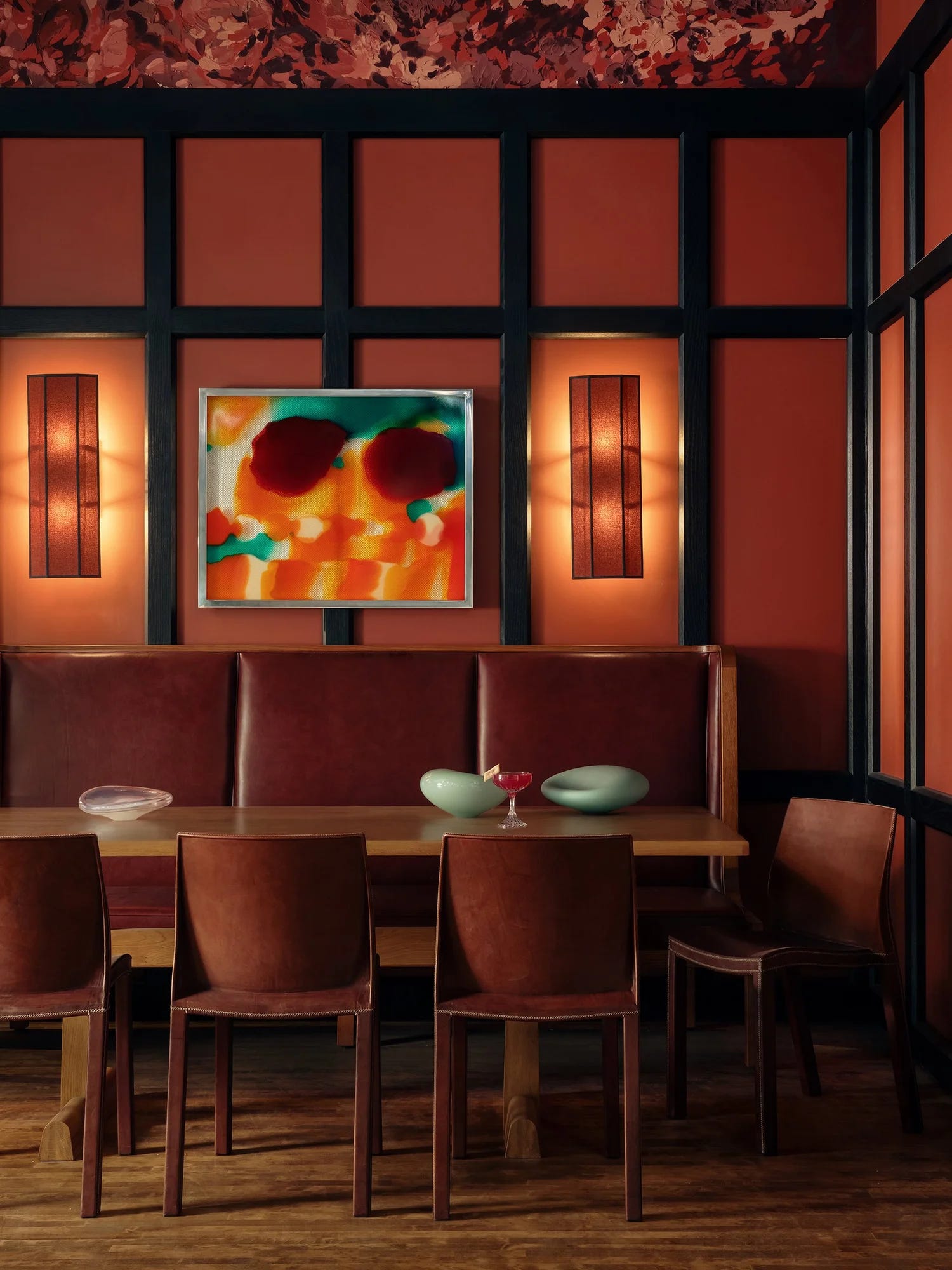
Electric Bowery drew on Peggy Guggenheim for inspiration, imagining the interiors as the home of an eccentric, well-travelled hostess, with art and furniture collected over the years. It’s a practical approach, if you ask me. The church gives you the grand spaces, but it hardly comes with a manual for mixing pieces from different eras to suit today’s luxury guest.
I can appreciate the reference without expecting it to tell the church’s story. After all, a muse—real or otherwise—can give an interior a coherent identity without necessarily telling us much about the building’s history. That doesn’t mean Lucile’s design ignores its setting. The preserved architectural details and works by local artists provide other connections to the place.
Perhaps that’s why I’m so fixated on narrative-led design these days. We talk so much about authenticity and a sense of place, but some of the most convincing interiors acquire their character through made-up stories.
There’s nothing inherently wrong with that. But perhaps the curation illusion begins when we mistake a convincing sense of character for the whole of a hotel’s connection to place. A good design narrative has its value, but the building’s history and relationship with its surroundings all have a part to play.
Parting thoughts
Conserving architecture is a physical act focused on the building. Creating a design narrative is a creative act concerned with its new identity. Establishing a neighbourhood role is an operational and civic undertaking. Hotel Lucile brings all three together, but that doesn’t make them interchangeable achievements.
For operators, it’s crucial to think about what claiming a communal role actually commits to doing. Does it alter how events are planned, how arrivals are managed, who’s invited to use the spaces, or which local relationships are nurtured? If none of these things is prioritised, then ‘community’ isn’t really a strategy.
Casetta appears to understand the importance of that last part. The group has announced a series of community-facing initiatives, including a local running club, a Sunday Service brunch and rotating art programming featuring local artists. By partnering with independent fixtures like Skylight Books and sourcing ingredients for Sous Sous from nearby producers, the hotel is making a conscious effort to establish local partnerships.
These are steps in the right direction, and there’s little reason to dismiss them. But I’m not rushing to call Lucile a neighbourhood institution. Belonging takes time to develop. Programming might encourage local engagement, but it doesn’t, on its own, resolve the practical concerns that residents raised when the conversion was first proposed. After all, inviting the neighbourhood in and being a good neighbour are two very different things.
WORTH THE DETOUR
INDUSTRY
The Wolseley is launching a members’ club
The Wolseley will open its first members’ club within The Wolseley Hotel New York in Q2 2027. Fittingly, the building at 130 West 44th Street originally served as the clubhouse for The Lambs, bringing the property back to its roots as a private social gathering place.
But what happens when The Wolseley’s identity is translated into a membership model? In London, it’s a social institution open to anyone who can secure a table. The New York club takes that familiar atmosphere and makes it more exclusive. It’s an interesting way to extend the brand, although I wonder what happens to its social character when membership becomes part of the equation.
Can 34 hotel brands share one architectural identity?
Diriyah Company has awarded $727.9 million in construction contracts for hospitality and residential developments in Diriyah Square, including 413 hotel rooms. Across the wider Diriyah and Wadi Safar masterplans, nearly 34 luxury hotel brands are expected to take shape within developments drawing on Najdi architectural heritage.
One example is The Oberoi Sukoonvilas in Wadi Safar, with 60 villas and ten residences. Architecture by Aedas and interiors by Blink take inspiration from traditional courtyards and local forms.
I’m curious how much creative freedom remains for individual hotel brands when an entire destination has such a clearly defined architectural identity. A shared design language could create a compelling sense of place, but how will nearly 34 international operators interpret the same heritage without eventually looking alike?
House of Black brings a personal touch to Akira Back at The St. Regis Rome
House of Black has completed the interiors of Akira Back at The St. Regis Rome, preserving original cornicing and marble while introducing a deeply personal design narrative. Artwork by the chef’s mother, Young Hee Back, informs the wallcoverings, fabrics and colour palettes, giving each dining room its own identity.
As far as brand storytelling goes, I rather like this approach. Instead of relying entirely on the familiar exercise of adapting an international restaurant concept to its surroundings, the designers have brought something truly personal to the chef into the experience.
THINGS
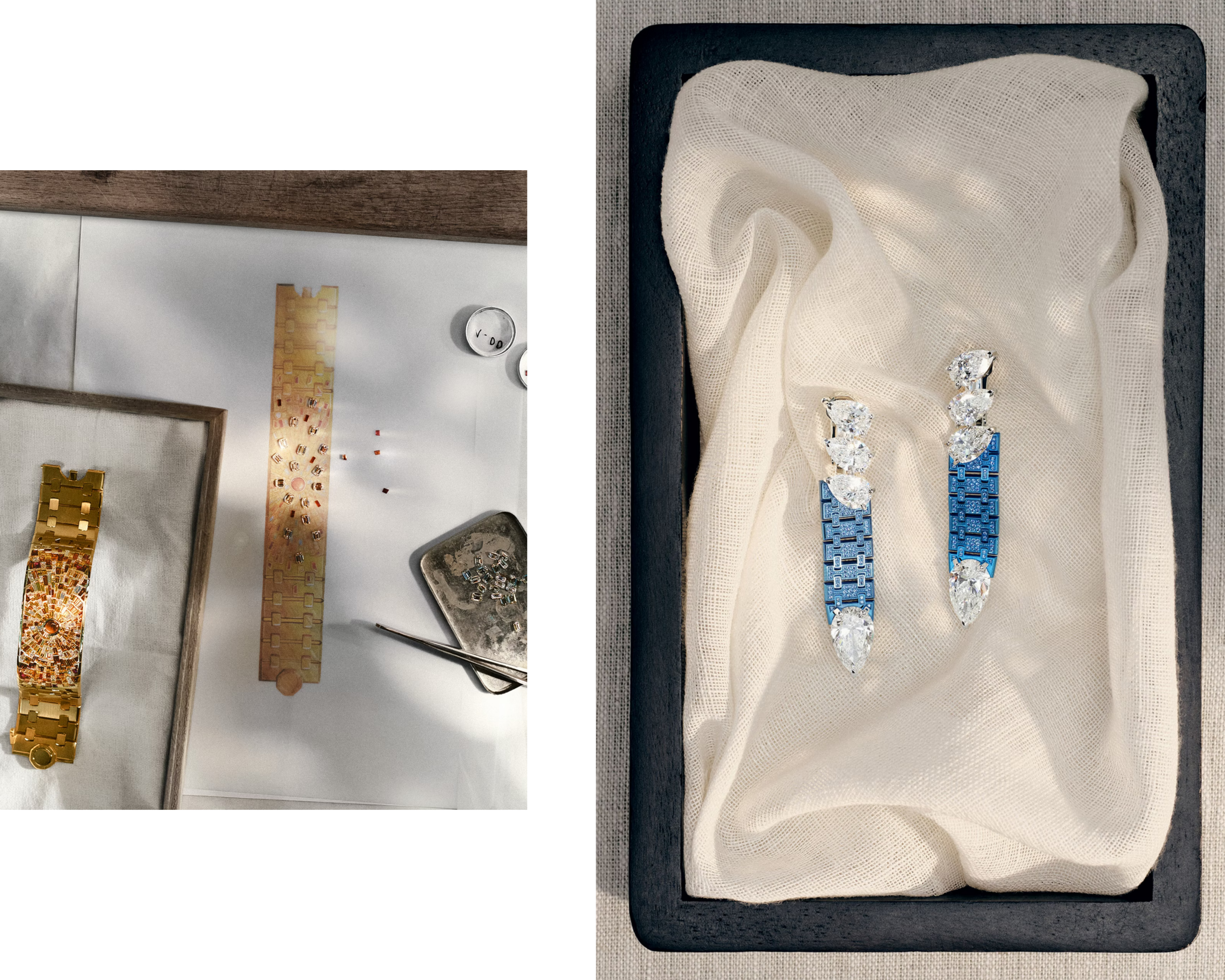
Did you see Audemars Piguet’s new Royal Oak Joaillerie collection? An interesting move, although hardly the brand’s first foray into jewellery.
My instinct is that jewellery houses have been more convincing at making watches than watchmakers have been at making jewellery. Then again, the distinction has always been porous. Gérald Genta, who designed the Royal Oak, was trained as a jeweller. And I tend to think of a watch as jewellery anyway. Why wear a bracelet when you could wear a beautiful timepiece?
For my own taste, the connection to the Royal Oak is more persuasive than the jewellery itself. I’d still choose the watch.
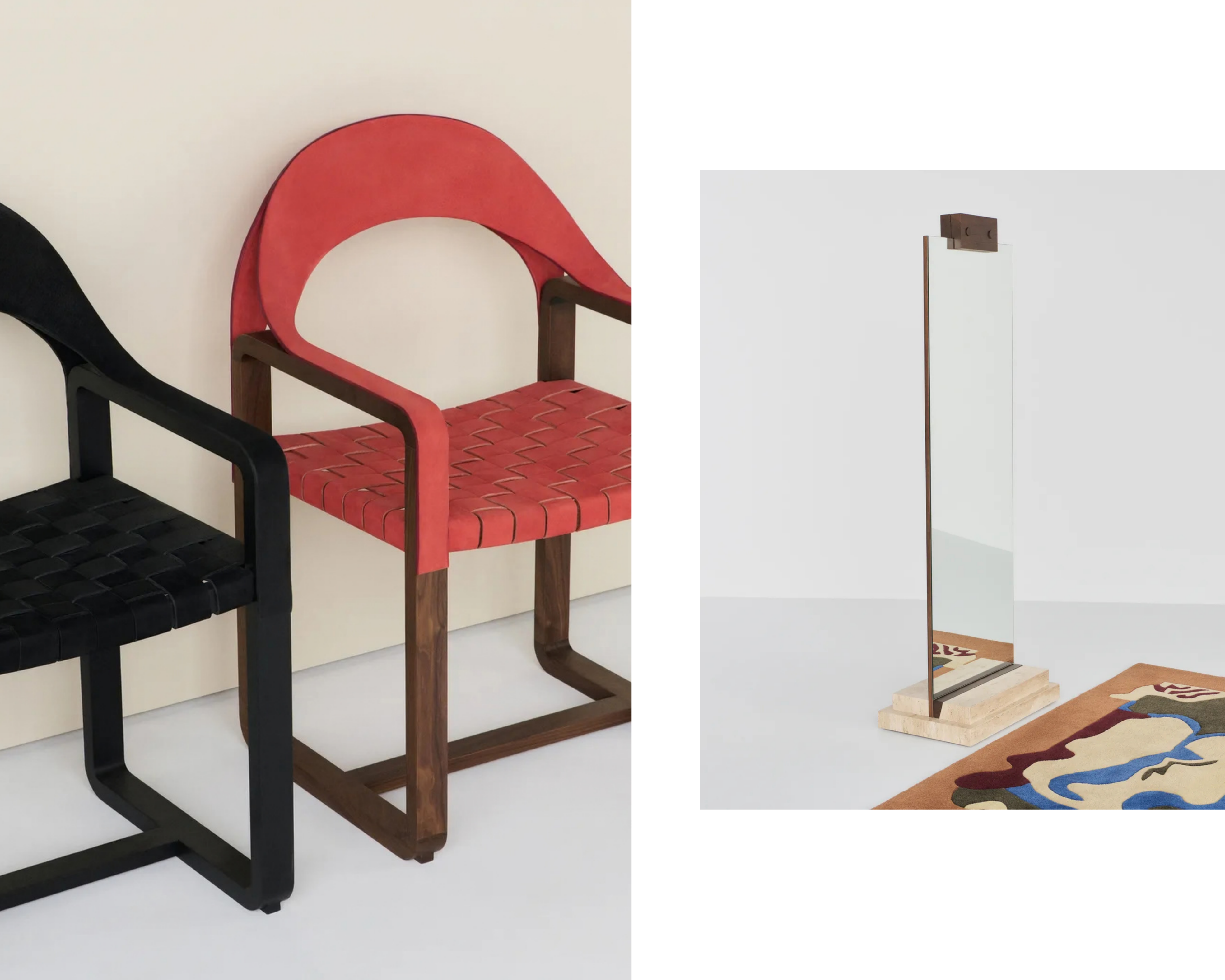
In other news, film director Luca Guadagnino has teamed up with architect and production designer Stefano Baisi to unveil their first design collection for Zara Home. The collaboration is no small affair, comprising over 200 pieces that range from furniture and lighting to tableware, fragrances and clothing. Their inspiration is a heady mix, taking cues from Viennese Secessionism, French Art Deco, Brazilian Modernism and Italian Radical Design.
Guadagnino’s films are widely known for their atmospheric interiors, where architecture and furniture tell us as much about the characters as the dialogue. But instead of just reproducing familiar sets, the duo have created a completely new design universe. You can explore it here.
MIND
I FaceTimed some friends a few days ago, and we couldn’t help but reminisce about our 20s in London. One friend put how much quieter life feels now down to the pandemic, but as I sit here in my 30s, I suspect my nostalgia goes beyond any single event. I have no desire to return to those days, but I do miss the person who seemed to thrive on all that chaos.
In an attempt to make sense of it, I came across psychologist William James, who proposed that we have multiple social selves, shaped by how others see us. I suppose part of the pleasure of catching up with old friends is that they remember versions of us that aren’t quite as present in our everyday lives. They knew us before certain responsibilities or routines took hold, and sometimes they bring a little of that person back.
I enjoy growing older and learning more about what I like. I appreciate a good night’s sleep far more than I ever did, and I’m not suggesting that the person I was at 25 had everything figured out (I still don’t have anything figured out). But our conversation has made me wonder whether, somewhere along the way, I’ve confused becoming more discerning with becoming less spontaneous. Spontaneity has no age limit, and I admire anyone who still has the instinct to say yes before talking themselves out of it.
UNTIL NEXT TIME
Thank you for reading and supporting The Other HAFH. Have a great weekend, and I’ll catch you next week.
I'm so intrigued by the idea of multiple social selves. I was also far more spontaneous as a twenty-something. Off to go look more into this!
Your distinction between conserving a building, inventing a design narrative and establishing a genuine neighbourhood role is particularly useful. Adaptive reuse is often celebrated simply because a building survives. But surely its success also depends on whether the new occupation adds something meaningful to the place and the people around it.