

I’m a big fan of Philippe Starck, so news of his latest project in Portugal was always going to grab my attention. It sent me down a rabbit hole about the stories designers tell themselves. After all, inspiration can come from anywhere.
This week, I’m looking at how invented narratives can guide design, and whether guests need to know any of it to appreciate the end result. Naturally, I’m nosy enough to want the whole backstory.
POINT OF DEPARTURE
You can tell a great deal about someone from what they choose to display at home—or at the very least, about the person they’d like you to believe they are. I suspect Philippe Starck feels much the same, given how he’s taken that curiosity and run with it.
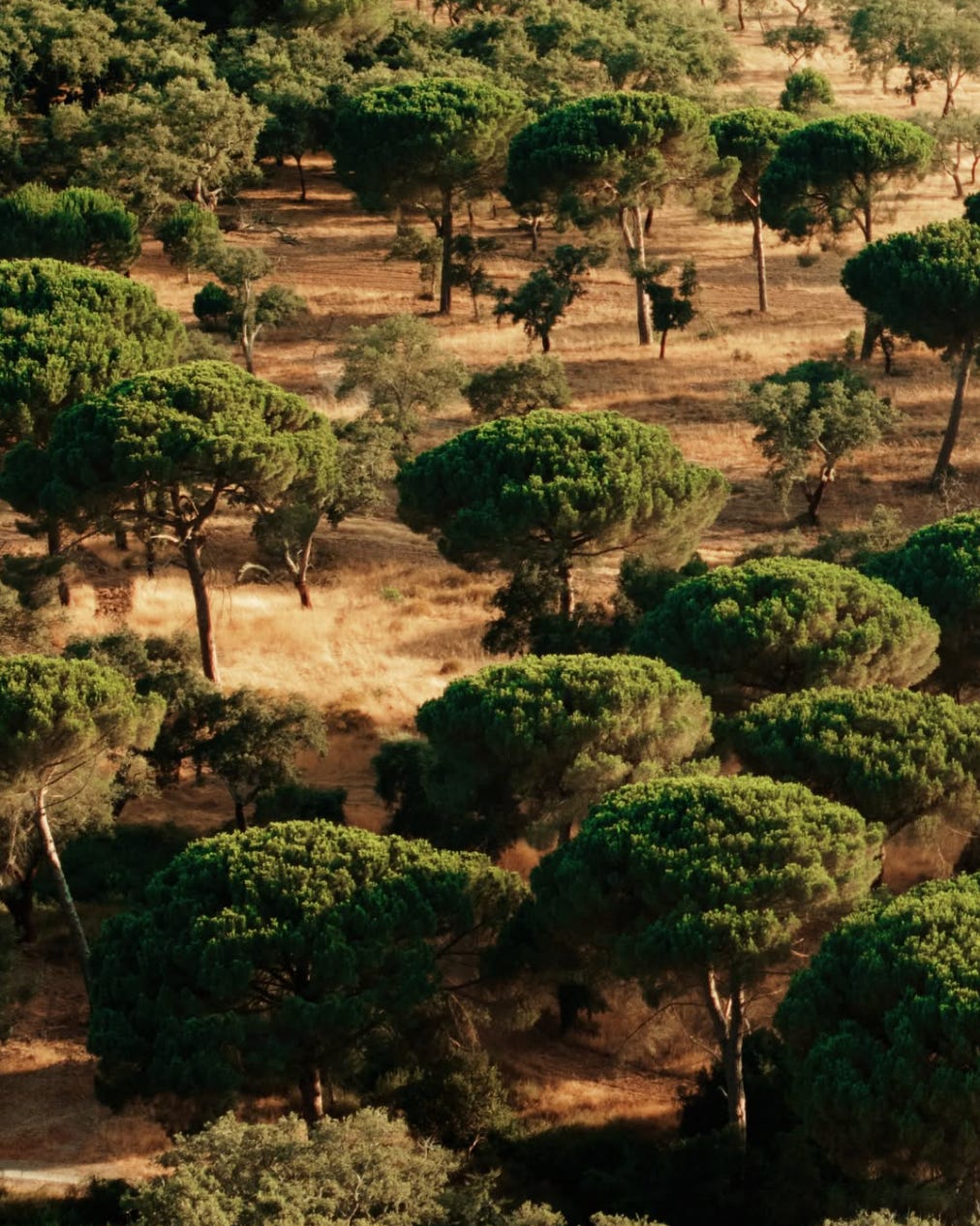
For ASerra, a new hospitality and residential project in Melides, he’s conjured up a couple who don’t actually exist: a writer and a musician. In this imagined scenario, their books, scores and instruments are scattered about as clues of their existence, but the people themselves are pure fiction.
I find this fascinating. Arriving at any hotel with its own set of interests always feels like stepping into someone else’s world, which is a welcome change. But what I’m interested in is how that world becomes real, and whether knowing its story makes the experience more worthwhile.
For context, ASerra will eventually combine a 25-suite hotel and 22 serviced villas, with the hotel due to open in 2028. Atelier AAVV is responsible for the architecture, while the landscape design is by Filipa Cardoso de Menezes. Wallpaper* describes Starck’s imagined journey as the guiding thread, linking hillside dwellings to a timber village below. We’ll have to wait to experience it, but it raises a broader question about what a made-up life can contribute to a real place.
There are advantages to giving a design team specific people to design for. Words such as ‘residential’ and ‘personal’ sound lovely in theory, but don’t actually decide much on their own. Inventing an inhabitant, though, gives those words meaning via habits and preferences.
Of course, fiction has always inspired us to make creative choices, and hotels are one setting in which it can become unusually tangible. At The Beaumont in London, for example, Jeremy King invented Jimmy Beaumont, an American hotelier who had escaped Prohibition. In a 2015 article, King explained that the backstory helped him resolve the hotel’s layout, including the bar and restaurant. It also informed the objects and art collected for the interiors.
I can see how this might help a team defend more unusual design choices. There’s a shared idea to refer back to, and a reason for an eccentric object or unexpected combination to belong. But the story can also become a justification in itself. Something might suit the fictional character perfectly without adding much to the experience of the person actually staying there.
We need to separate two things. One is how much a story shapes the design; the other is how much a guest actually notices or cares. These don’t always go hand in hand. A story might influence the layout and furnishing without ever being mentioned to guests. Equally, you might get a lengthy press release about an imaginary owner, only to find rooms that are anything but personal.
There’s a useful precedent at Hotel Covell in Los Angeles. Its rooms were conceived around chapters in a fictional writer’s life. Designer Sally Breer told Condé Nast Traveler that the character was merely a tool for making design choices; communicating the story to guests wasn’t the priority.
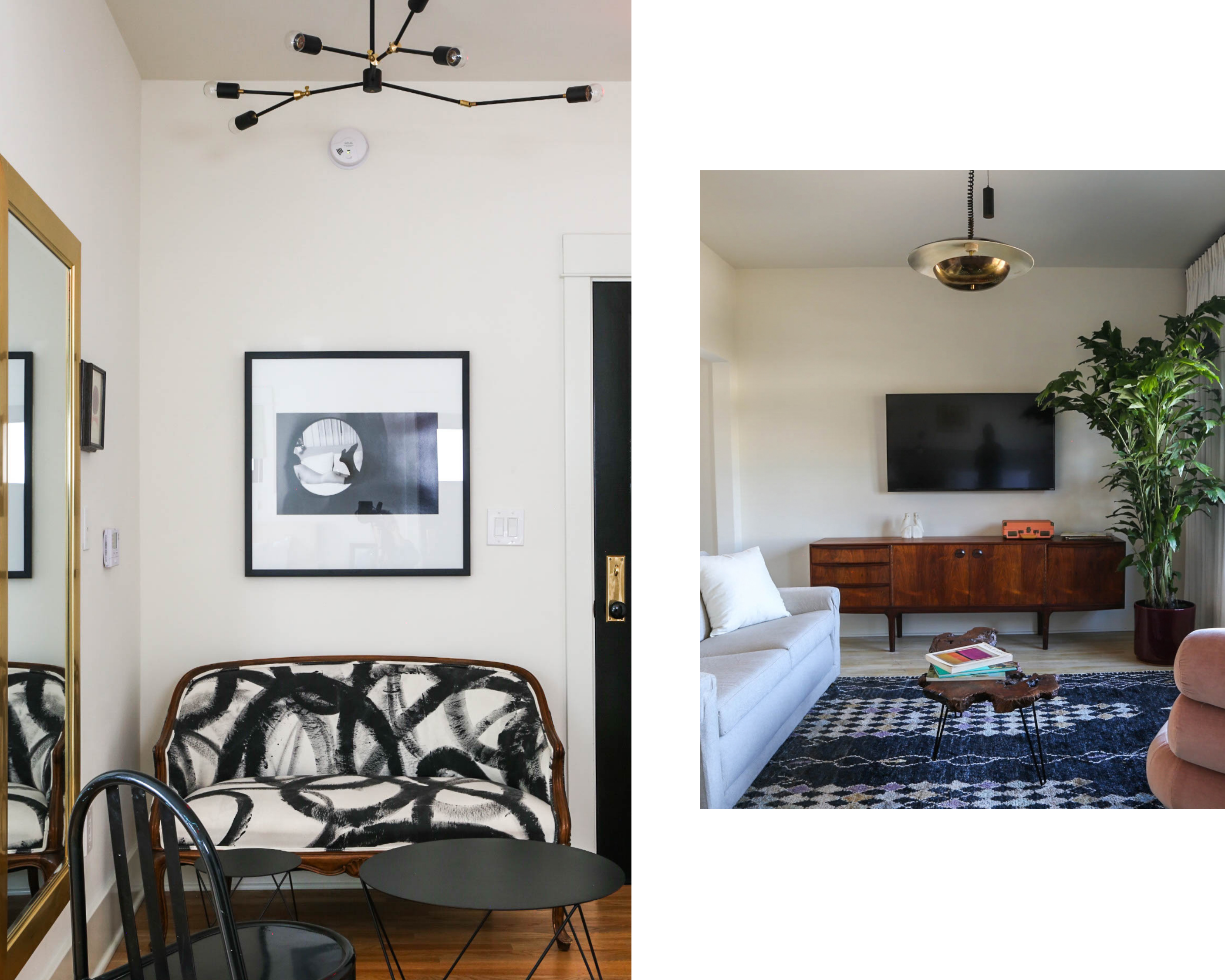
I like that. A guest can enjoy the setting without ever knowing why. The rooms might be full of deliberate cues, and the way you move from one space to another could be entirely intentional. If you’re curious, knowing the backstory might add a little something extra—it could make it all click. If not, that’s fine, too.
For me, I suppose part of the fun is working out who picked everything. Discovery can include learning how something was envisioned, provided the space is interesting enough to keep your attention afterwards.
In ASerra’s case, the reporting connects the fiction to the objects and the way the place is arranged. It doesn’t yet say how visitors will encounter the story, or whether they’ll be invited to take part in it. I have to be cautious about assuming there’ll be a scripted experience, when so far we’re hearing about the design process.
Let’s consider Starck’s characters. A writer and a musician—what sort of life do they suggest? Both represent creative independence and time to pursue an interest for its own sake. Their belongings open up a tempting idea: perhaps here I’ll spend an afternoon reading, listen to music, or finally have some peace and quiet to sit down and write.
The creative studios and workshops could give that creative life a practical expression. Their value will depend on how they end up functioning, including the quality of the spaces and who runs them. But the possibility is appealing: the life suggested by the interiors could become something visitors get to enjoy for themselves.
I don’t need to want their exact lives to find the fantasy appealing. Nor do I need a hotel to match my own taste. For a little while, I can trust someone else’s judgement and stumble upon choices I’d have never made myself.
Whether that kind of pleasure leads people to book or buy is another question. It’s easy to say that travellers seek out hotels with a strong ‘point of view’, but I’m getting quite sick of that phrase as it’s come to mean almost anything. Liking a designer’s taste, wanting somewhere out of the ordinary, or wanting to step into a fictional world are all different reasons to stay, even if they sometimes overlap.
Research does suggest stories can influence how we perceive hotels. A 2019 study in Tourism Management tested different versions of a fictitious luxury hotel’s brand story and found that a well-structured narrative could improve brand image through the reader’s absorption in it. That supports taking storytelling seriously, but it measures a response to communication as opposed to demand for living inside the resulting design.
Still, the story could help a team build somewhere worth visiting, even if it isn’t what persuades someone to book.
That’s where I land on narrative-led design. I love that an invented life can prompt real pleasures and habits. A hotel doesn’t need a hundred years of history to feel evocative. But I want the story to prove its worth through the choices it inspires: spaces I like spending time in or activities I might not otherwise get to try. Beauty, humour and surprise count as well. It doesn’t always have to be so practical.
WORTH THE DETOUR
INDUSTRY
Banyan Group acquires 70% stake in Newmark Hotels & Reserves
Banyan Group is inching towards full ownership of Newmark Hotels & Reserves, acquiring an initial 70% stake for approximately ZAR533 million (subject to adjustments). The phased transaction brings a managed portfolio of 26 hotels, lodges and reserves across seven African countries into the fold. Newmark retains its local operating approach, with integration into Banyan’s booking platforms and guest-recognition programme planned over time.
What Banyan is acquiring is a web of owner relationships and a depth of expertise in nature and wildlife hospitality that’d be hard to piece together one property at a time. Autonomy sounds great, but with full ownership on the horizon, will local decision-making survive once the machinery of distribution and guest recognition is fully in place?
HVS puts GCC and North Africa hotel pipeline at $90 billion
According to HVS data released ahead of FHS World, the GCC and North Africa have around $90 billion worth of hotels and resorts in the pipeline. That represents 200,000 new rooms, which would increase existing supply by 27 per cent. Around 88,000 rooms are under construction and another 25,000 are in the final planning stages. Saudi Arabia accounts for approximately 110,000 of the total, with delivery across the region phased through 2030 and beyond.
A reminder that adding rooms is one thing, but giving guests a reason to choose yours is another.
HKS unveils Sensa, a neuro-inclusive hotel concept
Featured in Hospitality Design this week, HKS’s Sensa concept reimagines the hotel as a series of high- and low-sensory spaces, linked by transitional areas. The idea is to give guests more say in their stay, with personalised rooms and soundproof retreats. Its ‘Sync Studio’ proposes wellness suites that would use wearable technology to adapt lighting, temperature and sound in response to a guest’s emotional state—an ambition within the concept, not a system demonstrated in operation.
In essence, Sensa is treating our varying sensory needs as a starting point for the whole hotel. It brings the discussion into the layout and the choices available to guests throughout their stay. It’s one to watch, for sure.
MIND
Lately, in our household, we’ve been debating which piece of wearable tech is superior. My husband was in the trenches of decision paralysis as he prepared to relinquish his WHOOP, weighing the everyday smartwatch conveniences of an Apple Watch against the deep-dive athletic metrics of a Garmin, only to throw Fitbit into the mix to complicate things further. He’s landed on a Garmin, and time will tell if that was the right move.
Watching all this unfold made me think of Jean Baudrillard’s ideas about simulation and how representations can come to displace the reality they describe. I see something of that in my own relationship with wearable tech: the data has become more authoritative than the feeling. I don’t feel rested because I got deep sleep. I feel rested because my WHOOP app told me my sleep score was 92.
My own WHOOP subscription ends next month, and I’m completely done with all of it—I won’t be switching to another device. These days, I can’t even go for a casual walk without coming back to a strain score, and frankly, the thought of letting my subscription lapse and freeing my wrist from all the tracking sounds like escaping a second job. That’s not to say I don’t appreciate what the technology can do for us. It’s exceptional, but I’m clearly not the target audience, and I want a little less of it myself. So, friends, I’m stepping off the biometric hamster wheel. You can hold me to that.
UNTIL NEXT TIME
Thank you for reading and supporting The Other HAFH. Have a great weekend, and I’ll catch you next week.
Aserra sounds incredible - is it a retreat? is a hotel? is it a story?