

Ian Schrager recently levelled a critique at the industry. Speaking to The Hollywood Reporter about his new LA hotel, The Public, the Studio 54 founder declared traditional notions of luxury ‘old-fashioned and outdated’. ‘There’s nothing more boring than being in a room full of rich people’, he remarked, championing instead a ‘democratic door policy’ where diversity serves as the spark of life.
Honestly, I felt a little vindicated reading that. I’ve written before about members’ clubs becoming so tightly controlled that they risk social sanitation. Different spaces, yes, but a similar concern: too much masterminding can stifle the atmosphere.
Schrager’s comments also made me think about another type of control. Beyond deciding who gets through the front door, design helps determine who encounters whom once they’re inside—including the people working there.
For so long now, luxury hotels have relied on a grand illusion. You’re meant to enjoy the show while hardly noticing the backstage apparatus that makes it all possible. There are good reasons for that separation. But as hospitality brands corporate-speak their way through themes of ‘community integration’ and ‘human connection’, I wonder how closely they’ve evaluated the expectations attached to their own service.
It’s limiting to promise human-centric hospitality while still expecting the people providing it to appear only when required.
POINT OF DEPARTURE
Luxury has certainly tried to soften its edges. We’ve traded stiff, golden-buttoned uniforms for casual linen shirts. Front desks have given way to iPads, and comfortable living-room-style check-ins are designed to make properties seem more homely. But underneath the easygoing facade, the choreography can remain tight.
To be fair, discretion is a functional necessity. No one wants a trash trolley rattling past their table during a multi-course meal. Service lifts and back-of-house corridors allow staff to get on with their jobs without navigating a sea of guests. When I travel, I appreciate that consideration as much as anyone.
But practical necessity doesn’t explain every expectation we attach to discreet service. There’s a difference between keeping a noisy delivery out of the dining room and thinking that the sight of a housekeeper carrying fresh linen somehow spoils the atmosphere. At what point are we protecting the guest’s peace, and at what point are we protecting the impression that comfort comes without much effort at all?
Consider how selectively we welcome visible work. When a chef prepares a dish in an open kitchen, we sit at the counter; we’re free to ask questions and marvel at the skill. Seeing the effort can elevate the experience. And this isn’t just anecdotal. Research from Harvard Business School on reciprocal value through operational transparency suggests benefits on both sides: customers can better appreciate the work, while employees can see the people benefitting from it.
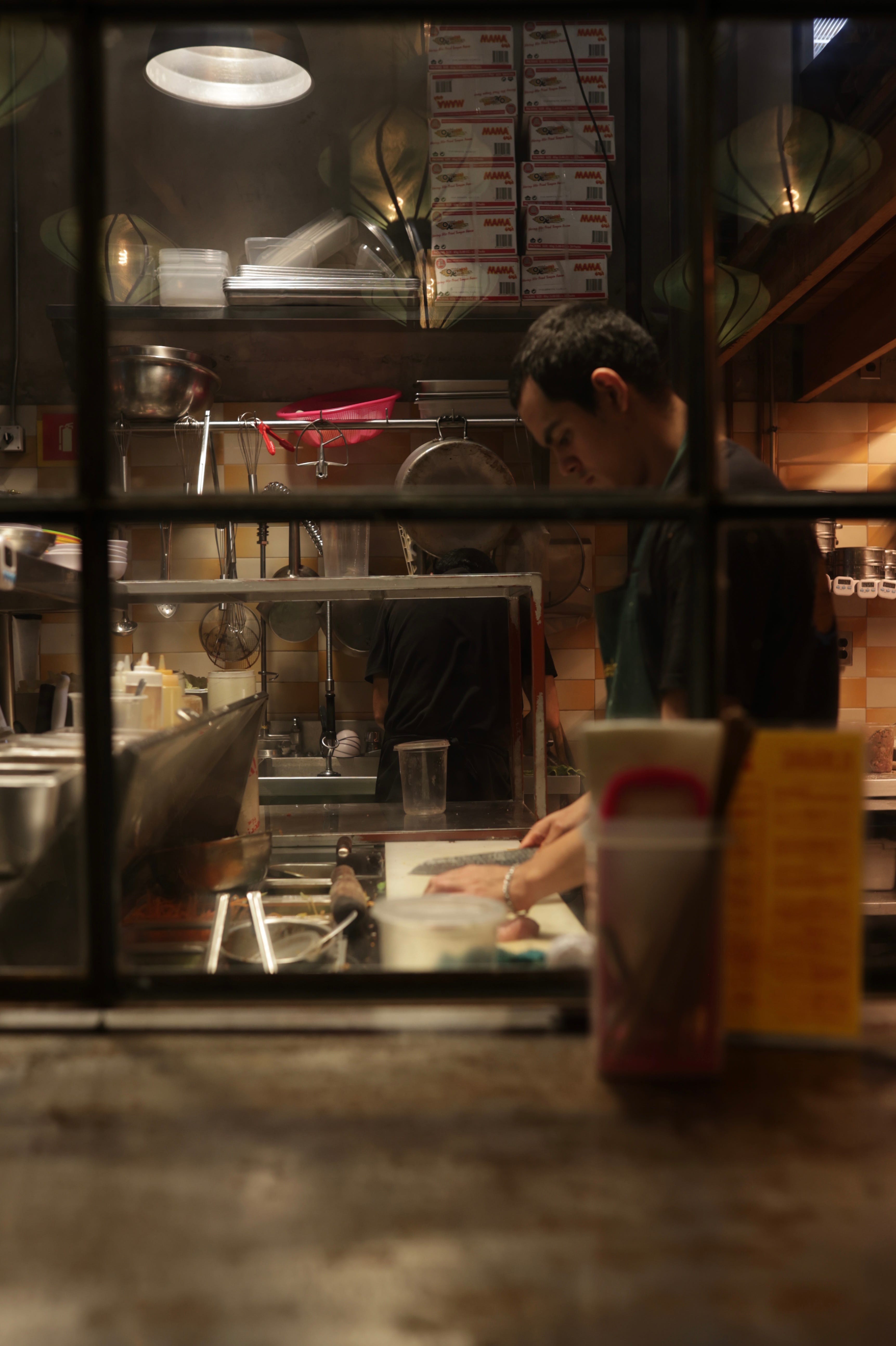
However, the open kitchen is a revealing exception because the encounter is very much staged. The chef’s craft has become part of what we’ve paid to enjoy. We’re happy to witness them torch a meringue, but we’re less accustomed to treating the movement of housekeeping staff as an equally ordinary part of a hotel’s life. Both involve skill and effort, but one has been given a place in the experience, while the other is generally expected to happen around it.
That’s not to say housekeeping needs to be a performance. That would extend the expectation that any work we see should entertain us. How exhausting! Staff need to be able to get on with their jobs without having to make them interesting for the guest.
Of course, part of what we buy when we book a luxury hotel is a short escape from our own responsibilities. I can want to understand a place and still want my morning coffee in complete and utter silence. There’s nothing wrong with that, and the freedom not to converse can be a considerable pleasure.
But that freedom needn’t depend on everyone else remaining out of sight. A staff member passing through a shared space doesn’t necessarily ask anything of me. Perhaps some of the discomfort lies in an expectation I’ve learnt: that attentive service should appear when required and leave little to no trace at any other time.
That’s where the design comes into play. Whose comfort does an arrangement support? Does a separate route make the work easier? Does it protect someone’s privacy or prevent a real disruption? Or does keeping the illusion of effortless service create added constraints for those doing the work?
Two approaches help illustrate my point.
SERVICE THROUGH SEPARATION
Royal Mansour Marrakech is a good example of separate service circulation. Under its private riads, a network of tunnels allows staff to move through the property and access the accommodation discreetly.
But there’s a context here that warrants more than an upstairs-downstairs comparison. The hotel draws on Moroccan architecture, arranging individual riads along winding alleyways like a medina. Privacy is part of that residential proposition, and I’d hesitate to assume that the desire for it amounts to a wish to pretend others don’t exist.
Plus, the tunnels alone can’t tell us whether or not this is a good environment to work in. These routes can make demanding jobs easier, and being out of guests’ sight can provide its own relief. Staff may reasonably prefer to move about without having to be available for questions at every turn.
It helps to separate the idea of keeping things out of sight from the idea that good service means never seeing anyone at work. You can design a discreet route that works well, and it doesn’t mean the whole thing falls apart if you catch a glimpse of someone doing their job. To really judge how the layout works, you’d need to know how the hotel actually runs and listen to the people who work there.
SERVICE THROUGH TECHNOLOGY
Technology is another way to reduce the need for face-to-face interactions. Smartphone entry, self-check-in kiosks, in-room tablets—they all allow guests to manage parts of a stay themselves. For solo travel or an in-and-out business trip, I can get on board with that.
There’s a possible benefit for staff, too. Fewer routine administrative exchanges could leave more time for requests that actually need someone’s attention. Removing a transaction doesn’t necessarily remove warmth from a hotel.
The question is what happens to that time. Does it give staff more room to answer thoughtfully, or become a reason to run the property with fewer people? Can a guest still find someone easily when they need help? A screen tells us very little about the working conditions or relationships behind it.
What I’d continue to question is the assumption that less contact is always an improvement. Some exchanges are unnecessary friction; others are part of the pleasure of being somewhere. A hotel needs enough judgement to tell the difference, and enough people with the time to act on it.
You can’t assess either approach by counting how many staff members a guest sees. More visibility isn’t inherently more humane. Nor is it a substitute for fair pay, manageable workloads or a say in how the work is organised. But if we’re going to question how design manages these situations, we have to look at it from the staff’s perspective as well. Convenient service routes matter. So do high-quality, private spaces to rest and speak freely with colleagues without being ‘on’ all the time. A friendlier layout is of little use if the workday leaves no room for pause.
To clarify: I’m not saying that every hotel needs to become more open in the same way. I am, however, scrutinising the expectation that good service should leave so little trace of the work involved. If luxury is indeed becoming more casual, then it can also become more comfortable with the occasional visible sign that staff have work to do. Personally, I like a hotel where someone can just do their job without their presence being treated as a lapse in service.
WORTH THE DETOUR
INDUSTRY
W Charlotte planned for former office tower in mixed-use conversion
A 1970s office tower at 400 South Tryon in Charlotte is planned for conversion, with a 200-room W hotel and 399 unbranded residences. The hotel will take up the first nine floors, while an 18,000-square-foot food and drink venue is destined for the 34th. Rockwell Group is overseeing the hotel design, with LS3P as architect of record and CetraRuddy taking on the conceptual design.
The Beverly Hills Hotel names a chef for its forthcoming supper club
Mattia Agazzi, who previously headed up the kitchen at Gucci Osteria in Beverly Hills, is set to take the reins at The Beverly Hills Hotel’s new supper club, opening later this year. The space will seat 94 and promises dinner and live entertainment, with Alex Le Roux overseeing the programme. This is all part of a wider refresh of the hotel’s social spaces, under the creative direction of Ken Fulk.
The Polo Lounge, reassuringly, will stay just as it is, which says a lot. Give guests something fresh, but hold onto what made them loyal in the first place.
Rammed earth and reused stone shape Maison Le Chevreuil in Meursault
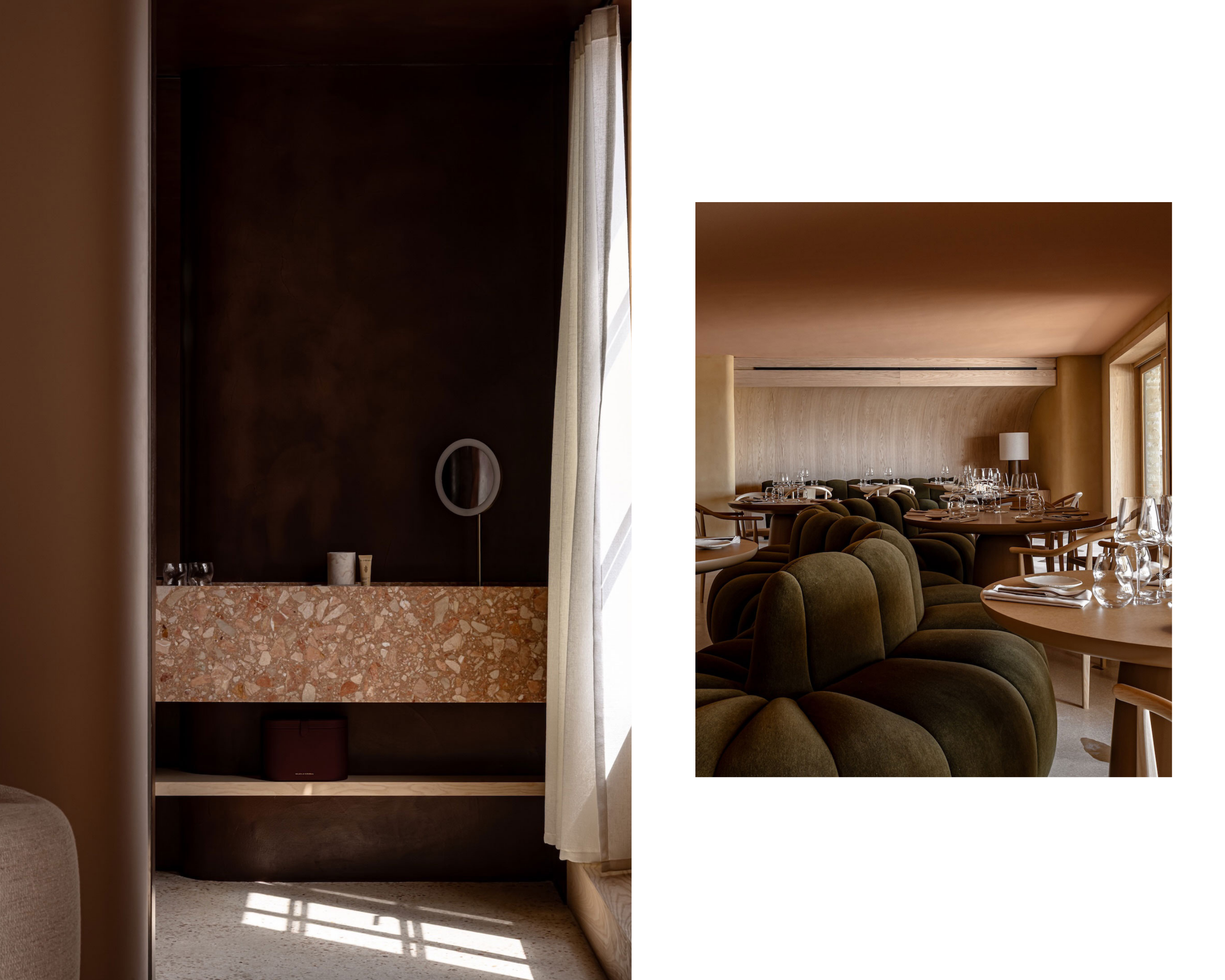
Maison Le Chevreuil in Meursault is opening this month after a two-year renovation led by Aubin Prost and Johanna Leserre. The ten-room property features a bar counter made from rammed earth, original Corton stone worked into terrazzo, and dining seating set lower than usual to encourage a more relaxed posture—I’m a fan.
The Hoxton has announced its first Middle Eastern hotel
The Hoxton is making its Middle Eastern debut in Dubai Media City, where it also plans to launch its first wellness club. The 230-room project will transform an existing building, with interiors by Ennismore’s AIME Studios. The hotel will include a gym, movement studios, treatment rooms, contrast therapy facilities, a members’ lounge and a café, all designed for both guests and the local community.
Sanctuary Camelback announces renovation under new local ownership
Sanctuary Camelback Mountain in Paradise Valley is returning to independent local ownership under Berger Holdings and RJ Hospitality, with a multi-million-dollar renovation programme in the works. Hart Howerton has been appointed as architect and designer of record. Work on 110 guest rooms and casitas is due to start in summer 2027, with completion expected in September, followed by culinary and spa improvements in 2028.
MIND
I was on the phone to a friend the other day, and she talked about how she’s so over posting on social media. I think many of us are, to be fair, and I’ve spent an embarrassing amount of time questioning the same things she did. As a millennial, I’m referring to Instagram, mostly. The nicely arranged feed begins to look like an obvious bid for approval (guilty), so we loosen up with ‘photo dumps’. Then the photo dump acquires its own aesthetic rules, so disappearing altogether becomes more and more appealing. Archive everything with no explanation. Give the impression that life is far too absorbing to document. Eventually, even absence becomes something other people are meant to notice.
Wanting to be seen isn’t a shameful thing. I can enjoy a photograph and hope someone likes it. The tiring part is expecting every choice to prove that we have a healthy relationship with attention. I want to post without wondering what it says about me—and leave something unshared without congratulating myself for it.
UNTIL NEXT TIME
Thank you for reading and supporting The Other HAFH. I’ll catch you next week.
Wine service is the other sanctioned exception. Decanting a bottle at the table is skilled labor performed in full view, and nobody finds it intrusive, because the ritual was designed to be watched. Housekeeping does comparably skilled work with none of the staging. What separates them is a decision somebody made about which work counts as part of the experience.
The most restorative thing in a hotel isn't the design: it's the sense that the people there are allowed to be human too. Wellness that only flows one direction isn't wellness.