

A quick note before we begin. Some of you have mentioned that this newsletter has been appearing in the Substack app instead of your inbox. Maybe you chose that, or maybe Substack did. Either way, the content is the same. If you’d rather it landed in your inbox on a Friday, you can adjust your notification settings for The Other HAFH. It only takes a moment. If you’re content with the app, ignore this.
In today’s newsletter, I’m taking a closer look at Now Now NoHo, which is described as a ‘boutique micro-cabin hotel designed for solo travellers’. Great. But is it a hotel or is it a hostel? And why am I so pressed about the categorisation?
POINT OF DEPARTURE
My friend Alli, founder of RUSKIN, was in New York last month for her pop-up and needed somewhere close by to stay. She stumbled upon Now Now NoHo online, enticed by photos of pale plywood, warm amber lighting and a bed tucked into a panelled alcove reminiscent of a sleeper carriage. The amenities were nothing fancy but perfectly serviceable, and in the end, she booked it for convenience.
What she actually encountered, however, wasn’t quite what the photos had suggested. At the time, we had a laugh about it, but on reflection, I realise the photos weren’t misleading at all. Everything pictured is there at 338 Bowery, just as shown.
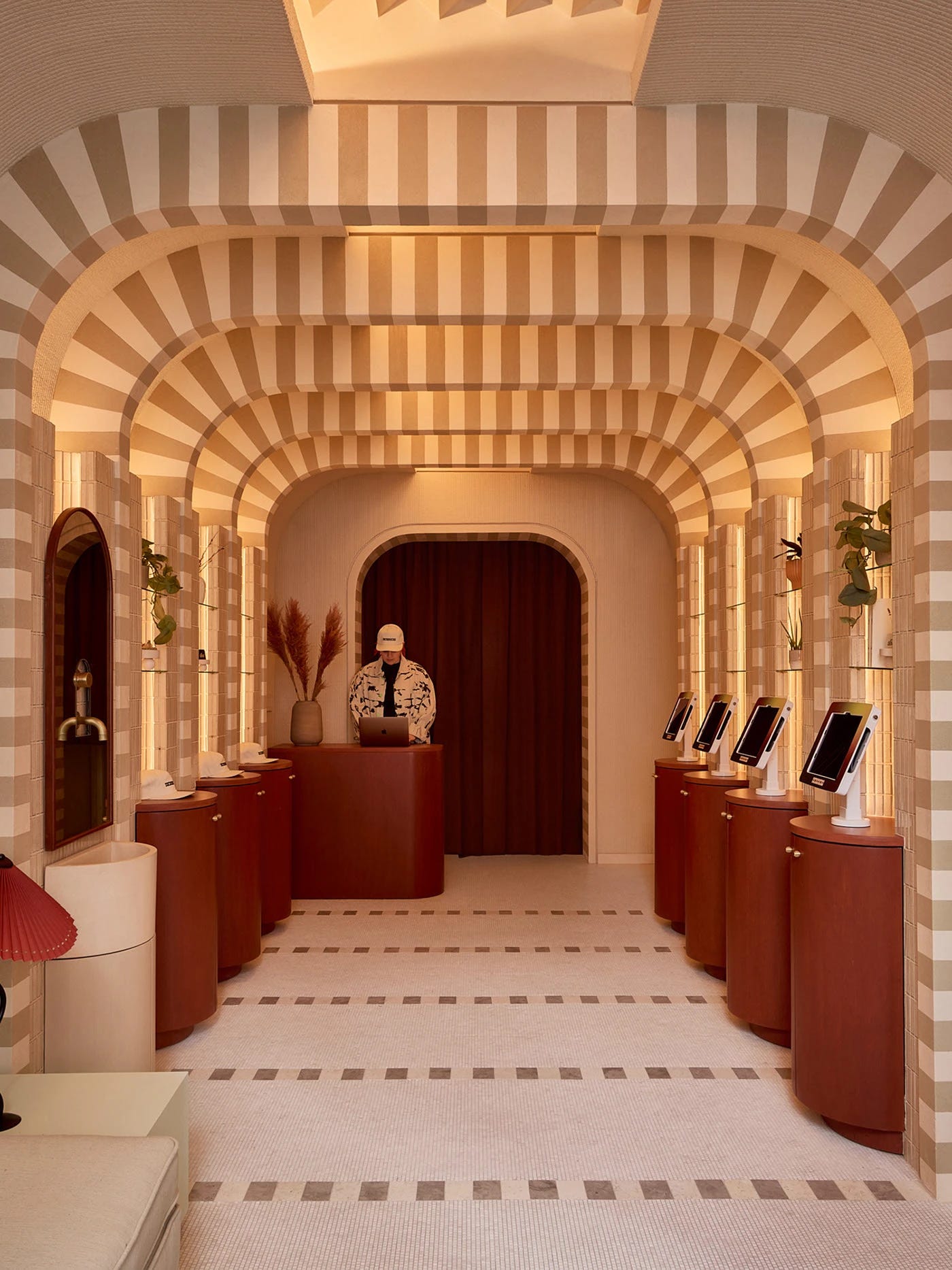
Essentially, Now Now is a hostel being sold as a hotel, and the design studio has been happy to use both descriptors, depending on the audience.
Islyn Studio entered the project for the Dezeen Awards 2025, where it was shortlisted in hotel and short-stay interior. The entry text opens:
Now Now is a boutique hostel in downtown Manhattan designed as a sanctuary for solo travellers seeking meaningful connection and restorative solitude.
On Islyn’s own project page on their website, the same building is a ‘boutique hotel’, and the word hostel doesn’t appear. Meanwhile, Dovetail + Co, the operator, runs a page on their site titled ‘Boutique NYC Hostel’ and describes a ‘boutique hostel experience’. On staynownow.com, where you enter your card details, it’s a hotel throughout.
‘Hostel’ is the accurate descriptor among those who’ll judge the work, and ‘hotel’ is what makes the nightly rate palatable.
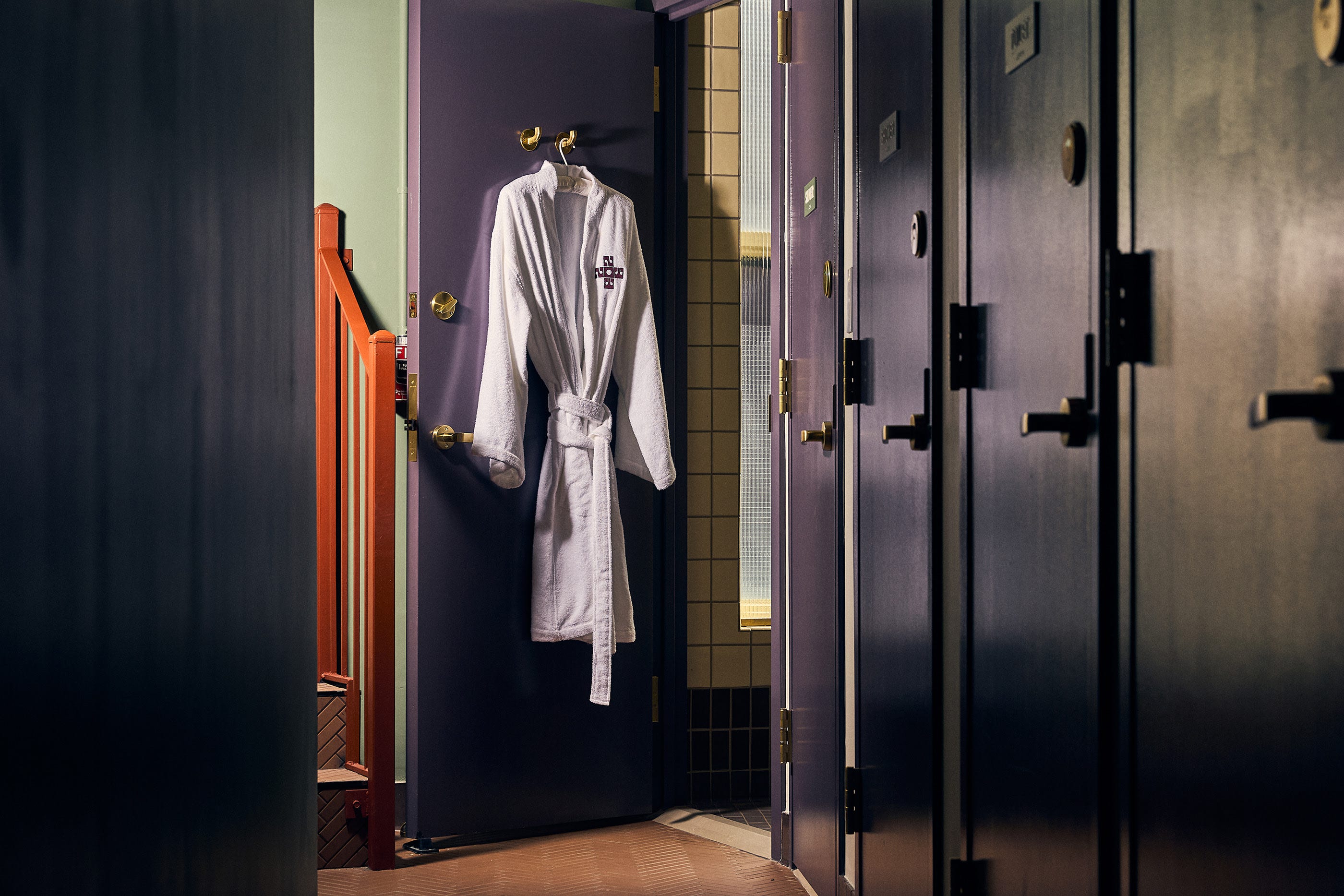
A standard cabin at Now Now is 32 square feet—that’s just enough for a single bed. There are 180 of these, starting at $125 a night. If you fancy a bit more room, another $30 gets you a grand total of 53.8 square feet.
So, for $30, you’re buying 22 square feet. It’s a rare thing, a building that spells out exactly what floor space is worth.
Then there’s the matter of the ceiling. The cabins have open tops, closed with acoustic baffles. Islyn describes them as ‘specially designed acoustic baffles that encapsulate the room while allowing light and air to flow’. Dezeen’s write-up went a step further, claiming the baffles ‘prevent noise from travelling’. Wallpaper’s reviewer, Lindsay Cohn, who actually slept there, put it slightly differently when she said the baffles offer ‘a smidge of privacy while allowing light and air (and, sure, noise) to come through’.
I wouldn’t put too much weight on one reviewer’s aside, except the building itself seems to back her up.
Every cabin comes with a sound machine and a sleep kit with earplugs, and if you ask, you can have branded sleep masks and noise-cancelling headphones as well. Four different fixes for the same issue.
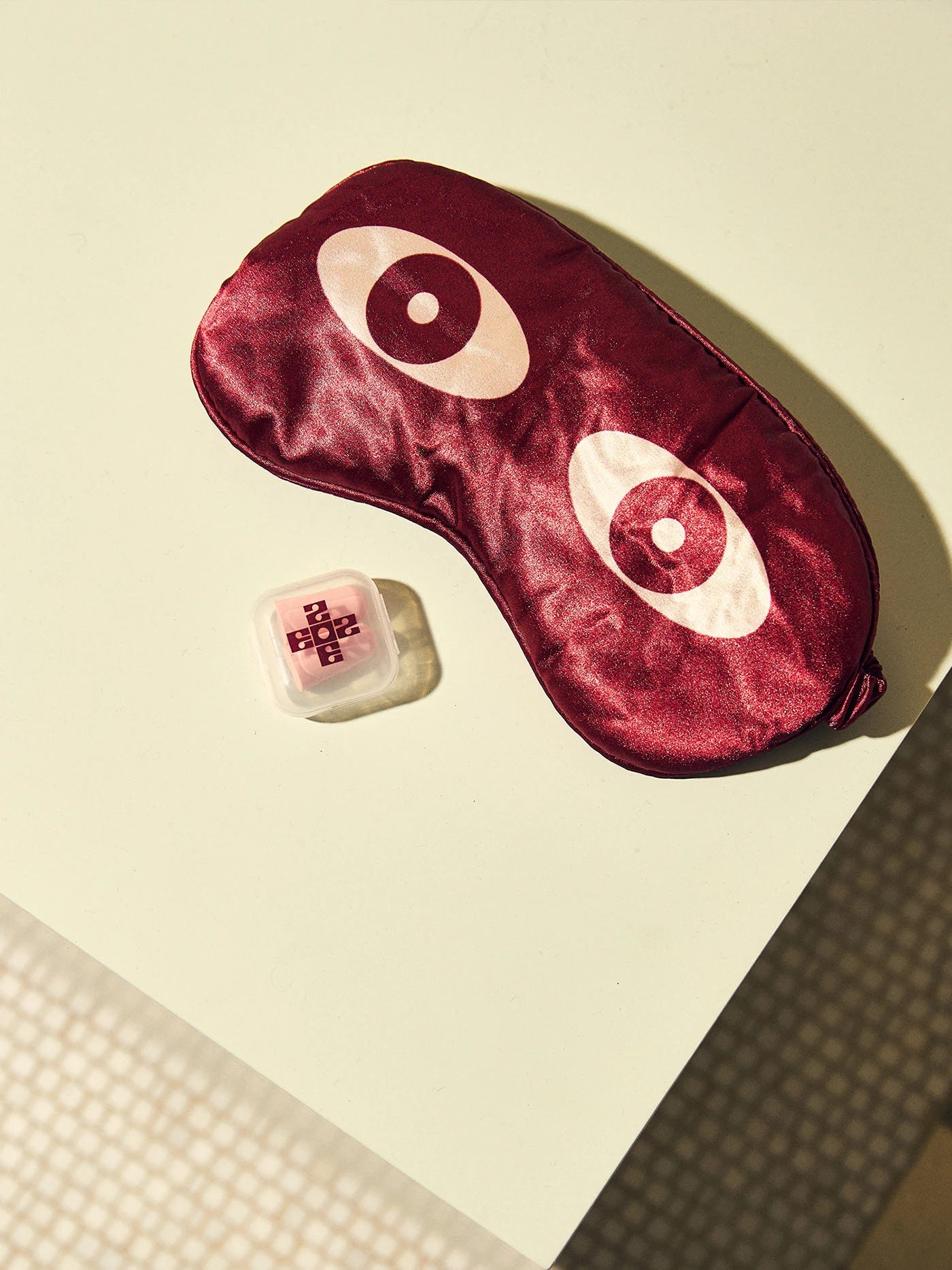
This is the compromise every small-room designer runs into sooner or later. You can borrow space for the eye, but not for the ear. An open ceiling makes 32 square feet look bigger in photos, while feel smaller in person, because the real boundary of a room is where privacy ends, not where the wall stands. A quiet 32 is a much bigger room than a leaky 54.
I should say, I haven’t stayed at Now Now myself, nor do I plan to. This is all based on Alli’s experience, the studio’s website and a handful of published reviews.
I did ask Alli to give us a first hand narration of her thoughts. Here’s what she said:
The thing I keep coming back to in my head about the Now Now experience is less ‘it was bad’ and more amused admiration for the sheer audacity of it all. It’s really how I felt every time I was regaling you with tales of the place—there was always something slightly absurd to report, but somehow it all felt very New York.
The website does all the heavy lifting in the first instance. It presents a very polished, considered version of the hotel and sets up a certain expectation. In person, the mood is probably what I would describe as more… resourceful :)
My attitude was to adopt a can-do attitude and get on with it. Quickly, you learn the geography. You know where to find things. You stop questioning why things are where they are—and somehow you come to realise they’ve done just enough to make it all work. I will say that this is helped significantly by Buddy Buddy Nut Butter Coffee Bar next door, which became something of a daily saving grace.
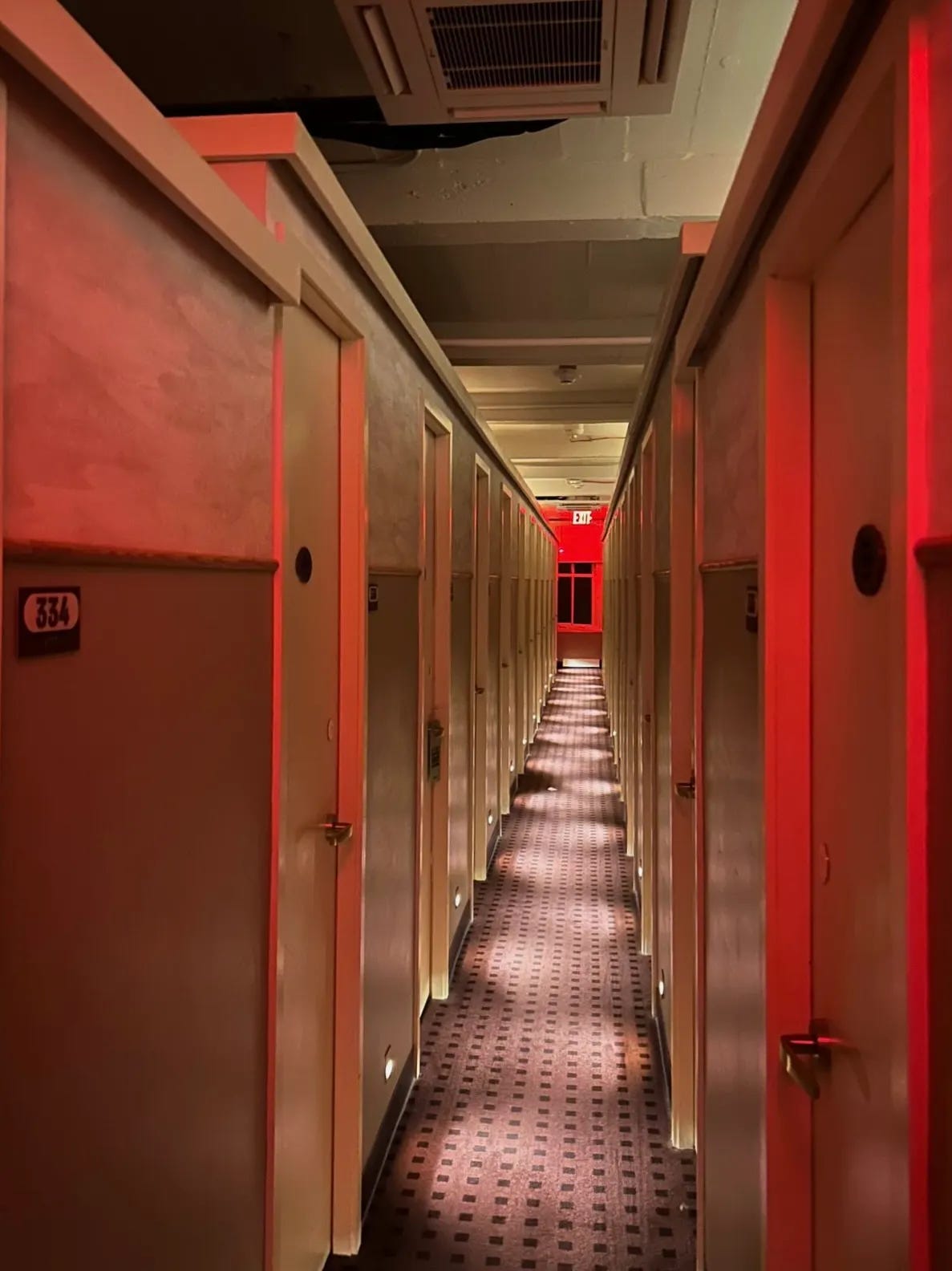
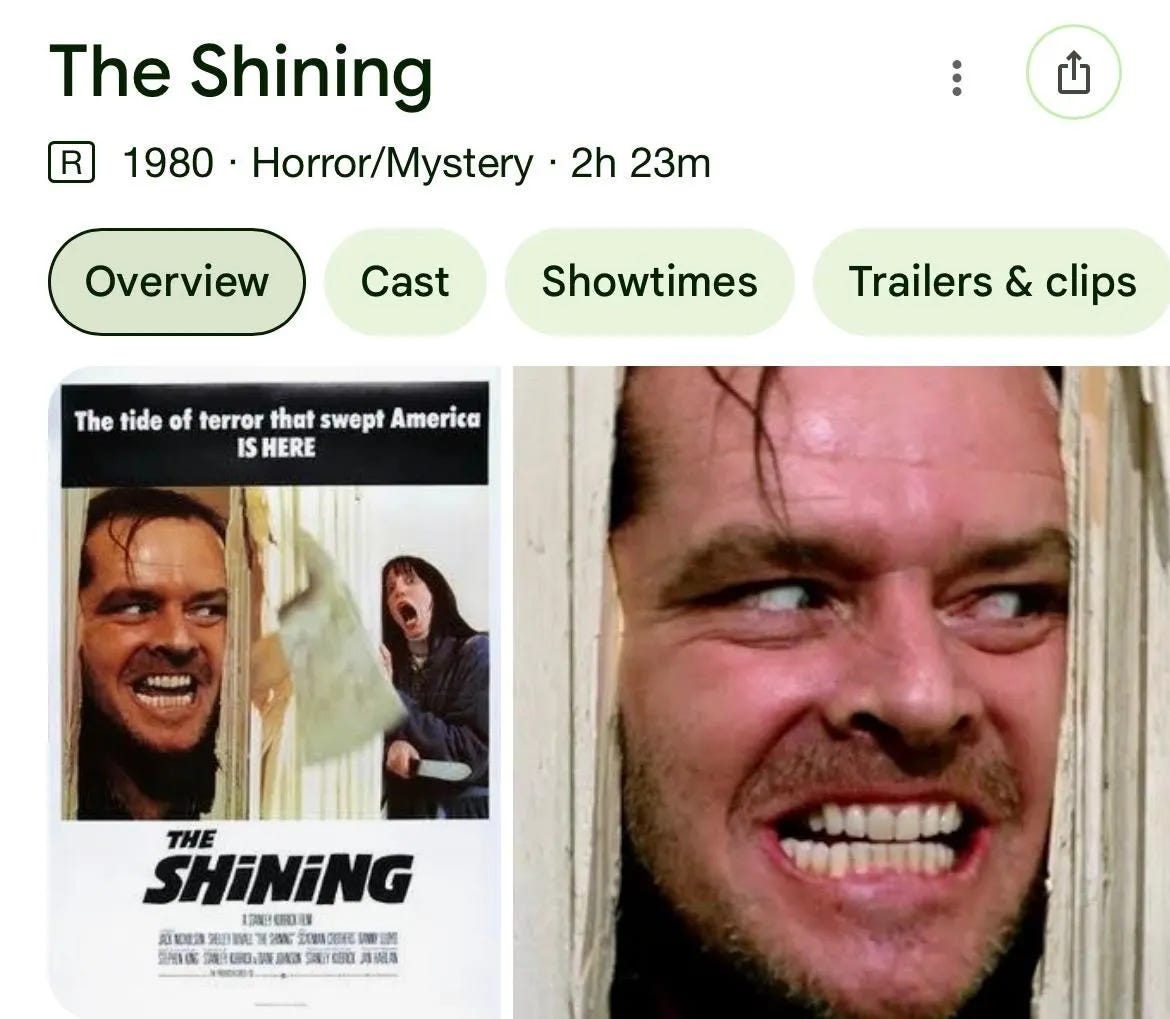
There are just a few things that are hard to escape. The corridors are a little reminiscent of The Shining, with that slightly uneasy expectation that you might encounter a small child on a tricycle. Although there is nowhere, quite frankly, for a tricycle to go.
The lounge is in the basement and is essentially a vending machine, a coffee machine, some stools and a counter-style ledge hammered onto the wall. So you have to recalibrate your expectations of the word ‘lounge’ fairly quickly. It’s less somewhere to settle in for a few hours and more somewhere to perch, make a coffee and move on from swiftly.
And then there’s the hairdryer situation. Having showered, you get used to a hop and a skip down three flights to use it in the communal bathroom. You just accept that this is where the hairdryer is.
And yet, despite all this, by the end the cabin starts to feel more like a cosy nest—compact and familiar. You appreciate the little things, like the sound machine, the eye mask, the pleasant toiletries. Those small comforts matter and you simply work with what you’ve got.
The building is free to pursue a rather more avant-garde interpretation of hospitality.
Micro-rooms almost always get the bed right, then leave the guest to puzzle out the rest, like where to put an open suitcase when it takes up as much floor as the suitcase itself, where to get changed, where to hang a coat, where to set down your glasses or book as you get into bed.
Storage is not the same as sequence, and the latter is what makes a small room either functional or maddening.
For the record, Now Now’s answer to the suitcase conundrum, per its FAQ page, is a bank of lockers below the lobby, plus a bit of space above or underneath the bed. It’s the same solution you’d expect from a hostel.
There is, however, a reason as to why the ceiling is like this.
338 Bowery is the Whitehouse Hotel—the last flophouse on the Bowery, a lodging house on that site since 1899, when it was the Bellevue. The Ghelardis bought it in 1916 and renamed it, and the four-storey building standing today is their 1928 expansion, folding in the lot next door.
At its height in 1950, it had 234 cubicles. They were about four feet by six, and their walls didn’t reach the ceiling. The gap was covered in chicken wire for two reasons, which the building was quite frank about:
To stop your neighbour from climbing over.
To let the sprinklers reach you.
In 2023, when the conversion was reported, the renderings revealed, as EV Grieve described, ‘many of the same details as the old flophouse, including walls that don’t reach the ceiling’.
So the open ceiling isn’t an embellishment, and it’s hardly even a choice.
Islyn swapped the chicken wire for acoustic baffles, which is certainly an upgrade. But that’s about as much freedom as the landmark status allows. 338-340 Bowery is in the NoHo Historic District Extension, so even the sign and the brickwork need the Landmarks Preservation Commission’s sign-off.
Alas, the case against me is stronger than I’d like to admit.
The Dezeen Awards shortlisting is well earned. Working within a fixed plan on the Bowery, squeezing in 180 cabins and ticking off all the codes, is no easy task, and the materials are handled better than most at this price in New York.
Wallpaper’s verdict—‘doesn’t skimp on smart design or style’ and ‘well worth it for a couple of nights’—seems fair. There’s even a Women+ floor for women and non-binary guests, which could have cost the operator some flexibility, so whoever insisted on that was clearly putting the guests first.
We aren’t being misled about the bathrooms, either. The booking page says ‘shared’, and at $125 in NoHo, people know, more or less, what they’re signing up for, and it’s fair enough to assume it’s a bargain.
The ceiling I’ve banged on about is disclosed, too. I assumed it wasn’t, and I was wrong. It’s in the FAQ, in plain language:
Our cabins do not have traditional ceilings but do have full-length specially designed linear acoustic baffles that cover them. Think really big slats with 3-inch spaces between them.
At least they’re being more upfront than the awards entry.
Alli was surprised upon arrival, but she’s just one person, and one person’s surprise doesn’t mark a trend. Our real gripe is with the label—the noun.
In my view, a hostel isn’t about being cheap or having bunk beds. It’s about what’s on offer. If you book a hotel, you’re buying a room. If you book a hostel, you’re buying a bed, and the room is something you share. By that measure, Now Now is up to the mark. It’s selling a bed. ‘Rooms are single occupancy at all times’—so a cabin can’t become a double like any hotel room. The bathrooms are down the hall. The cabins share air with the rest of the room through three-inch gaps. Luggage goes in lockers below the lobby because there simply isn’t space in the cabins. There’s a floor set aside for women and non-binary guests, which is a classic hostel move and a good one. The lounge isn’t really an amenity; it’s where you’re expected to be, since the cabin isn’t a place you can stretch out.
There are rules, too. Lights out at 10 pm, and cabins are kept dim after that. Headphones are required for any personal audio. And strictly no phone calls.
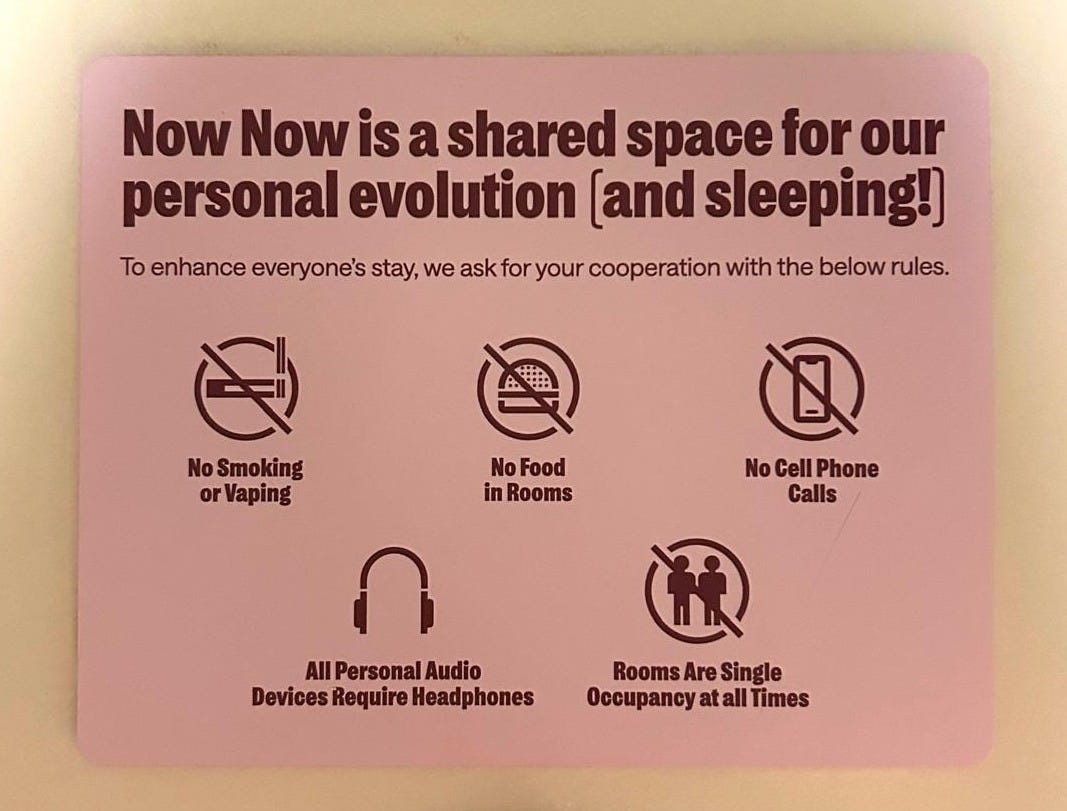
No hotel on earth tells you when to turn your light off. These are dormitory rules, written for a building where one guest’s habits quickly become another guest’s headache—all because there’s no ceiling.
Hostelworld lists Now Now, categorised as a hostel, rated 8.9 across 37 reviews. So it’s doing well for what it is.
But New York seems to have an aversion to the word. The city legislated hostels out of existence with the 2010 illegal hotels bill, and the Multiple Dwelling Law still doesn’t have a proper category for them. ‘Hostel’ might not even be a word Dovetail + Co can put on a certificate of occupancy.
Fair enough. The noun isn’t up for grabs, and I’ve spent all this time moaning about paperwork. So let’s set that aside, because there’s something better on offer, and nothing’s stopping anyone from making use of it.
The references the property claims are European sleeper trains and Japanese capsule hotels, which are reasonable references. A berth is small, and you can accept it because the room is moving and the alternative is probably a flight and a lost night. A capsule is even smaller, and you can accept it because it’s cheap and there’s a proper bathhouse downstairs. Both instances are plausible because the guest can say ‘I gave up X, and I got Y’.
In the case of Now Now, it occupies the last Bowery flophouse, the one with 234 cubicles at four feet by six, chicken wire over the gap, and walls that stopped short of the ceiling for exactly the same reason they do now. It’s a landmarked building on one of New York’s oldest streets, with over a century of cheap sleep behind it, in which every constraint the guest is asked to accept has a sincere and interesting explanation built into the floor plan.
That’s the sell. Not a sleeper train or a capsule hotel, but a guest told this was the last flophouse on the Bowery, and you’re sleeping in it.
It’s much easier to forgive the property’s shortcomings when you can appreciate just how compelling the history is.
The New York Post picked up on the angle straight away, as did EV Grieve. It’s worth leading with these facts because they’re by far the most interesting thing about the place. But for some reason, Now Now doesn’t—at least, not as explicitly as I would hope. Instead, they continue pushing photos of blonde ply and the word ‘boutique’.
WORTH THE DETOUR
INDUSTRY
Troutbeck, the 250-acre estate in New York’s Hudson Valley, has expanded with four new River Cottages and a gatehouse. Stonehill Taylor handled the architecture, while Champalimaud Design worked their magic on the interiors. The cottages are tucked along a wooded hillside above Webatuck Creek, carefully positioned to leave the mature trees undisturbed and preserve the landscape’s charm. The style is low-key, with dark timber, stone, and generous windows inviting the outdoors in. Once inside, guests are promised the comfort of a country house, with hardwood floors, fireplaces, four-poster beds and a dash of colour on the walls. Books and tactile furnishings are scattered throughout—a nod to Troutbeck’s literary past.
Viceroy Hotels & Residences is returning to New York with Viceroy Park Avenue, a 252-room hotel opening in December. Designed by Meyer Davis, the interiors combine warm woods, textured stone, layered lighting and custom furnishings for a more residential feel. The hotel will also offer more than 15,000 square feet of event space, as well as a spa and fitness centre with treatment rooms, a sauna, a steam room, a cold plunge, and Technogym equipment. Among its standout features is a 2,100-square-foot Wellness Penthouse, which includes a private infrared sauna, cold plunge, fitness and recovery equipment, a fireplace and an outdoor terrace.
The Hedges Inn has been part of East Hampton life since 1873, and it’s just reopened its doors following an interior refresh by David Netto. Kiko Sanchez of FGS Design oversaw the architectural side, while Kevin Warren and his team at Fifth & Dune brought the vision to life. The centrepiece is a bespoke hand-painted de Gournay wallcovering in the parlour. It captures East Hampton’s landscapes and village landmarks, with details inspired by the Wetenhall family’s own story on the East End. Throughout the inn, antiques sourced from the UK, Maine and Massachusetts mingle with custom-made furniture and smart upholstery. Swifty’s has had its own update, with a new bar and a new layout, providing a closer link between the indoors and the garden.
The Breakers Palm Beach has unveiled a $15 million transformation of its Beach Club Restaurant, once again enlisting Tihany Design with Alessia Genova at the helm. This time, the brief was to capture the spirit of the Italian Riviera, and the restaurant remains an exclusive retreat for hotel guests and club members. Perhaps the most significant change is the newly enclosed loggia, now ready for year-round gatherings without sacrificing those sweeping arches or the views out to the Atlantic. Guests arrive via a series of courtyards, each leading towards a sculptural fountain at the heart. Inside, twin bars serve the loggia and the main dining room, while private dining spaces can be adapted to suit the occasion. Outside, the terrace is finished with a checkerboard stone floor and planted with olive, cypress and citrus trees. The art, curated by Kevin Barry Art Advisory, is completely site-specific, with murals and sculptures inspired by the coast and the vineyards.
MIND
It takes a very conscious effort to keep the threads of your favourite relationships tightly woven when geography is tugging hard at them. And thank goodness for FaceTime. I’ve started treating a virtual date with the exact same sanctity and respect as an in-person dinner, deliberately opening my calendar and locking in a slot. But I’m also an advocate of the good old cold call. “Hey, I’m on a walk” or “Hey, I’m cleaning right now, and I just wanted to share the mundane air with you.” It all proves that as long as you intend to show up, physical distance doesn’t get to dictate the depth of your closeness. Trust me, as I’ve mastered the art of long-distance relationships.
THINGS
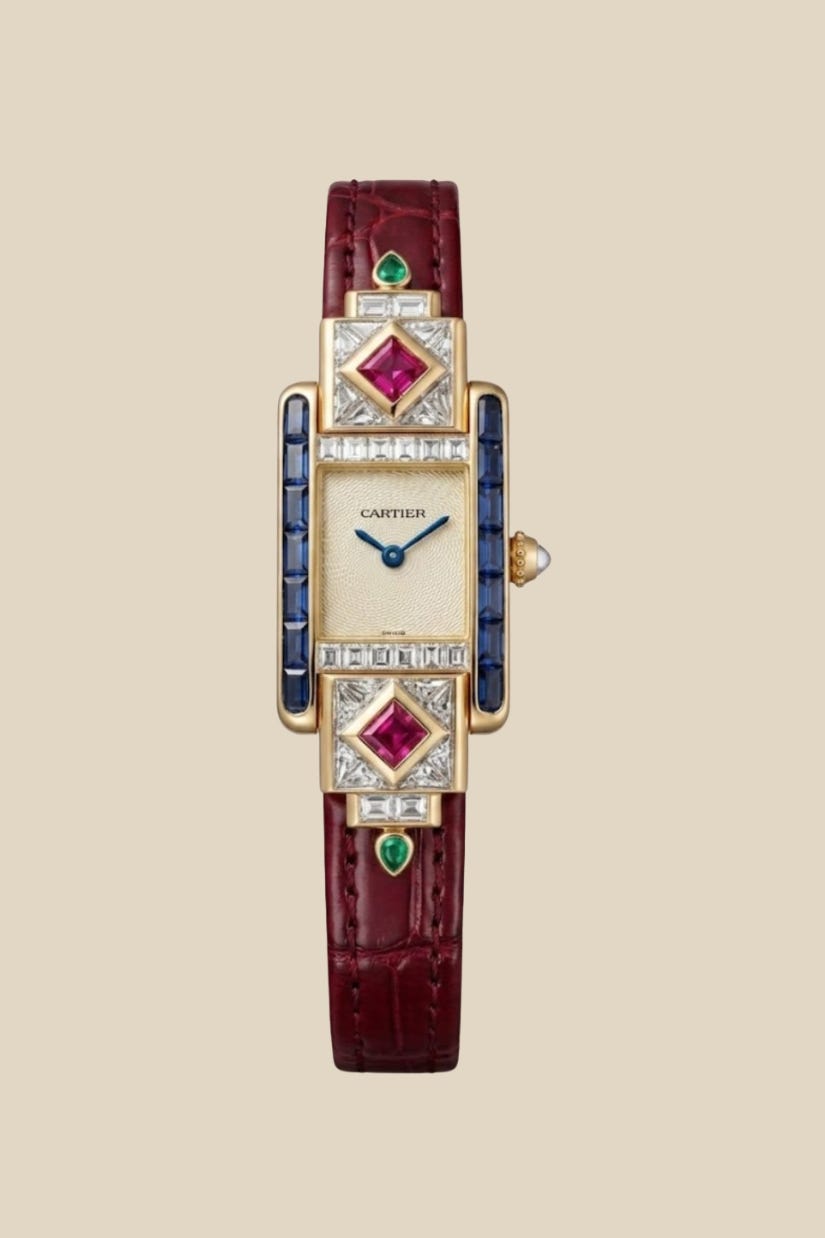
I’ve always been sceptical about wearing a watch to an evening event or celebratory occasion. Old-school etiquette insists that it’s rude because you should be fully present, enjoying the company and not worrying about the clock. Some also see a watch as a tool for the working day, bringing a whiff of business into a setting that doesn’t call for it. But I have found one exception to my rule in the Cartier Tutti Frutti watch, which traces its origins to 1901 when Queen Alexandra of Great Britain commissioned Pierre Cartier to design jewellery to match her Indian attire. The style took shape in 1911 after Jacques Cartier travelled to India, where he was captivated by Mughal gemstone-carving techniques that shaped rubies, emeralds and sapphires into organic leaves and berries. Though originally documented in archival records as ‘Hindou’ jewels, collectors in the 70s playfully coined the moniker ‘Tutti Frutti’ to describe their fruit-salad aesthetic—a name Cartier trademarked in 1989.
UNTIL NEXT TIME
Thank you for reading and supporting The Other HAFH. I’ll catch you next Friday.
There’s a revenue lesson here too: positioning should make the trade-off feel intentional. When a guest clearly understands what they’re giving up and what they’re getting instead, an unconventional product can become differentiated rather than disappointing.
The history makes the whole thing much more compelling. Boutique micro-hotel feels like marketing language vs. “last Bowery flophouse, reinterpreted” actually gives me a reason to forgive the weirdness.