

A quick note before we begin. The Upgrade | Anne Marie wrote on what she calls the great beige-ification of hotels, and it’s worth your time. The supply chain numbers are grim. As outlined in her piece, Benjamin West, the largest FF&E purchasing firm, spends around $1.5 million a day on behalf of its clients. HBA topped Interior Design’s hospitality list for 25 consecutive years. There’s a thing called the room matrix. Of course there is.
I’d like to add to the argument. The supply chain explains why hotels standardise, but it doesn’t always explain why they opted to standardise on beige. As Anne Marie says, white linen bleaches hot and washes in one load, and beige photographs well and reads as calm. All true. But then there’s the matter of the travertine, terracotta, oak, etc. Procurement is indifferent to colour, and the same lead times and approved vendor lists would happily have given us a decade of navy. Why did we come to associate beige with luxury in the first place? Someone decided on beige before the catalogues got hold of it.
I had a crack at the taste side, which you can catch here:
No. 35 - is beige luxury losing its grip?

Happy 2026! I hope your year is off to a pleasant and peaceful start.
While I don’t believe supply chains invented the look per se, they certainly made it inexpensive to repeat. I also keep wondering what will come next, then remembering it’s already come. I was back home in London a few months ago and neither my friends nor I could face another oxblood banquette or another brass picture light. Actually, I could, provided there’s some design rigour behind them. But any correction to the mainstream will be just as copyable.
It’s a nice segue into this week’s newsletter. What is hospitality design for? Such a simple question, but a confusing one nonetheless.
POINT OF DEPARTURE
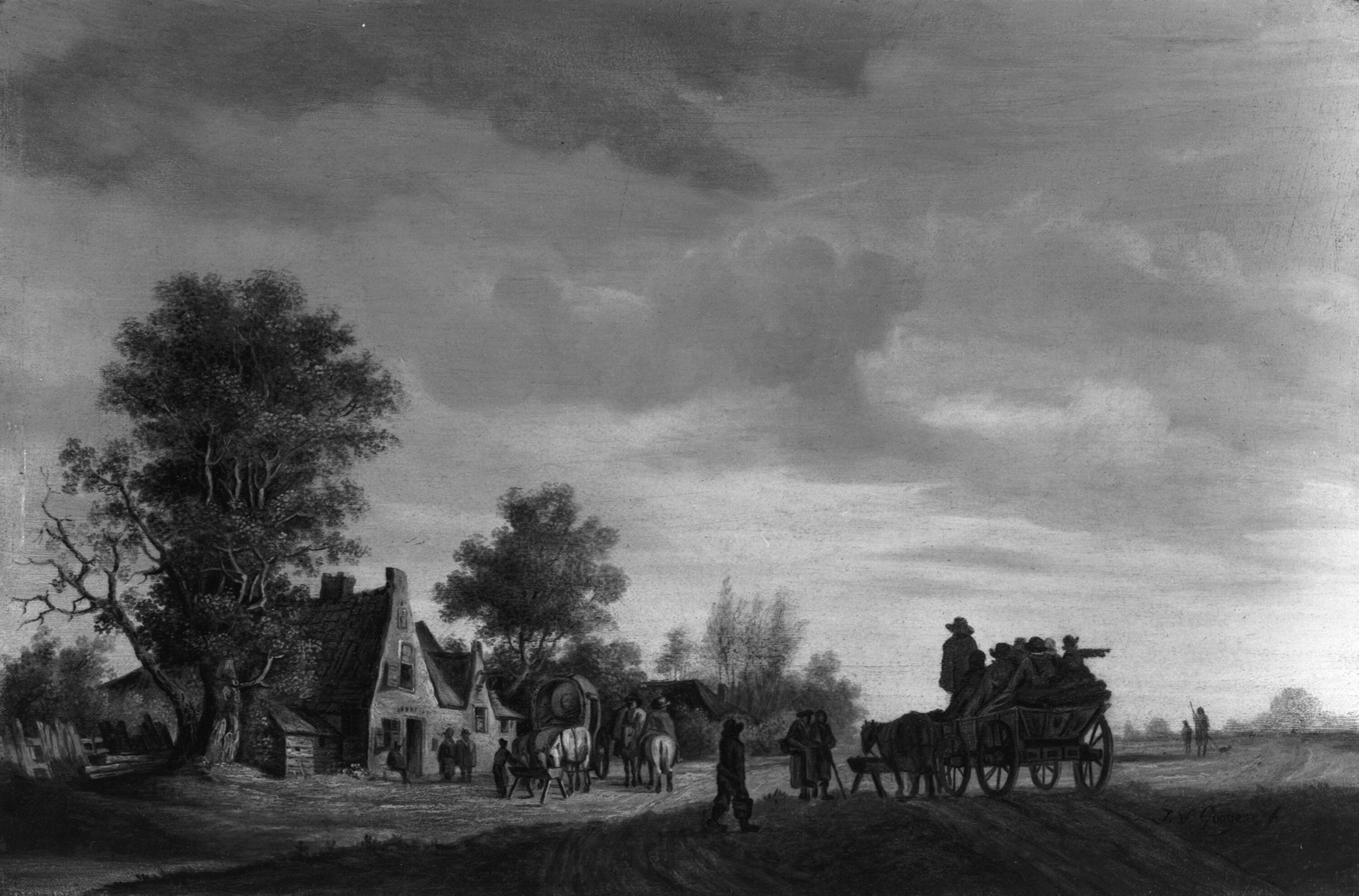
As nightfall settles over an old road, a man walks towards a light. He reaches for the door, a stranger without a letter or an introduction, counting only on the lateness of the hour and his tiredness for any semblance of security.
The door opens.
It’s not that the innkeeper is feeling particularly generous; he’s simply doing his job. Under common law, innkeepers were obliged to accept any traveller or wayfarer provided there was enough space and the guest could pay a fair price. Refusal could land him in court, so being a welcoming host had very little to do with mood and everything to do with duties.
Now fast forward to the present.
There’s another door in a foreign country. This time it’s made of glass, and it’s locked after 11 pm. The entry code is buried somewhere in an email you can’t access because you don’t have WiFi or service. Inside, there’s no reception desk in sight, but a man glides across the lobby, seemingly oblivious to your presence. He’s already decided what sort of guest you must be.
Both doors come down to design, and hospitality design is fundamentally about making decisions, in tangible form, about people.
However, the two doors answer different questions, and much of the confusion in this industry comes from treating them as one. The first is who gets in. The second is what the building has been built to do once they’re in.
In the case of a hotel, not a private club, the first question was answered centuries ago: everyone. It’s not a settled matter in practice, and it’s worth another post of its own, but it’s settled in principle. The second question has no default answer, which is why it has to be decided, and decided narrowly.
What does this guest need when they arrive?
How long are they staying, and why?
What are they worried about?
What would put them at ease?
Duty before taste
Common law never really regarded the innkeeper as a host but rather as an institution akin to public office. The reasoning was practical. The roads were dangerous after dark, the traveller had nowhere else to go, and a keeper who could turn people away at will effectively held their safety in his hands. So the law took the decision away from him: anyone who arrived in a fit state and could pay had to be received.
His duty, inevitably, reached beyond the entrance. A sleeping guest is defenceless and unable to watch over their belongings, with limited recourse if something were to be stolen in an unfamiliar town. Consequently, the law made innkeepers an insurer for the traveller’s possessions.
If the purpose is to ensure that the guest could get through the night unharmed, the design brief would include the following:
A door that remains open after dark.
A well-lit entrance for the keeper to see arrivals and for travellers to know they were expected.
A room with an interior lock, and a secure place to store any bags.
The medieval inn was hardly a classy place, but it did address many of the concerns that still arise in modern hotels. These debates aren’t so much about taste as they are about the extent to which we allow strangers into our lives, and what happens to those who find themselves vulnerable, far from home.
Notice what the law didn’t do, however. It set a floor on admission and a floor on safety, but it said nothing about what the room should be like. That question was left open, and it remains open.
The dollar and a half room
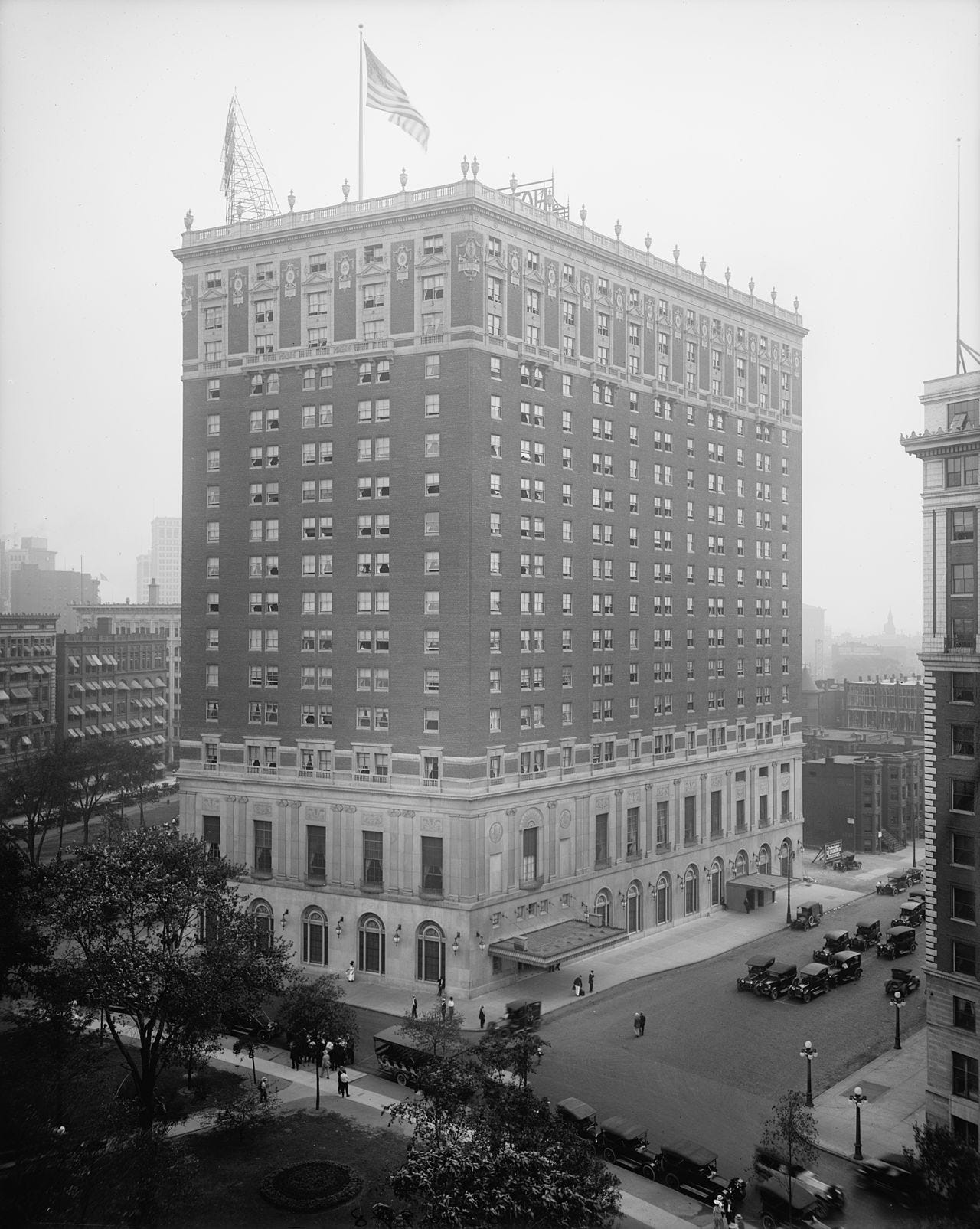
In January 1908, Ellsworth Milton Statler opened a hotel in Buffalo, New York, that boasted 300 rooms and 300 bathrooms. It’s widely credited as the first hotel in the world to provide every guest with a private bath, made possible by a clever bit of engineering.
Statler had introduced the Statler plumbing shaft: bathrooms stacked back to back around a shared vertical run carrying water, waste, heating pipes and electrical conduits, which meant he could build two bathrooms for a little more than the price of one. The efficiency spurred a revolutionary marketing strategy, as Statler advertised a room and a private bath for a dollar and a half, at a time when competitors with inferior rooms were charging as much as three dollars a night.
Traditionally, inns prioritised safety through the night, with locked doors, secure storage, and, hopefully, a reliable keeper. Privacy, however, remained elusive. Until Statler, using the bathroom meant leaving your room in the wee hours and passing through a corridor of strangers.
Statler’s other design specifications mirrored this approach. Every room featured circulating ice water, a telephone, a full-size closet with a light, a towel hook next to the bathroom mirror, a complimentary morning newspaper and a pincushion with a needle and thread.
A human being had carefully considered the needs of another human being, setting those requirements down in a blueprint that could be replicated several hundred times. That’s care, and it’s also inventory management.
What I find most instructive, though, is how Statler dealt with variety. His hotels accommodated commercial travellers, families and people staying for weeks at a time, but he didn’t respond by designing a room that tried to suit them all equally. Instead, he worked out what every guest had in common, and built for that.
By 1922, at the Pennsylvania Statler in New York, he had introduced the Servidor, a panel in the guest room door for hanging clothes. This allowed them to be picked up and returned without the guest ever running into the person who took them.
This was the point at which welcoming a guest evolved from duty into product. Not a lesser thing, and not a fake one, because once you can articulate and specify what welcoming a guest might mean to you, you can design it, price it, compare it, standardise it and continuously improve upon it.
What changed?
Statler had a very clear idea of who his guests were and what they might need, and he answered those needs through his design decisions. Everything about that has since come undone, and it isn’t because we stopped caring.
Three things happened:
There are now multiple stakeholders. Statler owned his building and could decide its specifications, so the guest question sat with one person who could be held to it. That single seat is hard to come by now, and when everyone at the table is someone important, I worry that a guest becomes no one’s particular responsibility. This comes down to a transfer of authority, not necessarily a decline in standards.
We started designing for the market, not for the moment. Statler’s guests were varied, but what they did inside the building wasn’t. Extended stay is now one of the fastest-growing parts of the industry, and a guest staying for a week or more isn’t having a longer version of a one-night experience. They might be cooking, receiving post, keeping a routine and generally wanting the building to recede into the background. So the variation isn’t in who’s arriving, but in what they’re doing once they’re in their rooms. Somewhere along the way, though, we started talking about that variation in terms of segments and profiles instead of situations people actually find themselves in.
The guest now arrives knowing everything. Statler’s traveller turned up without any idea what was behind the door. In contrast, today’s guest has seen numerous photos of the room, read the reviews and probably compared the rate against several competitors before deciding to come. Sadly, this means the building will have to work harder to surprise anyone into satisfaction.
What’s the building’s role?
I’m sensing fatigue around hospitality design, and the standard explanation is that we’ve seen too much of everything. I agree, there’s a sameness problem, but I’m not convinced that’s the whole story. Novelty is everywhere; you can be inside a space that’s truly unlike anything else and still feel absolutely nothing.
What seems to be happening, at least from where I’m standing, is a disconnect between intent and reality. Take lighting, for example. It might imply you can stay for as long as you like, maybe even get some work done, but the room is so loud you can’t hold a conversation, let alone hear yourself think. Or there’s lounge seating that looks inviting, but in reality, it’s rather uncomfortable. You end up in a space that’s sending mixed signals, and you’re left wondering what to do.
It’s not even about bad taste. It’s more that things are chosen to fit an abstract notion of how the place should feel, as opposed to thinking about what people might actually want to do there.
It brings to mind Banana Republic’s foray into homeware, when they priced their collection alongside the likes of RH. The products themselves weren’t bad. But a person who picks up a Banana Republic jumper isn’t necessarily the same person who’s ready to splash out on a pricey sofa, and simply setting the price higher doesn’t magically create a new customer base.
Hotels are just as guilty. When I call something gimmicky, this is exactly what I mean. At the top end, it’s almost unforgivable, because anyone paying those rates has almost certainly stayed in enough places to know the difference between a hotel that’s thought through everything and one that’s cobbled together a look and hoped for the best.
Some say luxury thrives because it understands its guests. I’m not fully convinced of that, either. The hotels at the top are those singular places that are hard to recreate, and, dare I say, scarcity steps in where definition is otherwise required. In other words, if you happen to have the land, the view, the listed building, etc., then you can afford to be a bit vague about the rest (a clientele that arrives on price alone isn’t a guest definition). If not, vagueness quickly becomes a liability.
On the other hand…
There’s a strong case against everything I’ve just said. It goes something like this:
Designing to place is designing for people because people want to feel like they’ve arrived somewhere specific.
Designing to trend is responsive, not lazy, since trends represent what a large majority of people gravitate towards, and ignoring them is arrogance masked as principle.
Designing for flexibility is the most democratic option of all, as it refuses to assume who’s coming and leaves space for them to use the property as they wish.
By this logic, the industry isn’t dodging the human questions at all; it’s answering them with more humility than I’ve given it credit for.
The three arguments do share a weakness, though, and it’s the same one in each case. Place tells you where the guest is. Trend tells you what people currently like. Flexibility tells you what can be left to interpretation. All three are about the guest, which is why they’re persuasive. But they’re about guest preferences, not guest behaviour, and what people say they want and what they do in a room aren’t the same thing.
Flexibility seems the most generous, but no building truly avoids forming assumptions about the person walking in. So the question isn’t whether we’re imposing an idea of the guest, since we always are; it’s which idea.
As for local design, well, that’s everywhere, and I’m all for it. But a hotel can be of its place, built by local hands, out of local this and that, praised in every publication, and still have no idea who its guest is. Place answers where I am, and perhaps even who I am. It doesn’t answer what I might need. So place works when it comes after the guest decision, not despite it.
So, what’s hospitality design for?
The obvious answer is that it’s for people, and the obvious answer isn’t always good enough because it’s the same species of claim as ‘sense of place’ or ‘mood’. What’s missing these days isn’t care or taste. We have both in abundance. What we really need is to be specific, and to accept that being specific means not being for everyone.
WORTH THE DETOUR
INDUSTRY
Greydon House in Nantucket has opened a new lounge and four guest suites, connected to the original Broad Street building by a brick path. Architecture is by local firm Emeritus; interiors by Natasha Willauer. The lounge, The Green Room, centres on a wraparound 14-seat bar and serves cocktails and light bites, with a sea green palette that echoes the original hotel. The suites use soft blues and greens with warm woods, brick tones and brass, mixing on-island custom furniture with New England antiques and vintage finds. Some bathrooms have dual showers and walnut vanities. A patio and garden will complete the expansion this autumn.
Woodbine Development (Dallas) and Delightful Development (Fort Worth) are partnering on a $160 million resort in the Fort Worth Stockyards. Three acres, 225 rooms, split across two independently operated hotels. Groundbreaking is set for next autumn, opening spring 2030. Woodbine’s Dupree Scovell points to the site’s position at the gateway to the Historic District, which he says draws more than 10 million visitors a year. Delightful’s Craig Cavileer frames it as a continuation of the Stockyards revival he’s been working on for 15 years.
THINGS
Here’s a recent purchase I’m loving. I’m starting to take scalp massages very seriously. And yes, like many other Indian women, I, too, have a story of my mother oiling my hair on weekends before washing it. My sister said this particular scalp massager resembles a torture device, but I promise you the sensation is wildly calming. Happy scalp, happy healthy hair. I’ve even got my non-believing husband on it.
UNTIL NEXT TIME
Thank you for reading The Other HAFH. If you haven’t subscribed already, might I nudge you towards clicking the button below? I’ll catch you next Friday.
I love how the Statler examples turn the whole question from taste into behavior. A private bath, a lit closet, a towel hook in the right place. None of it is spectacular, but every detail answers a real moment in the stay. Hospitality design gets much more interesting when the question becomes “what will the guest actually need to do here?” rather than “what should this room look like?”
wow, love this history deep dive! thank you!!