

I’ve been thinking back to this post:

I talked about the European standards that have dominated hospitality. But if these European standards were always more arbitrary than universal, what are we deferring to now?
That question kept pulling at me, and it turned into this week’s topic.
Let’s get into it.

There was a time, not long ago, when good taste in luxury hospitality had a recognisable shape. It was hierarchical, mostly European-influenced and widely accepted by those in the know. The Ritz Paris epitomised this, as did Cipriani Venice, Claridge’s in London and The Plaza before its closure and subsequent reinvention. These were the hotels to stay at, thanks to their history and consistent coverage in legacy media. Not to mention, the self-reinforcing presence of loyal guests.
The hotels did their thing, but it was certain institutions that largely dictated where you chose to stay.
Relais & Châteaux, founded in 1954, served as taste certification for hotels that met specific standards of French-influenced hospitality. Condé Nast Traveler’s Gold List and Travel + Leisure’s World’s Best Awards produced annual rankings that readers consulted when making decisions. These weren’t perfect systems by any means. They had their biases and their entanglements with advertisers. But they did represent something close to consensus. You could disagree whether a hotel deserved its place on the list, but you were at least disagreeing within a shared framework of what excellence in hospitality might mean.
The parallel in dining is even clearer. Michelin Guide, whatever their limitations, provided a hierarchy that trumped individual preference. A three-star restaurant in Paris, for example, operates under the same rubric as one in Tokyo, judged by the same supposedly objective standards. The methodology might be opaque, but the reference point is shared, and as a consumer, you know what you’re aspiring to.
This kind of consensus requires designated validators whose authority is self-perpetuating. Condé Nast decided what was worth covering, and what was worth covering was what Condé Nast covered. That, however, required contempt for what fell outside, i.e. the wrong kind of hotel, or the wrong kind of guest, or the wrong kind of aspiration.
It’s how cultural authority in hospitality has always been produced—through the confidence that such standards exist, and that the people who set them are qualified to do so. It’s a circular argument dressed up as discernment. And what the last thirty-odd years of supposed disruption has shown us is that the logic never actually falters. It migrates from institution to institution, aesthetic to aesthetic, generation to generation. But structurally, it remains unchanged.
Every challenger to the old consensus framed itself as a liberation. The question worth asking is whether any of them actually changed how authority gets produced. Or whether they simply changed who produces it.
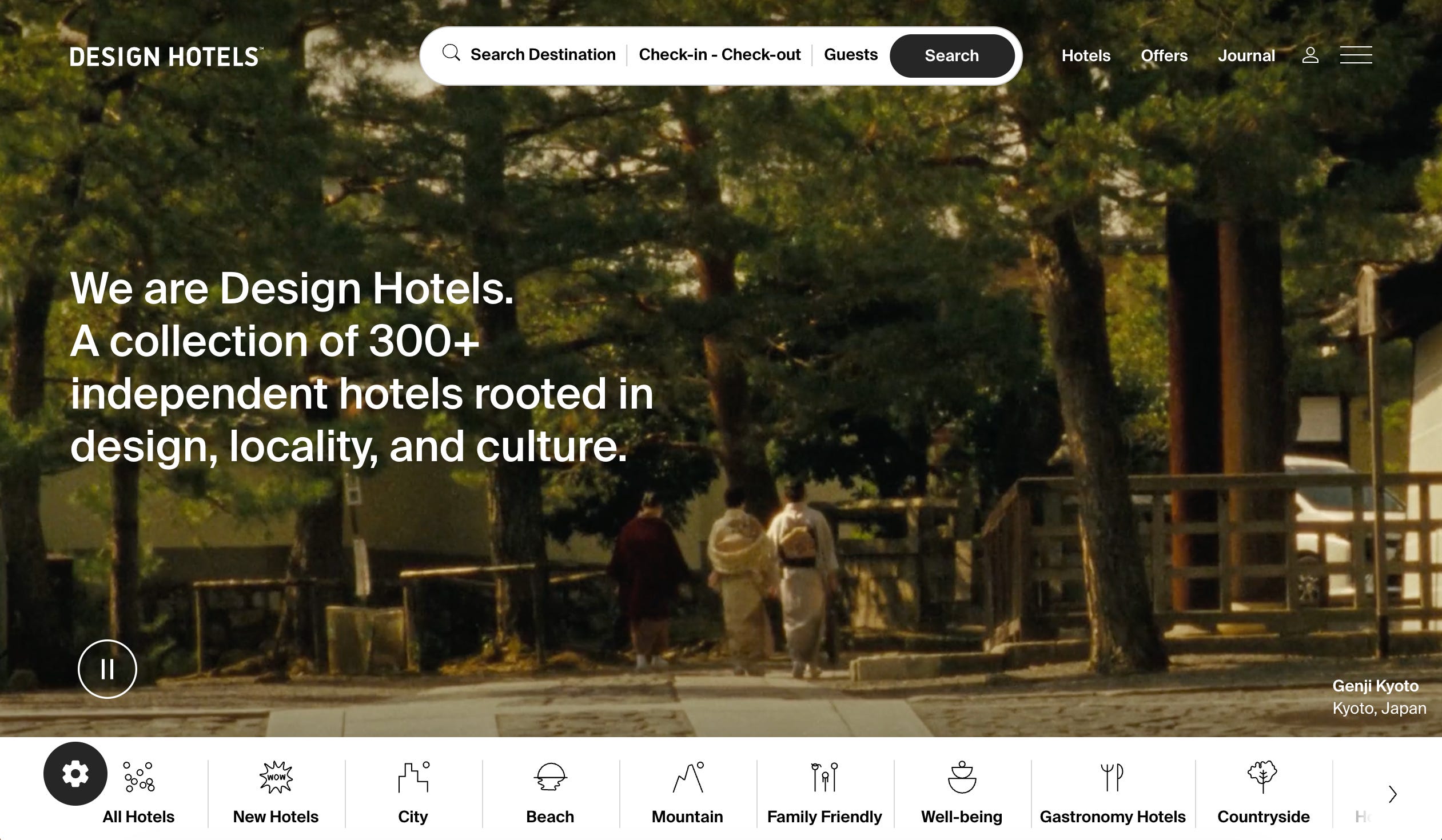
Design Hotels, founded in 1993 by Claus Sendlinger, was the first real challenge. Where Relais & Châteaux certified properties against French standards of service and style, Design Hotels championed character over conformity. A property’s inclusion depended on a creative vision that deviated from recognisable luxury templates. Suddenly, a 12-room property designed by a local architect could claim parity with a Grand Hotel. Consistency, once the hallmark of quality, was recast as mediocrity. As a company, they expanded what could count as excellent and it was pretty radical at the time.
But the mechanism was the same. Design Hotels still selected. It still excluded. It still required a traveller to look at its portfolio and trust that the collection represented a higher standard than the market at large. So while the criteria had changed, the operation had not.
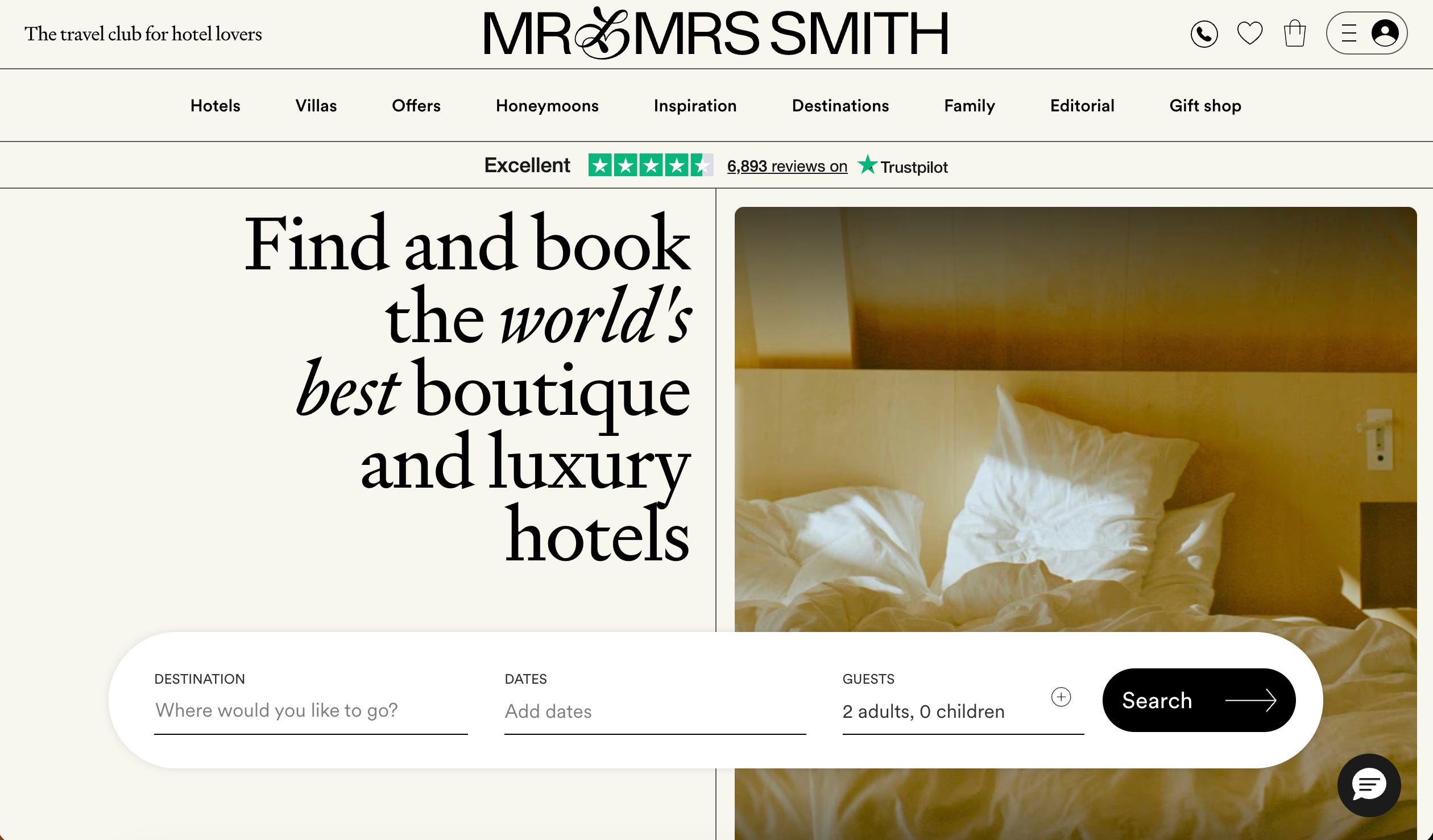
Tablet Hotels, Mr & Mrs Smith and Small Luxury Hotels of the World (to name a few) followed through the late 1990s and 2000s, each carving out a curatorial position against the old lists. Tablet targeted a design-literate traveller who found Condé Nast too mainstream. Mr & Mrs Smith made the selection feel personal and editorial, with its lively first-person reviews and a deliberately anti-corporate tone. Small Luxury Hotels championed independents, equipping them with a collective credibility they might not have generated alone. Different aesthetics, maybe similar audiences. But every one of them was producing the same product, which was a validated hierarchy and insider knowledge of which properties were worth caring about.
Then social media. Instagram and TikTok especially have achieved cultural dominance. Anyone could become a tastemaker and property could gain attention through photogenic design. A carefully curated feed became the new Condé Nast. But here’s the comical part: hotels can become a punchline for being ‘too Instagram’ just as quickly as they achieve status through it. The ability to distinguish between the authentically photogenic and the cynically so is itself a form of insider knowledge—the same insider knowledge that the old system ran on, just distributed across millions of accounts instead of a single editorial board.
The niche newsletter (hi) completed the cycle at a smaller and more targeted scale. The format changed once again, but the logic still hasn’t. A curatorial platform can champion minimalist properties one season and heritage the next. A traveller can subscribe to three competing publications and find each one convincing on its own terms. What looks like a saturated landscape of competing taste authorities is better understood as a single operation running on whatever the current moment makes available.
Hotels have adapted accordingly. They no longer attempt to appeal across curatorial audiences. They cultivate alignment with specific ones. Being featured in Tablet signals something different to being listed in Small Luxury Hotels, which signals something different again to appearing in a well-regarded newsletter. Which platforms endorse a property shapes who books it and what experience they arrive expecting.
Old authorities like the Gold Lists and the World’s Best Awards still exist, but they’ve lost their power to strong-arm consensus. They’re one voice among many.
You could argue that this is democratisation. I don’t think it is. Fragmentation is a better term. Authority has been distributed across more platforms, each serving a narrower audience with greater intensity. This is the landscape’s real shape. Not a democracy of taste and not a simple hierarchy, but a proliferation of curatorial voices that offer their respective readers the same core product: the experience of being someone who knows what’s worth caring about.
Which is where this publication has to be honest with itself.
HAFH is a taste authority. It designates certain properties as worthy and others as beneath consideration. It signals alignment with a particular cultural sensibility, and to pretend otherwise, i.e. to claim the position of the neutral observer or objective curator, would be to do exactly what the old consensus did—dress a circular argument up as discernment.
But there is a difference between an authority that mystifies its own criteria and one that makes them visible. The former needs you not to see how the selection works. Its power depends on the appearance of objectivity. The latter offers something more useful, which is a clearly held point of view, openly argued, that you, as a reader and a peer, are free to disagree with.
There’s no debating whether taste authorities will exist. They will. They always will. The real test is whether they’re willing to spell out exactly what they are. Think of it as the same authority, just many different fonts. Which is, at minimum, far more interesting than only having a few to choose from, even if the underlying typesetter hasn’t changed.

INDUSTRY
The Sitio, a 20-room boutique hotel, opens this March at Atlantic Park in Virginia Beach—a new mixed-use development backed in part by Pharrell Williams. The hotel sits alongside North America’s first Wavegarden Cove surf lagoon, and the whole concept leans into the cultural trinity of art, music and surf. Expect work by French artist JR and local artist Schuyler Beecroft, locally crafted furnishings, deliberately understated rooms with custom surf racks and playlists curated by Pharrell’s team (obviously). One to watch—if only to see whether the Pharrell association becomes the main pull or the hotel itself does.
Altus Hospitality is launching a new lifestyle brand, The Webster, with two locations this year: Covent Garden in London this July, and Times Square in New York this winter. The name nods to the historic Webster Hotel where Nobel Prize–winning author Gabriel García Márquez once stayed. Meanwhile, the design is warm, stocked with literary nostalgia (Marshall speakers, hand-selected books, brass and alabaster fixtures), and the programming, including literary salons, artist residencies, neighbourhood collaborations, suggests a hotel that wants to be a cultural address. Maison Premiere, the celebrated New York hospitality group, will run the dining and nightlife.
Inns of Aurora Resort & Spa in upstate New York has opened the Farmhouse, a 10-bedroom inn originally built in 1835 and fully reimagined by Hart Howerton. It's the sixth and reportedly final addition to the resort's collection of historic properties, which together span nearly a century of architecture along the shores of Cayuga Lake. Notably, the Farmhouse comes with its own dedicated treatment room and an exclusive wellness menu, which is a meaningful upgrade on the standard spa-access model.
THINGS
In the name of good taste, I’ve discovered one of my new favourite social media accounts: stp.review, dedicated entirely to the ranking and analysis of sticky toffee pudding. Which is, for the uninitiated, a superior dessert. Date cake, warm toffee sauce and the great custard versus ice-cream debate (stp.review has opinions). I am, as a rule, inclined to support ultra-niche thought leadership in all its forms.
Not sponsored (although, I ought to be), this Kiehl’s moisturiser has become my latest skincare fixation. Recently bought, already devoted. The magic words for me are ‘colloidal oatmeal’. My skin is quite reactive and particular about what it tolerates, and this has asked no questions whatsoever.
I am a scribbler. Always have been. Constantly jotting, noting, scrawling in margins, which means pens are serious instruments. I’ve revisited Muji and cannot recommend their ballpoints enough. 0.5. Nothing thicker, nothing thinner. And a click is categorically superior to a lid. At least, for more affordable pens.

Thank you for reading and supporting The Other HAFH. If you enjoyed this post, consider passing it along to someone else. It helps get the word out!